Tag: King County Sheriff’s Office

County Hires New Cop Recruiter; Deputy Mayor Moves On; Calls for Park Sweep Increase After Unrelated Attack

Seattle - City Hall Park & King County Courthouse 05
Joe Mabel, CC BY-SA 4.0 via Wikimedia Commons

1. The King County Council added $248,000 to the county’s budget last week to hire a new recruiter for the King County Sheriff’s office in response to two years of unusually high attrition. The council eliminated the position last year.

In the past two years, the sheriff’s office has seen roughly 15 percent of its sworn officers resign or retire. Fifty deputies have resigned from the department in 2021, setting the county on pace to surpass the 69 deputies who left in 2020. Last year’s attritions marked a 42 percent increase from 2019. “Because these aren’t vacancies we planned for,” council president Claudia Balducci said, the sheriff’s office should be able to restore its ranks while the county considers whether to downsize the office in the future.

The council’s 2021-2022 budget included funding for 41 sworn positions in the sheriff’s office that are currently unfilled, but few qualified candidates have applied for those positions. Of the 351 applicants to entry-level positions in the sheriff’s office since January, only 79 have met basic hiring criteria, including a clean criminal record and bill of health.

But not every member of the council thought that funding the recruiter position should be a priority for the council. Councilmember Dave Upthegrove, who represents South King County, cautioned his colleagues against dipping into the county’s general fund until the council can look at its budget with fresh eyes after American Rescue Plan Act dollars dry up. “If I looked all around county government looking for one more position we could fund,” he said, “it wouldn’t be this one.” Upthegrove, along with council members Joe McDermott, Rod Dembowski and Girmay Zahilay, voted against funding the position.

In the same meeting, the council also voted to set aside $5.6 million to provide refunds for King County residents who have paid legal financial obligations for drug possession convictions that the Washington State Supreme Court rendered void with the landmark Blake decision in February. The state will reimburse counties for any spending on Blake-related refunds.

2. In response to complaints about public safety at the downtown King County Courthouse—including, most recently, an attempted sexual assault inside the courthouse itself—the city is reportedly planning to remove an encampment in City Hall Park next door. A sweep could happen as early as this week. Although the alleged courthouse assailant has no known connections to the park, King County Councilmember Reagan Dunn and other officials have made the connection; in a statement about the attack last week, Dunn called for “the immediate closure of City Hall Park and the danger it poses to our employee[s], residents, and the community.”

Support PubliCola

PUBLICOLA NEEDS YOUR HELP.

If you’re reading this, we know you’re someone who appreciates deeply sourced breaking news, features, and analysis—along with guest columns from local opinion leaders, ongoing coverage of the kind of stories that get short shrift in mainstream media, and informed, incisive opinion writing about issues that matter.

We know there are a lot of publications competing for your dollars and attention, but PubliCola truly is different: We’re funded entirely by reader contributions—no ads, no paywalls, ever.

So if you get something out of this site, consider giving something back by kicking in a few dollars a month, or making a one-time contribution, to help us keep doing this work. If you prefer to Venmo or write a check, our Support page includes information about those options. Thank you for your ongoing readership and support.

REACH has been doing outreach in the park for the past several weeks, with the goal of moving people from encampments into hotels through JustCARE, a program that provides hotel rooms, case management, and services to people living unsheltered in Pioneer Square and the International District. Last week, the city signed a contract with the JustCARE alliance to fund 89 more JustCARE slots, which the PDA had hoped to use to shelter the people living in the park.

In a statement Sunday, the alliance, which includes the Public Defender Association, the Urban League, and the Asian Counseling and Referral Alliance, among others, said that “many of the people in the park arrived there after being removed from other locations without offers of non-congregate shelter that matched their situation”—a reference to ongoing encampment sweeps by the city. “Those who are rightly upset about conditions in the park should join the many voices opposing shuffling people around the city—that practice contributed significantly to this situation,” the letter says.

“Moving people out of the park to no clear destination will not solve courthouse or neighborhood safety, or address the situation of anyone currently living there,” the letter concludes. “It feels like action—but it actually makes matters worse.”

For years, the city has presented unsheltered people with “offers” of shelter that are less appealing than sleeping outdoors, including beds in congregate shelters that lack the privacy or security of a private room, and dispersing them to other locations when they “refuse” these offers. Sweeping people from City Hall Park will only displace them to new locations—which is how many of them ended up in the park in the first place.

3. One of Mayor Jenny Durkan’s most senior cabinet members, senior deputy mayor Mike Fong, is leaving the city later this month for a new job as Chief Recovery and Resilience Office for Snohomish County.

Durkan, who announced she would not seek reelection in January, is leaving office at the end of this year after a single term. She currently has two deputy mayors, both appointed after their predecessors left for new positions. Tiffany Washington, the former head of the city’s homelessness division, replaced Shefali Ranganathan, and David Moseley, a former deputy mayor, came out of retirement to replace Casey Sixkiller, who quit to run for mayor. Continue reading “County Hires New Cop Recruiter; Deputy Mayor Moves On; Calls for Park Sweep Increase After Unrelated Attack”

County Executive Dow Constantine, Seeking Reelection: “The Status Quo Has Been Upended”

By Erica C. Barnett

King County Executive Dow Constantine, who served in the state legislature and on the King County Council before beating eight other candidates for county executive in 2009, was supposed to run for governor—until the current governor, Jay Inslee, decided he wanted to keep the job. With a bid for higher office thwarted until at least 2024, many political observers expected Constantine to step down this year rather than seek a fourth term.

Then the pandemic hit, and suddenly, all eyes were on King County and its public health department, whose capable response to a fast-moving, ever-evolving crisis made the county a model for the nation. Constantine decided to run again, and for the first time in 12 years, drew a credible opponent—Democratic state Sen. Joe Nguyen, who represents the same West Seattle district Constantine did in the state House and Senate. (In a further twist of internecine West Seattle politics, Nguyen defeated Shannon Braddock, who’s now Constantine’s deputy chief of staff.)

I sat down with Constantine over Zoom last week, and started out by asking him why he decided to seek another term.

Dow Constantine: I mean, I was thinking about running for governor, but then the governor ran for governor. And because I’m a good Democrat, and I want to ensure that we have Democratic leadership in Olympia, I chose not to run for governor along with all the other potential candidates.

I have lots of options in life. But the best opportunity right now coming out of this crisis is to advance the work we’ve been doing. I think this is a unique, exciting moment where the status quo has been upended. And a lot of the things that we have been dutifully building toward in equity and social justice and environmental restoration and police transformation and so forth become dramatically more possible. So, you know, once the, the COVID crisis started, we’ve been in it, and there’s really been no looking back.

PubliCola: Looking back over the last 14, 15 months of the pandemic, is there anything that you would have done differently in the early months, if you had known kind of how things would turn out?

With hindsight being 20/20, instead of trying to distance people in a congregate setting, like in shelters, we would know that having people just farther apart but all in the same room, was still going to be problematic. We [eventually] moved to the hotel model, which immediately and dramatically slowed the spread of the disease. Obviously, if we had more knowledge at the time, we might have made different choices about requiring mask use early on, or getting people into hotels and single-room settings rather than shelters. But in general, I think that the people responded well to a crisis with a lot of unknowns.

“Simply saying that the government can’t be involved in anything that in any way facilitates someone using the substance to which they are clearly physically addicted is just inhumane.”

PC: One of the things [Downtown Emergency Service Center director] Daniel Malone has said since early in the pandemic, when DESC moved people from their downtown shelter to the Red Lion in Renton, is that they’re never going to go back to the way things were, with people staying in overcrowded, congregate shelters. And yet it feels like that’s kind of what’s happening at the city level. Do you think that in a year or two years, we’re going to be right back where we were?

DC: That is not what the county is doing. Other than in isolated cases, for an immediate overnight emergency, we’re not going to be investing in mats-on-the-floor, get-kicked-out-in-the-morning shelters, because we have seen what having a room of your own, a place of your own, even just space of your own, can do for people.

It used to be that people were very focused on long-term, purpose-built, supportive housing, and it was sort of, we’ll just wait and let people rotate through these congregate shelters until those things are ready. With some exceptions, I think we’re moving much more toward a model where we try to get everyone a place that is genuinely a better alternative to the streets or a tent—a place that has a lock on the door with their own bathroom and some dignity and the ability to get rested and cleaned and centered. And that seems like kind of an obvious thing. But the pandemic created the opportunity to demonstrate how much better that works than a congregate shelter setting.

“I do think it’s likely that we want to find [a new sheriff] who is an outsider, someone who doesn’t owe anyone anything and is not beholden to people so that they can make difficult decisions and see things with clear eyes.”

PC: The opiate task force came out with its recommendations almost five years ago, and I remember at the time thinking that, in particular, the [supervised consumption site] recommendation was never going to happen. And sure enough, it hasn’t. Why do you think that is? And do you think the county has come through as promised on the remaining recommendations, including access to treatment on demand?

DC: I do think that the task force was correct that a safe, monitored place would save lives. And we’re seeing continued deaths from heroin that’s tainted with fentanyl, for example. And for the parents, for the families who’ve lost their children, the moralizing that I come across in the media about not facilitating drug use rings kind of hollow. Simply saying that the government can’t be involved in anything that in any way facilitates someone using the substance to which they are clearly physically addicted is just inhumane.

Will we, as a practical matter, be able to get one of these things up and running? I don’t think, unless there’s a significant political change, that it’s going to be possible to do. But I will say this. The advances in both treatment and the drugs to reverse overdose mean that it’s absolutely imperative that people not be in basements and alleys and other places where they don’t have eyes on and them can’t get help, because we can save lives in the short run. And we can save people from addiction over time. And we have much better mechanisms that we had even a decade ago to do that.

“It is the state of Washington that requires us to have a youth detention facility. And we would very much welcome the state legislature actually removing that legal obligation, and instead providing us with the funds and the mandate for alternatives.”

This is not your question, but this has been bugging me lately. There are a lot of people on the streets who have some level of opioid dependence. And some of them had it before they were homeless, and a lot of them developed it on the streets and are at grave risk because of tainted drugs that can come in to the community. And there have been plenty of suburban kids and parents who have died. But I continue, as I make calls, to hear this basic, moralistic perspective—like, they’ve just got to get off the junk, and then we can offer them all these services.

And we know that’s not how it works. Getting just some solid ground under people’s feet first is an almost indispensable prerequisite to people being able to succeed in treatment. When you’re fighting for survival every night, it’s very hard to adhere to some sort of program that’s going to help you get off of whatever you’re addicted to. Continue reading “County Executive Dow Constantine, Seeking Reelection: “The Status Quo Has Been Upended””

Deputy Mayor Sixkiller Joins Crowded Mayoral Race; Police Union Joins Calls for Sheriff’s Resignation

Deputy mayor Casey Sixkiller at the opening of King’s Inn hotel shelter.

1. Deputy Mayor Casey Sixkiller joined the crowded race for mayor Tuesday, after months of hinting that he would make an announcement soon. He told PubliCola that, if elected, he would propose a bond measure, backed by a property tax increase, to build 3,000 new permanent homes for people experiencing homelessness; back a local version of universal basic income; and work to find “common ground” between people on all sides of the homelessness issue.

“If there’s one issue that we can all agree on, it’s that the conditions of our parks and our streets is unacceptable, and despite spending a record amount of money, homelessness has gotten worse,” Sixkiller said. “One part of the strategy for homelessness going forward is, number one, continuing to move more folks inside and creating safe spaces for people to move into shelter, but second, we’ve got to build or require more permanent places for folks to [live].”
Sixkiller is leaving the mayor’s office to campaign full-time.

As deputy mayor, Sixkiller was in charge of overseeing Mayor Jenny Durkan’s response to homelessness. In that role, he often clashed with the city council, defending Durkan’s reluctance to open more restrooms for unsheltered people early in the pandemic and proposing a huge new “shelter tent” for homeless people in early April of last year, when it had already become clear that COVID-19 could spread quickly in mass shelters. But he also advocated for hotels as a replacement for congregate shelters later that year, negotiating a compromise between the mayor (who was not a fan of hotels) and the council that ended up resulting in about 200 hotel-based shelter beds, with another hotel in north Seattle on the way.

“I think what the charter amendment underscores is that folks across our city and from all ends of the spectrum want to see results… both for folks that are experiencing homelessness and those impacted by it. As an organizing principle, it’s a really important thing.”—Casey Sixkiller

Sixkiller wouldn’t say whether he supports the “Compassion Seattle” initiative, which would impose a new human services spending mandate on the city and lays out conditions for future sweeps. “I’m still looking at” the proposal, he said, adding, “I think what the charter amendment underscores is that folks across our city and from all ends of the spectrum want to see results… both for folks that are experiencing homelessness and those impacted by it. … As an organizing principle, it’s a really important thing.”

Before joining the mayor’s staff, Sixkiller worked briefly as the chief operating officer for King County. Prior to that, he founded a D.C.-based lobbying firm, Sixkiller Consulting, with his wife.

So far, there are 16 candidates in the mayoral race; the filing deadline is May 21.

2. Sixkiller’s departure leaves an open position at the mayor’s office, but not for long; Durkan’s office says they plan to bring former deputy mayor David Moseley out of retirement to take Sixkiller’s place. Moseley will take over most of Sixkiller’s portfolio, which includes transportation, utilities, parks and housing, but deputy mayor Tiffany Washington will be in charge of homelessness.

Washington headed up the city’s Homelessness Strategy and Investment division until 2019, when she resigned to take a position in the city’s Department of Education and Early Learning. Her relationship with the city council could charitably be described as tense; her explanations for city policies such as an earlier increase in encampment sweeps were often vague and inconsistent, and was often defensive in response to criticism, including from journalists who questioned the city’s sunny claims about homelessness.

Durkan hired Washington for her current position last year.

3. The latest call for King County Sheriff Mitzi Johanknecht’s resignation is coming from inside the house: on Monday, the King County Police Officers’ Guild—the union representing most of Johanknecht’s sworn officers—joined county and state lawmakers pressuring Johanknecht to step down from her post.

Guild President Mike Mansanarez told PubliCola on Tuesday that his union’s members have lost confidence in Johanknecht’s competence as a leader and ability to communicate with her officers and other county leaders. “The rank and file don’t see [Johanknecht’s] leadership team—they don’t come to the precincts,” he said. He added that union members are frustrated with some of Johanknecht’s appointment decisions, and with the sheriff’s perceived willingness to overlook misconduct by her appointees.

Opposition to Johanknecht grew in March, after the county reached a a $5 million settlement with the family of Tommy Le, a 20-year-old killed by King County Sheriff’s deputy Cesar Molina in 2017. Continue reading “Deputy Mayor Sixkiller Joins Crowded Mayoral Race; Police Union Joins Calls for Sheriff’s Resignation”

Calls for King County Sheriff Resignation Expand Beyond County Council

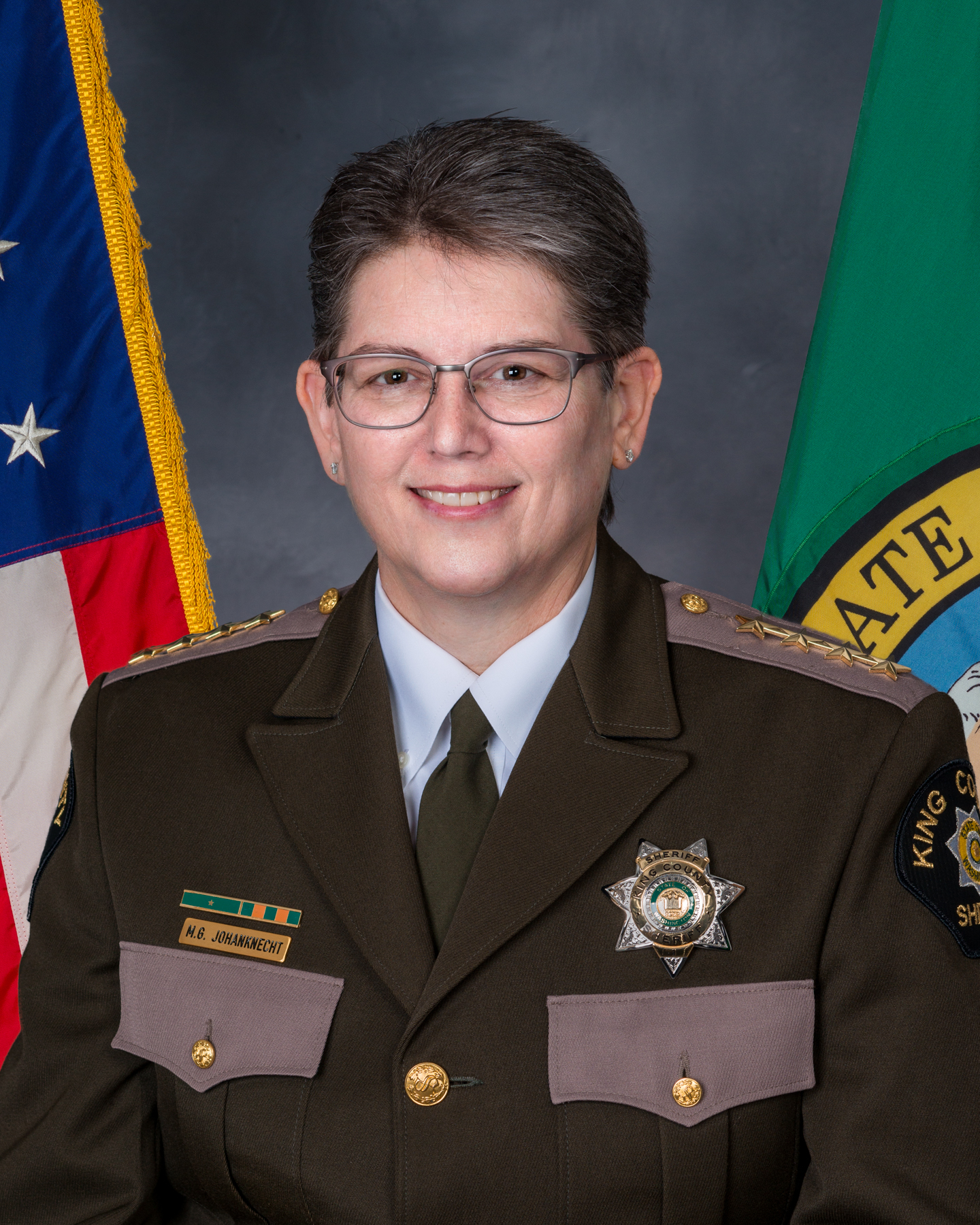
Sheriff JohanknechtBy Paul Kiefer

County and state lawmakers continue to join the chorus calling for King County Sheriff Mitzi Johanknecht to resign for comments she made in a department-wide email about the killing of 20-year-old Tommy Le by a sheriff’s deputy in Burien in 2017. On Thursday, state senator Joe Nguyen (D-34, West Seattle) became the latest elected official to add his voice, joining three county council members.

Johanknecht sent the email at the heart of lawmakers’ criticisms only hours after a March 24 press conference at which Le’s family announced a $5 million settlement with King County for their son’s death. The email’s contents were first reported by the South Seattle Emerald.

In the department-wide email, Johanknecht shared her “appreciation of the difficulty” of Deputy Cesar Molina’s decision to shoot and kill Le, who was unarmed. Johanknecht also wrote that the county’s settlement with Le’s family—which implied some admission of wrongdoing by her department—was “not a reflection of how [Johanknecht] view[s] the actions of Deputy Molina in this incident.”

In a statement on March 26, King County Councilmember Joe McDermott said that the sheriff’s email “was, in the most charitable light one might muster, disrespectful to the young person who was killed, to his family and our entire community.”

Both Le’s shooting and the internal investigation into his death have sparked scrutiny by police accountability advocates and lawmakers. A critical review of the investigation by the county’s Office of Law Enforcement Oversight in September 2020 identified an array of flaws in the internal review into Le’s death, which an internal review board determined to be justified in 2018. Those flaws included the internal investigators’ failure to note that two of the six shots that Molina fired hit Le in the back, contradicting Molina’s assertion that he fired at Le in self-defense. Though Johanknecht was not sheriff at the time of Le’s death, she assumed leadership of the department during the investigation into the incident.

The publication of Johanknecht’s email spurred King County Councilmember Joe McDermott to join Le’s family in calling for the sheriff’s resignation; in a statement on March 26, McDermott said that the email “was, in the most charitable light one might muster, disrespectful to the young person who was killed, to his family and our entire community.”

Johanknecht maintains that she has no plans to resign, but as the county’s transition from an elected sheriff to an appointed sheriff in 2022 looms on the horizon, her future with the department may be limited.

McDermott’s call for Johanknecht’s resignation was preceded by that of County Councilmember Dave Upthegrove, who quietly expressed his opposition to Johanknecht in a March 12 Facebook post in which he shared his support for relatives of Black victims of police shootings in King County and called for Johanknecht to step down for “her failure to treat racism with the seriousness it requires.”

On Wednesday, Councilmember Girmay Zahilay became the third council member to call for Johanknecht’s resignation. In a series of tweets, Zahilay wrote that a sheriff’s comments were evidence that she presents a barrier to police accountability and “do not reflect the values we need in that office.” Sen. Nguyen, who voiced his support for Johanknecht’s resignation on Twitter a day later, called the email “dehumanizing, disrespectful [and] dismissive.” Continue reading “Calls for King County Sheriff Resignation Expand Beyond County Council”

Afternoon Fizz: Sheriff Fires Deputy, New Director Lays Out Plans for Homelessness Authority, City Reinstates 72-Hour Parking Rule

King County Regional Homelessness Authority director Marc Dones

1. King County Sheriff Mitzi Johanknecht will fire a detective for failing to follow basic de-escalation policies and for “extremely poor tactical and officer safety decisions” before fatally shooting a car theft suspect near Enumclaw in 2019.

Detective George Alvarez is a 21-year veteran of the sheriff’s office with a lengthy use-of-force record, including five shootings and a criminal charge for assaulting and threatening an informant in 2003. In November 2019, Alvarez and his partner, Detective Josh Lerum, were driving an unmarked car when they spotted 36-year-old Anthony Chilcott, wanted for stealing an SUV and a pet poodle, driving in rural southeastern King County. Earlier that day, Chilcott had evaded a Washington State Patrol officer, but when the detectives found him, he had parked next to a power station to smoke a cigarette. At the time, Johanknecht wrote, “there was no imminent risk” to members of the public.

Nevertheless, without consulting with Lerum or waiting for backup, Alvarez decided to pull within inches of Chilcott’s driver’s-side door, sparking a confrontation that ended with both detectives shooting Chilcott in the head. Neither detective was wearing a sheriff’s uniform, and witnesses at a bus stop nearby told investigators that they didn’t initially realize that the pair that rammed the stolen SUV across the road and broke the driver’s-side window with a sledgehammer and the butts of their handguns were police officers.

In a letter to Alvarez explaining her decision, Johanknecht emphasized that she did not decide to fire him for the shooting itself, but for his decisions that led up to the shooting. “You did not use the opportunity you had to slow things down,” Johanknecht wrote. “The urgency here was created by your actions, not the actions of the suspect.” Johanknecht and other department leadership also called into question Alvarez’s claims that Chilcott posed an “immediate danger” to witnesses at a bus stop nearby. Instead, Johanknecht argued that Alvarez’s actions had placed bystanders—and Lerum—in danger by sparking an unnecessary confrontation with Chilcott.

For his part, Lerum received a written reprimand for not wearing his ballistic vest or clothing identifying himself as a law enforcement officer during the encounter.

In a press release on Thursday, King County Sheriff’s Office spokesperson Sergeant Tim Meyer drew a parallel between Chilcott’s death and the failed sting operation in 2017 during which plainclothes sheriff’s deputies shot and killed 17-year-old Mi’Chance Dunlap-Gittens on a residential street in Des Moines. King County agreed to pay a $2.25 million settlement to Dunlap-Gittens’ family in May 2020; however, according to Meyer, Alvarez is the first officer whom Johanknecht has fired for misuse of force or failure to de-escalate since taking office in 2017.

Cooper Offenbecker, an attorney representing Alvarez, told the Seattle Times that his client intends to appeal Johanknecht’s decision.

According to Rachel Schulkin, a spokeswoman for Mayor Jenny Durkan’s office, the city “will not immediately resume issuing citations starting April 1 and will instead have a grace period in which we remind the public about the parking rules.”

2. In a media availability this week, new King County Regional Homelessness Authority director Marc Dones said they intended to “allow for regional variations” in how various parts of King County respond to homelessness, giving the example of a “mega-shelter in Black Diamond” as something that “would not make sense” as part of a regional response. “I don’t see this job as being about running roughshod or issuing policy fiats; it will be about building things together,” they said.

However, Dones added, they are not interested in promoting the narrative that Seattle is somehow producing homelessness or generating the region’s homeless population; cities are natural “draws” for people experiencing homelessness in nearby areas, they said and “there is a natural pull to where there are services. We see this in jurisdictions across the country—people go where they think they can get the help they need.” Continue reading “Afternoon Fizz: Sheriff Fires Deputy, New Director Lays Out Plans for Homelessness Authority, City Reinstates 72-Hour Parking Rule”

2020 In Review: Following Up on the Year In Police Accountability

By Paul Kiefer

Throughout 2020, PubliCola provided ongoing coverage of the year’s top stories, including the COVID-19 pandemic, efforts to shelter and house the region’s homeless population, budget battles between the mayor and city council, and efforts to defund the Seattle Police Department and invest in community-based public safety programs.

Today, we’re focusing on several stories about the Seattle Police Department, the King County Sheriff’s Office, and police accountability.

Police Shootings

The Office of Police Accountability (OPA) won’t complete its investigations into the killings of Shaun Fuhr and Terry Caver by Seattle police officers in April and May, respectively, until early 2021. City law and the current city contract with the Seattle Police Officers Guild (SPOG) give the OPA 180 days to investigate misconduct allegations. However, because of delays related to the COVID pandemic and police actions during recent protests, OPA Director Andrew Myerberg has received two extensions. Myerberg added that the OPA won’t complete its investigations into the two shootings until SPD’s Force Review Board completes its own reviews of the incidents.

SPD officers shot and killed 24-year-old Fuhr on April 29 after his girlfriend called 911 to report that he had beaten her and taken their child at gunpoint. Fuhr was holding their one-year-old daughter when officers fatally shot him in a Columbia City driveway after a short chase on foot; SPD reported finding a handgun nearby, but the department hasn’t said whether Fuhr was holding a gun when officers fired at him. His daughter wasn’t hurt in the shooting, but Seattle-King County NAACP President Carolyn Riley-Payne issued a statement after the killing criticizing then-SPD Chief Carmen Best for claiming that the officers were concerned for the child’s well-being. The King County Sheriff’s Office is also investigating the shooting.

Less than a month later, officers shot and killed 57-year-old Terry Caver on a mostly empty sidewalk in Lower Queen Anne. As PubliCola reported in August, Caver had moved to the Seattle area after a 2010 drive-by shooting in California triggered the onset of paranoid schizophrenia. He initially lived with his older sister in Everett, who told PubliCola that her brother regularly carried a knife to defend himself during bouts of paranoia. She believes that Caver was experiencing a schizophrenic episode when Seattle police officers responded to 911 calls about a man waving a knife at passersby along Elliott Avenue West.

At least five officers surrounded Caver with their cruisers and shouted at him to drop to the ground, prompting Caver to break into a run, shouting, “you’re going to have to kill me.” Less than a minute after the officers arrived, two of them—Christopher Gregorio and Matthew Milburn—opened fire.

Though the OPA reviewed the shooting in May, the office didn’t begin a formal investigation into Caver’s death until August, after PubliCola published Caver’s name, which SPD didn’t release after the shooting. According to Myerberg, the investigation will focus primarily on whether officers followed SPD’s de-escalation policies.

Both Fuhr and Caver were Black, as were roughly a third of the people killed by SPD in the past decade.

Support PubliCola

If you’re reading this, we know you’re someone who appreciates deeply sourced breaking news, features, and analysis—along with guest columns from local opinion leaders, ongoing coverage of the kind of stories that get short shrift in mainstream media, and informed, incisive opinion writing about issues that matter. Earlier this month, we took a look back at just some of the work we’ve been able to do thanks to generous contributions from our readers, but those pieces represent just a handful of the hundreds of stories we’ve published this year.

We know there are a lot of publications competing for your dollars and attention, but PubliCola truly is different. We cover Seattle and King County on a budget that is funded entirely and exclusively by reader contributions—no ads, no paywalls, ever.

Being fully independent means that we cover the stories we consider most interesting and newsworthy, based on our own news judgment and feedback from readers about what matters to them, not what advertisers or corporate funders want us to write about. It also means that we need your support. So if you get something out of this site, consider giving something back by kicking in a few dollars a month, or making a one-time contribution, to help us keep doing this work. If you prefer to Venmo or write a check, our Support page includes information about those options. Thank you for your ongoing readership and support.

The Seattle Police Contract

Though the city’s collective bargaining agreement with the Seattle Police Officers Guild expires on December 31, the city won’t begin negotiating a new contract until 2021 at the earliest, leaving the union to work under an expired contract until the city council ratifies a new agreement. At the moment, the Labor Relations Policy Committee—which includes five council members, the mayor’s policy director, the Budget Office director and the director of Human Resources—is still hammering out the city’s bargaining agenda, including the subjects of bargaining, the length of the new contract and the amount of money the city is willing to spend to meet the terms of the new contract.

In early November, Mayor Jenny Durkan and city council public safety committee chair Lisa Herbold announced that the all three of the city’s police oversight agencies—the Office of Police Accountability, the Office of the Inspector General (OIG), and the Community Policing Commission (CPC)—would advise the LRPC ahead of negotiations with SPOG.

While the OPA has taken an advisory role in the past, the CPC (which represents the interests of the public, not a branch of city government) has never previously had an official role in police contract negotiations. Nor has the city council, which will now have a representative—likely council central staffer Greg Doss—at the table. Continue reading “2020 In Review: Following Up on the Year In Police Accountability”