Tag: Claudia Balducci

Sound Transit CEO Rogoff Out Next Year, Labor Council Wades Into Sawant Fray, 43rd Democrats Divided on Dow

1. Learn to trust the Fizz: Sound Transit CEO Peter Rogoff will leave the agency next spring. On Thursday, Sound Transit board members voted to approve the terms of Rogoff’s departure and queuing up a national search for his replacement.

The announcement came two weeks after the board removed what had seemed to be a standard one-year renewal of Rogoff’s contract from their regular agenda, after a nearly two-hour executive session in which board members discussed his performance as director of the agency. Board members also retreated to a lengthy executive session during Thursday’s meeting before emerging with the news that Rogoff “did not foresee continuing in his role,” in the words of board chair Kent Keel.

As PubliCola reported in early September, board members have spent the last month discussing whether to renew Rogoff’s contract, raising questions about Rogoff’s leadership style as well as large cost increases—largely for property acquisition—that forced the board to adopt a “realignment” plan for the voter-approved Sound Transit 3 package earlier this year. Mayor Jenny Durkan King County Council member Claudia Balducci, and King County Executive Dow Constantine are among the board members who brought up concerns publicly and internally.

According to a report by an independent consultant, Triunity, the cost increases were worsened by the fact that various divisions of the agency didn’t communicate with each other, thanks to a “siloed” organizational structure and a culture of keeping bad news under wraps. Another issue: Sound Transit, under Rogoff’s leadership, has been slow to make decisions that could reduce costs, such as choosing a single preferred alignment for light rail expansion instead of continuing to study many different options.

Durkan, one of two board members to vote against retaining Rogoff after allegations that he acted inappropriately around female staff, did not join in the round of praise for Rogoff that followed the board vote Thursday. After a round of effusive praise for Rogoff (Auburn Mayor Nancy Backus: “We should be very grateful as a board and a region for his expertise and skills”), Balducci’s comments focused mostly on Rogoff’s early years at the agency, calling him a steady hand when the agency was struggling to get its bearings

“We were trying… to build this incredibly ambitious and future-looking transit plan, to finally meet the promise of what we have needed and wanted in this region for over 50 years,” Balducci said. “Peter stepped in in the middle of that and quickly got his bearings and helped to bring us home.”

Rogoff will receive severance worth one year’s salary, plus unused vacation time and other benefits outlined in his contract. Speaking after the vote, Rogoff said he has found the job “simultaneously exhilarating and exhausting,” sometimes leaning more toward the latter. “I will continue to be the loudest cheerleader for Sound Transit’s staff and all of their accomplishments even after I step to the sidelines next year,” he said.

2. The King County Labor Council, which represents around 150 unions in King County, tweeted on Thursday urging Seattle City Councilmember Kshama Sawant to stop “meddling” and “interfering” in the internal business of the Pacific Northwest Carpenters Union, which is currently on strike over a contract that a majority of members rejected over issues including pay, contract length, and parking reimbursements. “Ask how you can support instead of being a nuisance,” the Labor Council said.

Sawant began inserting herself into the debate earlier this month, when she issued statements and held a rally urging union members to vote “no” on the contract. Union leaders, including the head of the anti-Sawant Building Trades Union as well as the Carpenters’ Union itself, have repeatedly asked Sawant to stay out of their negotiations. “[N]o politician should be meddling in a private sector union contract negotiation,” Washington State Building Trades vice president Chris McClaine said. “It only helps those who want to destroy worker unions and take money out of workers’ paychecks.”

This week, Sawant issued a flurry of statements supporting the strike, touting her own promise to contribute $10,000 (up from an initial pledge of $2,000) to the carpenters’ strike fund, and showcasing a letter of support from several dozen carpenters’ union members for “stepp[ing] forward in solidarity” with the strike. The $10,000 pledge will come from the Sawant Solidarity Fund, which supports various political efforts and campaigns.

Sawant also said this week that she will introduce legislation to “require construction contractors to fully pay for workers’ parking costs, strengthen enforcement and penalties for wage theft, and restore [the] right to strike” at sites with a project labor agreement (PLA)—a bargained agreement between the union and contractors that prohibits workers from walking off the job. PLA sites in Seattle include the NHL hockey arena, the downtown convention center, and Sound Transit’s ongoing light rail construction.

It’s unclear when Sawant plans to introduce the legislation or what mechanism it would contain for requiring specific parking reimbursements, which are currently included in union contracts, not dictated by legislation.

3. The 43rd Legislative District Democrats failed to reach an endorsement for King County Executive at their endorsement meeting Tuesday night, a victory of sorts for incumbent Dow Constantine after a series of landslide votes for lefty candidates in other races. Constantine received a little over 43 percent of the vote to his challenger, state Sen. Joe Nguyen’s, 54 percent.

That may not seem like a blowout, but compared to the district’s sweeping support for other progressive candidates—city attorney candidate Nicole Thomas Kennedy, City Council candidate Nikkita Oliver, and mayoral candidate Lorena González all received first-round votes of at least 75 percent—Nguyen’s 54 percent showing looked limp.

“We cannot wait for the status quo to solve the problems that have been impacting us for decades and they especially won’t be solved by those who helped create them,” Nguyen said before the vote. Constantine responded to this by highlighting the county’s work responding to the COVID pandemic, including the imposition of a countywide vaccine mandate for indoor and large outdoor events. “This is the kind of difficult work that real leaders do. I’ve never been much for bluster,” Constantine said.
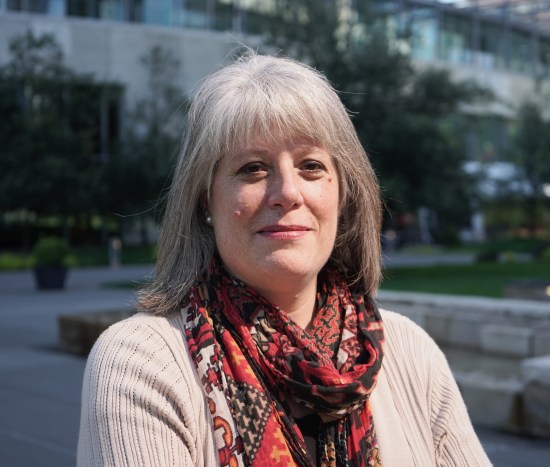
Guest Post: New Affordable Housing Dashboard Promotes Transparency and Accountability 

by Claudia Balducci

It’s no secret we have a dramatic housing shortage in King County. This has real human consequences, leaving too many with insecure housing and contributing to an unacceptably high level of homelessness. Many people and organizations – public and private – have been working hard to tackle the problem. We’ve seen increased investment at all levels of government and from private companies, partnerships to provide affordable housing near transit, new funding sources to support subsidized housing, zoning changes to allow more housing in some areas, new regional collaborations, and much more.

But the headlines keep coming: housing costs continue to rise and COVID times have brought job loss and the risk of housing loss for many more people than before. Many thousands of families spend more than half their income on housing, leaving them just one extra expense away from homelessness. Questions should be asked:  Are our efforts enough? What more must we do to ensure that people have access to the housing that they need and deserve? To understand the answers to those questions and to be sure our efforts are working, we needed to know more.

That’s why I’m excited to share that this week the Growth Management Planning Council’s Affordable Housing Committee, which I chair, released a Regional Affordable Housing Dashboard to track our county’s progress toward our goals. This new tool will help hold us all accountable to the bold and ambitious goals set by the Regional Affordable Housing Taskforce to build or preserve 44,000 affordable homes by 2024 and 244,000 homes by 2040.

The dashboard will help jurisdictions track their progress, arm housing advocates with data to make their cases, and provide the public with information to hold elected leaders accountable.

To our knowledge, no dashboard like this has ever been built. The dashboard will help jurisdictions track their respective progress, arm housing advocates with data to make their cases, and provide the public with information to hold elected leaders accountable. The dashboard’s “Jurisdictional Snapshots” section offers information about housing affordability and policy enactment by city. Additionally, a wide variety of affordable housing data— from housing policies to transit-oriented development and displacement—are available for download either as raw data or charts.

The tool itself illustrates the power, and challenge, of working together. The Affordable Housing Committee, which is composed of 19 elected, nonprofit and business leaders, provided an umbrella for the hard work it took to identify data sets, analyze the data and reach agreement on how to interpret the data.  This collaboration across our county is something to celebrate.

Here’s what the dashboard tells us already:

• King County lacks an adequate supply of affordable homes for the lowest-income renters who must compete for the limited number of rental homes affordable to them in the private market. Only 27 units are affordable and available for every 100 extremely low-income households (those making between 0 and 30 percent of Area Median Income, or AMI).

  • Black households are severely cost-burdened (defined as paying more than half of one’s salary for housing) at twice the rate of white households. Twenty-six percent of Black households are severely cost-burdened, as compared to 13 percent of white households.
  • Our region established a goal to build or preserve 44,000 homes affordable to households with incomes at or below 50 percent of AMI between 2019 and 2024. To meet this goal, we need to create 8,800 affordable units per year; but in 2019, only 1,595 affordable units were created.

Continue reading “Guest Post: New Affordable Housing Dashboard Promotes Transparency and Accountability “

Mercer Island Plans Homeless Ban, Shakeup at Homelessness Authority

Image via Wikimedia Commons

1. On Tuesday, the Mercer Island City Council is scheduled to vote on a proposal to ban all “camping” in the city, including sleeping unsheltered in public places and sheltering in a vehicle overnight. People who violate the ban—anyone who remains unsheltered in the city overnight—could be jailed for up to 90 days and fined $1,000 for each violation. Any vehicle that is used for overnight shelter, including RVs, could be impounded.

At a Mercer Island City Council meeting last month, Councilmember Jake Jacobson said the proposed ordinance “addresses public safety concerns [about] people who, but for this ordinance, would be staying in public properties for an infinite period of time and certainly are in a position to be of concern to people on the island. Fear—there is fear out there, and this is a way to deal with it.”

“And if people say they don’t want help and say, ‘I’m not going into shelter,'” Jacobson continued, “then they have made a decision to opt into the justice system.”

A federal appeals court ruling, Martin v. Boise, bars cities from passing outright bans on homelessness. Instead, it allows cities to ban sleeping outdoors unless there is no “available” shelter in the area—but the definition of “available” and in the area are very much open to interpretation.

The Mercer Island proposal gets around Boise by saying that police who encounter unsheltered people may direct them to shelter outside Mercer Island but on the Eastside, since Mercer Island does not have any homeless shelters. In practice, this means one of four shelters—one for women, one for men, one for families with children, and one for youth. In exchange for these services, Mercer Island would pay a consortium of Eastside service providers a total of $10,000 a year.

The bill defines “available” broadly, allowing police to enforce the law against people who can’t be admitted to their designated shelter because of the “voluntary actions of that person,” including :intoxication, drug use, unruly and/or assaultive behavior and like behaviors.” Under proposed ordinance, for example, if a homeless man was ineligible for the lone men’s shelter because he was exhibiting behavioral health symptoms that made him “unruly,” he could be seen as refusing shelter and jailed.

If people say they don’t want help and say, ‘I’m not going into shelter,’ then they have made a decision to opt into the justice system.”

Mercer Island Police Chief Ed Holmes assured the council that then police were interested in helping homeless people, not further marginalizing them. “Rest assured… we won’t take enforcement action until there’s repeated issues,” he said. But Sergeant Mike Seifer, who presented the legislation to the council, noted that it was aimed at addressing a specific group of people—”about four individuals that we deal with on a very serious or consistent basis” in public spaces, plus “about six or seven that are in vehicles that are consistently coming into contact with the officers.”

One way or another, the law would allow Mercer Island police to remove those ten or so people from the island, either by jailing them in another city, such as Issaquah, or by sending them to a shelter off the island. Councilmember Craig Reynolds, who cast the lone “no” vote against the ordinance on first reading, noted that the city’s jail contracts don’t come cheap—jailing a person costs the city about $200 a day, or up to $18,000 for the maximum 90-day sentence.

2. King County Councilmember Claudia Balducci  will replace her fellow Councilmember Reagan Dunn on the King County Regional Homelessness Authority’s governing board, as we reported exclusively on Twitter Friday.

In January, as PubliCola reported, governing board member Zaneta Reid took Dunn to task for positions he has taken on homelessness, including his opposition to the “Health Through Housing” sales tax proposal and his efforts to fund one-way bus tickets out of King County. “Mr. Dunn—Reagan—I have not seen one article that you have been compassionate or even cared about what we’re sitting at this table doing.  … How can I trust that you have the best interests of those that we are serving at forefront?” Seattle Mayor Jenny Durkan shut down the conversation before Dunn could answer. Continue reading “Mercer Island Plans Homeless Ban, Shakeup at Homelessness Authority”

Financial Crisis Forces Sound Transit to Consider Tough, Complicated Choices

By Erica C. Barnett

Over the past few months, Sound Transit, the regional agency tasked with building light rail to Ballard and West Seattle lines as well as extending the main light-rail “spine” to Everett and Tacoma, has been dealt a double blow of bad news. Last June, agency staff estimated that total revenues could fall short by $8 billion to $12 billion by 2041, the original end date of the Sound Transit 3 program voters approved in 2016. (More recent projections have adjusted that projection down slightly, to a range of $6.1 billion to $11.5 billion, but the numbers remain grim).

Then, earlier this month, Sound Transit announced that the cost to build the ST3 package, which includes elevated lines to West Seattle and Ballard, had increased by about $8 billion. The combination of the shortfall and cost inflation has created an “affordability gap” of about $11.5 billion.

Referring to the chart above, which shows a green line marked “ending balance” plummeting below zero beginning in 2029, Sound Transit board chair Kent Keel said last week, “I’ve never seen a chart where the budget dropped off the chart … so that’s pretty sobering for me.”

Keel made his comments during a board workshop on Sound Transit 3 “realignment” last Thursday, where the general outlines of two broad options emerged.

The first, which staff have dubbed the “expanded capacity” approach, would involve finding additional resources, such as grants, federal dollars, or new taxes, to boost Sound Transit’s revenues and make the newly inflated project possible. The second, called the “plan-required” approach, would involve some combination of delaying elements of the project, permanently reducing the scope of projects, and eliminating some projects altogether. According to a lengthy report on the options, this alternative would only come into play “in the event that new financial resources are not secured.”

Support PubliCola

If you’re reading this, we know you’re someone who appreciates deeply sourced breaking news, features, and analysis—along with guest columns from local opinion leaders, ongoing coverage of the kind of stories that get short shrift in mainstream media, and informed, incisive opinion writing about issues that matter.

We know there are a lot of publications competing for your dollars and attention, but PubliCola truly is different. We cover Seattle and King County on a budget that is funded entirely by reader contributions—no ads, no paywalls, ever.

Being fully independent means that we cover the stories we consider most interesting and newsworthy, based on our own news judgment and feedback from readers about what matters to them, not what advertisers or corporate funders want us to write about. It also means that we need your support. So if you get something out of this site, consider giving something back by kicking in a few dollars a month, or making a one-time contribution, to help us keep doing this work. If you prefer to Venmo or write a check, our Support page includes information about those options. Thank you for your ongoing readership and support.

/

Presented with these conflicting options, several board members insisted that the solution was doing “both.” Seattle Mayor Jenny Durkan, for example, said, “We have to be working hard at what the resources we have, but [we also] have to look at what are other potential sources of revenues,” she said, adding, “Every time we pull the covers over ourselves, we fail ourselves. We have to be thinking of the future.”

To that end, the options Sound Transit CEO Peter Rogoff presented last week included: New federal funding; direct grants from the state; increasing the agency’s debt capacity; raising the rental car tax rate; purchasing lower-cost debt through federal loan programs; and increasing fares.

Most of these options come with significant caveats and downsides. For example, Sound Transit is already the nation’s largest Transportation Infrastructure Finance and Innovation Act borrower, making it less likely the agency will be approved for additional debt. Rental-car tax revenues are currently negligible because of the COVID-related decline in travel. And any increase to the agency’s debt capacity would require either 60 percent voter approval or a change to the Washington State Constitution (and would lower the agency’s credit rating, resulting in higher interest payments.)

Finally, Rogoff said, the likelihood of more federal grant funding is dampened somewhat by the fact that Sound Transit already receives one-tenth of the Federal Transit Agency’s grant funding nationwide; “We would certainly love to get a higher percentage of that program, and we certainly would love to get an additional program funded, but there is certainly a limit to what one transit agency can call on from that program, or at least there has been to date,” Rogoff said on Thursday.

Complicating matters are some of the six factors the board will use to decide how to prioritize voter-approved projects in light of the budget gap. For Seattle residents, two factors could end up working against the city’s projects, including light rail to Ballard and West Seattle.

The first is whether a project serves to “complete the spine” of regional light rail, meaning the central line that will eventually extend from Tacoma to Everett.  This portion of the plan requires the construction of a second downtown transit tunnel, but Sound Transit does not consider that tunnel part of the “spine.” Instead, the tunnel—which will also connect downtown to West Seattle and Ballard—is considered a Seattle-only project for planning purposes. (Sound Transit spokesman Geoff Patrick said the tunnel is funded regionally, the costs split between the three “subareas” within the Sound Transit taxing district). The upshot could be that when Sound Transit gets around to picking projects to delay or cut, West Seattle and Ballard could be first in line because Seattle already got a “Seattle” project in the form of a second downtown tunnel.

The second issue is equity—defined, for Sound Transit’s purposes, as how well a project serves low-income people, people of color, and people with disabilities within a one-mile radius of a project, such as a station. Although many ST3 projects scored low on equity, some of the worst were in Seattle. They included the West Seattle line (which scored medium-low), the downtown tunnel (medium-low) and the Ballard extension (low). This could bump these projects lower down the priority list.

Some board members argued that the definition of “equity” Sound Transit uses is narrow and self-defeating, since stations tend to raise property values (and prompt gentrification) in their immediate vicinity, driving down their equity scores even if they serve people from less-affluent, more diverse parts of town. For example, an infill station at NE 130th Street, in board member Debora Juarez’s Seattle City Council district, ranked low on the list, despite the fact that the station will serve people commuting into the area from elsewhere.

“I have a real problem with the equity” metric, because of the way it narrowly defines a station’s service area, Juarez said. “The whole point of having these stations is to get people to work, to the hospital,” Juarez said, referring to the UW Medical Center hospital near the station. “Taking three buses to get to the north end is ridiculous.”

The board isn’t expected to adopt a realignment plan until next summer, at the soonest. Although board chair Keel began a blue-sky discussion last week about how Sound Transit could cut costs or raise money—beginning with the rental-car tax, which would raise a negligible amount—board member Claudia Balducci, a King County Council member from Bellevue, cautioned against coming up with lists of cuts or new taxes before a thorough discussion.

“When we did this ten-plus years ago”—in the wake of the 2008-2010 recession—”we had a very deeply researched piece of documentation that was given to us with a lot of backup behind it,” Balducci, who first joined the Sound Transit board as Bellevue mayor in 2020, said. “I feel like we’re at that early stage of maybe trying to provide high-level feedback about the parameters around additional study that we want to see. … It feels like we’re rushing toward a solution when we haven’t identified the problems.”


Sound Transit Keeps Punitive Fare Enforcement Options on the Table

Sound Transit board member Joe McDermott, legislating from his basement bunker

by Erica C. Barnett

A committee of the Sound Transit board passed a proposal to temporarily suspend citations for fare nonpayment while it conducts a “fare enforcement ambassador pilot” program, but rejected a proposal to decriminalize nonpayment completely after board chair Kent Keel argued that without criminal charges as a deterrent, some miscreants will avoid paying fares as a way to “get one over” on Sound Transit.

The proposed change was part of a motion from Sound Transit board member Joe McDermott directing Sound Transit CEO Peter Rogoff to recommend improvements to the agency’s fare enforcement policies by 2022. McDermott’s original motion would have said that the agency “must” recommend some of those changes, which also included lower fines and more warnings before fare officers issue a citation; Keel’s amendment changed the language to say that staff “should” include those recommendations in a list that may also include “alternate approaches resulting from community engagement and pilot program findings.”

Keel’s arguments came out of his own personal experience, but they also echoed an unusual memo Sound Transit CEO Peter Rogoff wrote at Keel’s request last week, laying out the “staff” case against taking fare nonpayment out of the criminal justice system. The memo reads, in part: “Most importantly, the staff is concerned with directives in section 3 that seek to predetermine the outcome of our community engagement and pilot program by dictating the measures staff “must” recommend to the Board at the conclusion of the process. Rather than specifying details that the future recommended policy must include, staff suggests in section 3 to replace “must” with “should consider.” 

This is extremely similar to the language Keel added to the suggesting close coordination between the Sound Transit board chair and the agency’s director—who has frequently raised objections to proposals that would reduce penalties for nonpayment—on a matter of contentious, hotly disputed policy.

Support PubliCola

If you’re reading this, we know you’re someone who appreciates deeply sourced breaking news, features, and analysis—along with guest columns from local opinion leaders, ongoing coverage of the kind of stories that get short shrift in mainstream media, and informed, incisive opinion writing about issues that matter. Earlier this month, we took a look back at just some of the work we’ve been able to do thanks to generous contributions from our readers, but those pieces represent just a handful of the hundreds of stories we’ve published this year.

We know there are a lot of publications competing for your dollars and attention, but PubliCola truly is different. We cover Seattle and King County on a budget that is funded entirely and exclusively by reader contributions—no ads, no paywalls, ever.

Being fully independent means that we cover the stories we consider most interesting and newsworthy, based on our own news judgment and feedback from readers about what matters to them, not what advertisers or corporate funders want us to write about. It also means that we need your support. So if you get something out of this site, consider giving something back by kicking in a few dollars a month, or making a one-time contribution, to help us keep doing this work. If you prefer to Venmo or write a check, our Support page includes information about those options. Thank you for your ongoing readership and support.

McDermott told PubliCola he saw the memo over the weekend, but was blindsided by Keel’s introduction of an amendment adopting Rogoff’s recommendations. “I wasn’t surprised to hear [Keel oppose decriminalization]. I understand that he believes civil infractions and possible court involvement are central elements of fare enforcement,” McDermott said yesterday, but “the language, and that it was written as an amendment—I didn’t know about that until today.”

Before the committee voted, Keel said that his own experience “as a young Black male” made him understand that a lot of people will try to “get over” on the system if there are no penalties for doing so. “There is a growing group of people that are just trying to get over,” he said, and other people who would ordinarily pay their fare see that behavior and follow suit. Judges and juries, he continued, could tell the difference between people who truly couldn’t afford to pay and those who are “just trying to get over.” Continue reading “Sound Transit Keeps Punitive Fare Enforcement Options on the Table”

King County Council Debates Bus Service Priorities and the Meaning of “Equity”

King County Council member Rod Dembowski, in pre-COVID times (flanked, L-R, by King County Executive Dow Constantine and council members Jeanne Kohl-Welles and Joe McDermott)

by Erica C. Barnett

The King County Council shelved a budget proposal by North Seattle council member Rod Dembowski yesterday that would have kept 47,000 hours of bus service inside Dembowski’s district after the Northgate light rail station opens next year. The proposal came in the form of a budget proviso, or restriction on spending, that would have withheld $5.4 million in funding for King County Metro unless the bus service went to North King County.

The hours will become available because King County Metro is shutting down its Route 41 bus line, which duplicates the light rail route. Instead of being redistributed throughout North Seattle to feed commuters to the new light rail line, as Dembowski proposed, those hours are likely to go to South King County, where King County Metro’s equity analysis shows the need is greatest.

Support PubliCola

PUBLICOLA NEEDS YOUR HELP.

This ad-free website is supported ENTIRELY by generous contributions from readers. At a time when real local news is more threatened than ever by declining revenues and the growing spread of misinformation, PublICola is a trusted source of breaking news, commentary, and deep dives on issues that matter.

If you enjoy the work we do here at PubliCola, please help us KEEP IT GOING by donating a few bucks a month or making a one-time donation via PayPal, Venmo (Erica-Barnett-7) or by check at P.O. Box 14328, Seattle, WA 98104. We’re truly grateful for your support.

Dembowski argued that Metro’s usual practice is to reallocate service freed up by light rail into nearby neighborhoods, to make light rail more accessible. “We’re doing this all around the county,” he said. While this has been the practice in the past, it is not required—and Metro’s new Mobility Framework, created in collaboration with community groups over the past year, calls for new or reallocated service hours to go into communities where the need is greatest, regardless of where they originated.

“Every time there’s service changes, if we start to put our thumb on the scale or try and use the budget as a tool to try to slip through something that carves out hours, it undercuts established policies and it also undercuts our commitment to equity,” council member Dave Upthegrove, who represents South King County, says. “It goes around our established processes and guidelines, and that’s a dangerous road to go down.”

The debate, which centered on the question of what constitutes equitable transit service during a time of sweeping budget cuts, concerned a small slice of Metro’s overall budget. But it was also a preview for the battles that will play out over the next year, as Metro adopts new service guidelines that will benefit the county’s most underserved communities while diverting funds from areas that are, on average, wealthier and whiter.

“Every time there’s service changes, if we start to put our thumb on the scale or try and use the budget as a tool to try to slip through something that carves out hours, it undercuts established policies and it also undercuts our commitment to equity.”—King County council member Dave Upthegrove

Last year, before a global pandemic forced massive cuts to bus service and decimated transit agency revenues, King County Metro adopted a new “mobility framework” to guide future transit service decisions with an eye toward equity and economic and racial justice. The framework, developed by Metro in collaboration with an Equity Cabinet made up of 23 community leaders from across the county, was a precursor for revised Metro service guidelines, which will replace existing guidelines that emphasize ridership and geographic distribution, including in “areas where low-income and minority populations are concentrated.” Among other changes, the new framework recommends concentrating new (and reallocated) service in areas with high density, a high proportion of low-income people, people of color, people with disabilities, and those with limited English skills. 

Community members who turned out to speak against Dembowski’s proposal talked about the challenges they face as bus riders in South King County. Najhan Bell, a student and retail worker, described a grueling daily routine: Up at 9 to catch a 10:15 bus that will take her, via two transfers, to her noon-to-9 shift at IKEA in Renton; leave work at 9 to do the same grueling commute in reverse; and land home at midnight to study for a few hours before getting up to do it all again. Bell said that if Metro was going to uphold its commitment to equity, it “must continue to put efforts into increasing service in areas in South King County so that people like me don’t have to spend most of their day waiting on a bus.”

The members of the Equity Cabinet, along with Transportation Choices Coalition, Disability Rights Washington, and other advocacy groups, wrote a joint letter to the council on Tuesday opposing Dembowski’s amendment.

Continue reading “King County Council Debates Bus Service Priorities and the Meaning of “Equity””