Category: race

Top Fire Official Helped Concoct Hoax Against Department, Targeting “Woke” Policies Like Vaccine Mandate


The former deputy fire chief and another firefighter created a fake “proud Latino” from South Park. Messages also show department staff trading vaccine conspiracy theories, using homophobic slurs, and providing packaged, “paint by numbers” stories to right-wing media.

By Erica C. Barnett

A Seattle Fire Department deputy chief, Tom Walsh, and a longtime firefighter, identified in Signal messages as Paul Patterson, concocted a ruse to deceive fire chief Harold Scoggins into changing the language the department uses to describe staffing shortages in an attempt to prove the department was too “woke,” then shopped the story to right-wing media. KTTH commentator Jason Rantz picked up the story and ran with it last year.

The messages were obtained through a citizen records request and are available on Muckrock.

Walsh and Patterson were among many SFD personnel who were furious over the COVID vaccine mandate that went into effect in 2021. Signal messages between Walsh and a half-dozen other fire department employees show the men endorsing conspiracy theories, making racially insensitive comments (such as suggesting that Scoggins can never be fired because he’s Black), and using the f-slur for gay men.

The story Walsh and Patterson peddled to Rantz involved a fabricated South Park resident, “Armando Paredes de Castillo,” a “proud Latino currently living in the South Park neighborhood”  who was offended by the term “brownout,” which fire departments use to describe short-staffing. Both Patterson and Walsh are white.

Patterson and Walsh spent weeks working on a letter to Scoggins, which they also released to Rantz, expressing outrage about the term and calling it racist against Latinos; the goal was to get Scoggins to direct staffers to stop using the term, which would supposedly demonstrate that the department was too “woke” and focused on the wrong things. The Signal messages suggest that Patterson was the primary author of the “Armando” emails, with assistance and editing from Walsh.

Neither Walsh nor Patterson responded to questions sent earlier this week.

Patterson went by the handle “L11Tillerman” in Walsh’s Signal account but was identified by name in several exchanges, including one from Walsh that read “Paul Patterson: The Harriett Tubman of SFD.” (In a message to a city IT staffer, Walsh referred to himself as a “modern-day Harriett Tubman,” apparently referring to his “path back” into the department despite being unvaccinated. The deputy fire chief and the IT staffer also discussed Bitcoin, “one-way tickets to South America,” and places they might move now that living in the US was untenable.)

“Armando” began writing to Scoggins in the spring of 2022, complaining in April, for instance, that “brownout” was a “discriminatory term” that was offensive to Latinos like himself. In a conversation with Patterson about an email from “Armando” in May, Walsh joked that the email was making him “tingle in my bathroom parts.”

On June 13, Scoggins distributed a memo saying they would stop using the term after “Concerns were raised that the term ‘brown out’ has negative connotations for communities of color. This change has been made to reaffirm SFD’s commitment and mission to serve all communities with dignity and respect.” In an exchange with Patterson that day, Walsh wrote, “And Armando’s memo just came out,” to which Patterson responded with an image (or GIF) of dancing monkeys. “Exactly,” Walsh responded.

Rantz reported on the memo the following day, touting it as an “EXCLUSIVE.” In his post, Rantz called Scoggins’ response “a wholly contrived issue that the chief is using to signal his wokeness. It’s as if he was under pressure to show his commitment to ‘equity’ but couldn’t think of any that are woke enough, so he made up an issue for the pats on the back he’ll no doubt receive.”

Rantz remained in contact with “Armando.” In August, Rantz filed a followup based on more info he’d received from “Armando,” reporting that “internal emails obtained by the Jason Rantz Show on KTTH show how the department kowtowed to the increasingly aggressive demands of one random Seattleite.”

In November, Rantz returned to the story yet again, this time with an email exchange with Patterson. (In a message to Walsh in October, Patterson wrote, “Jason asked for an interview, I declined but said I would give him a [sic] that was quotable. Feel free to edit or give your input”).

Walsh and Patterson debated how to talk to Rantz over Signal, and ultimately decided to deliver him anonymous quotes over email; in his piece, Rantz wrote that “Armando” “said he is an internal Seattle Fire source that wishes to stay anonymous.”

PubliCola is supported entirely by readers like you.
CLICK BELOW to become a one-time or monthly contributor.

Support PubliCola


Despite being fine with quoting a source who was anonymous even to him, Rantz’ followup excoriated Scoggins for failing to “vet” Castillo to determine that he was who he said he was—a Latino resident of South Park. (The city does not track down and verify the identity of every person who writes to them, which would cause obvious privacy and workload issues.) Patterson forwarded the story to Walsh, writing, “He didn’t hit a home run, but…”

The following February, after a lengthy back-and-forth on Signal to fine-tune the wording, “Armando” sent a followup to Scoggins and Harrell mocking the fire chief for falling for their “brownout” hoax. The point of the prank, they wrote, was to bring attention to Scoggins’ efforts to “divide us on vaccination, religion and race.”

Besides the vaccine mandate and the “brownout” language change, the letter complained about Mayor Bruce Harrell’s reaction when a firefighter wrote the mayor to complain about the mayor’s pro-choice statement when Roe v. Wade was overturned, which the firefighter called “virtue signaling, politically motivated nonsense.” Harrell’s office sent the email to the fire department’s HR department, which told the firefighter he should only communicate with the mayor through his chain of command.

The letter began, “I am the troll that single handily played into your woke ideology and manipulated you into the BROWN OUT cancel culture BS!”

You have shifted the paradigm and culture within the Seattle Fire Department from being a tight nit inclusive family to a poorly run business that has been run with tyranny & bias!

I highlighted the gaping tear in the fabric of common sense by arbitrarily saying I found the term “BROWN OUT” offensive. We are living in ridiculous time where anyone can “identify” as whatever they want and then throw a flag that the rest of society has to bend and lean into their irrational behavior and insist we reinvent language to accommodate made up feelings.

The purpose of this dog and pony show was to bring attention to couple of things that you have done that have ripped a gaping hole in the fabric of the Seattle Fire Department!

It went on for another 2,500 words in this vein.

Rantz wasn’t the only local right-wing commentator who ran with a packaged story from Walsh and Patterson. In February 2023, the pair shopped around a letter from a group of firefighters who claimed Scoggins had engaged in “presumed criminal activity” during the 2020 protests by, among other things, loaning stretchers to volunteer medics in the so-called Capitol Hill Autonomous Zone (CHAZ).

After failing to get traction with Rantz and considering both Brandi Kruse (a former FOX13 reporter who, according to Patterson, “owed [Walsh] one from the Chaz”) and local right-wing provocateur Katie Daviscourt, the two men decided to go with Post Millennial writer (and failed Seattle City Council candidate) Ari Hoffman.

In their texts, Walsh and Patterson described the story as a “paint by numbers” piece. In a separate email with another firefighter, Steve Collins, around the same time, Walsh wrote, “Hoffman’s not gonna have to do any work. I’ve done it for him.’

Hoffman ran with the story on March 15, posting it under the headline, “EXCLUSIVE: Seattle fire chief faces backlash after coordinating with BLM, Antifa rioters during CHAZ occupation.”

The Signal messages included in the records request include Signal messages from deputy fire chief Walsh from 2021 through 2023. Many of the conversations are about the vaccine mandate, and refer to right-wing conspiracy theories that have been thoroughly debunked.

In many of the texts, Walsh and other fire department employees complain that the department has been taken over by “woke” vaccine proponents. “These fucking people are ruining my beloved fire department,” Walsh wrote in November 2021. The following March, Walsh wrote that he had “zero fucks left to give”; two days later, he wrote, “The city was monstrously good in the way they prosecuted the mandate. Fuckers. Evil, but good,” then made a joke about Seattle restaurants requiring “a proof of Ukraine support card before they’ll serve you.”

Despite writing that he would likely lose his job over the mandate, Walsh remained in his position until June, when he retired after 27 years at SFD. As of last year, he was still complaining about the vaccine mandate, writing, “Cocksuckers. Every last one of them” in an exchange with Collins on September 7, 2023.

In a separate exchange with Walsh, Collins said he was being disciplined for calling someone a “f-g” on Facebook after the other person was “whooping up the mandate;” Collins complained that the person sent the exchange to HR. “Of COURSE he did,” Walsh wrote. “Seattle is such a ‘run and tell mom’ town.”

Walsh also speculated, in a conversation with a fire lieutenant, about whether someone was a “tranny” or a “chick.”

As of July 31, Patterson was still listed as an active firefighter in Seattle’s online wage database and in the city’s internal employee directory. Collins left the department in 2021 after refusing to get the vaccine, and we were unable to locate contact information for him; however, he was quoted in the Free Beacon, a right-wing website, in 2023, complaining that “woke tests are making it harder for the macho guys to get hired” at SFD.

The Seattle Fire Department responded to our questions with the following statement: “The Seattle Fire Department is unable to provide comment due to an ongoing investigation and pending litigation.”

Discrimination Complaints, High Turnover, and Disputes Over Strategy Roil SPD’s Communications Office

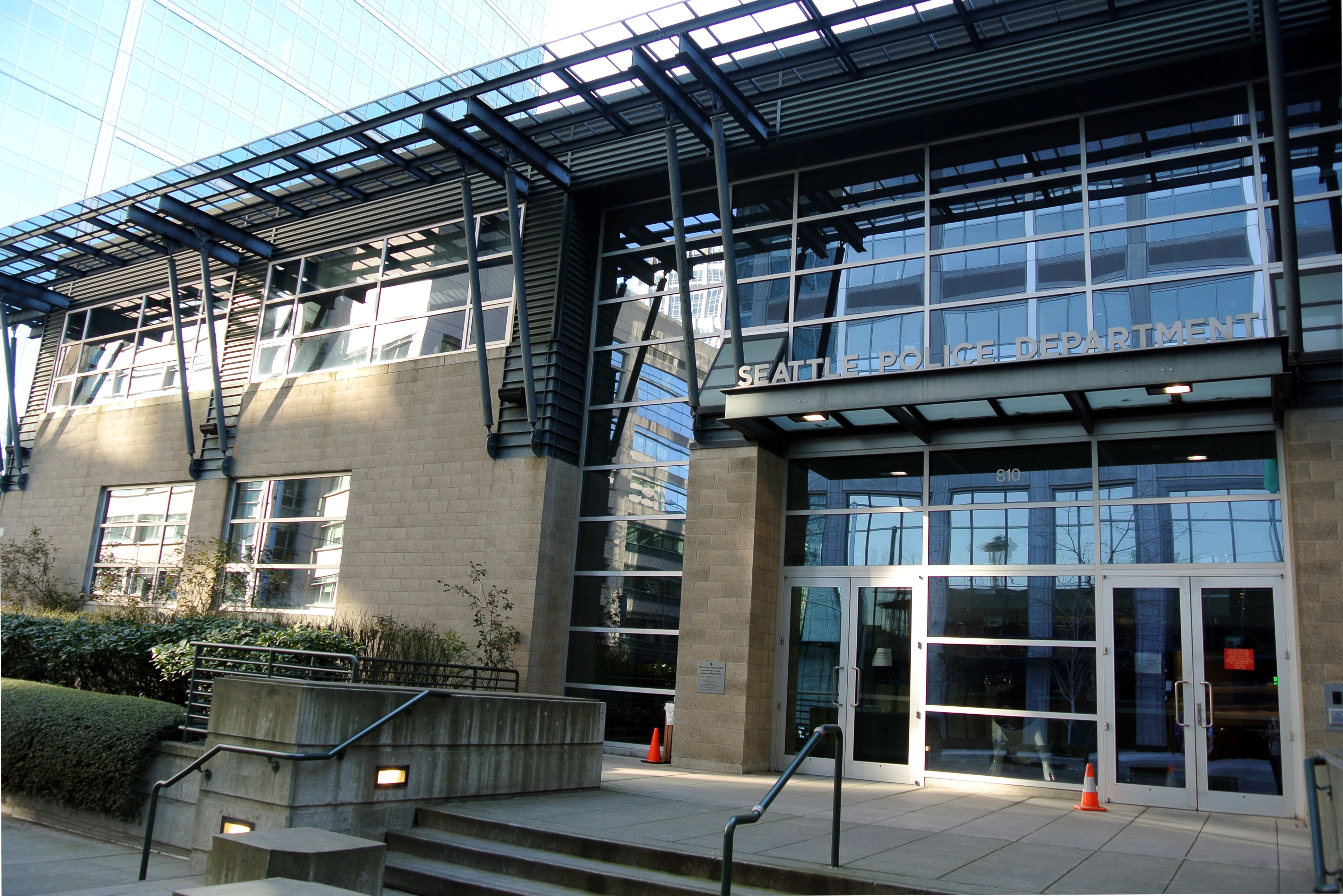
Seattle Police Department West Precinct; image by Adbar, Creative Commons license

By Erica C. Barnett

Tension between the head of the Seattle Police Department’s communications office, Lt. John O’Neil, and his staff boiled over last year, when a detective in the division, Valerie Carson, accused him of retaliation after he addressed an internal dispute by filing a police-misconduct complaint against her.

The complaint against O’Neil, by one of just 150 or so female officers in the department, came at a time when SPD is openly struggling to recruit and retain women (of 61 officers who left last year, nearly a quarter were women), and when female officers are speaking out about what they describe as an environment of casual misogyny, discrimination, and harassment.

In a recently released report commissioned by SPD, women in the department described it as a hyper-masculine, misogynistic environment—one in which male officers frequently characterize female officers as inherently inept, comment on their appearance, and gossip about their sexual history.

Carson and O’Neil had clashed previously, including once when she failed to respond to a text while volunteering for on-call duty from a scheduled vacation on the East Coast. But the conflict reached a breaking point when Carson turned down an interview with a TV station, something she said she ordinarily had discretion to do. After a junior officer, Judinna Gulpan, told Carson she didn’t feel prepared to do the interview herself, O’Neil ordered Gulpan to tell Carson she had to do it. Carson refused again, went home, and requested medical leave for her mental health.

An hour after Carson informed O’Neil she was taking leave, O’Neil filed a complaint against her with the Office of Police Accountability, alleging that Carson had violated SPD’s policy requiring officers to obey any lawful order. (O’Neil said he was already planning to file the complaint but had been busy all day and didn’t get around to it until late that afternoon).

  Citing reports from “a couple of lieutenants,” O’Neil continued, “One person said that she looked like she just came from a club, and it was a very short skirt and the shoes were inappropriate. … It was more party attire, stuff like that.” “I received complaints, which is what happened, and one of the main complainants was Chief [Adrian] Diaz—that’s who the main complainant was.”

Carson declined to speak on the record for this story. In an interview with SPD’s internal EEO investigator, Rebecca McKechnie, Carson said she declined the interview with FOX 13 News because she was stressed to the breaking point after being on call every day for months and “felt as though I could burst into tears at any moment.”

“I was not feeling well that day,” Carson told McKechnie. “I was physically, mentally and emotionally exhausted [by the] increasingly frustrating situation at work which I had already reached out to HR about. … I did not want to be at work, but I felt an obligation to stay because our office is very understaffed and because I was the most experienced person in the office.”

McKechnie also investigated O’Neil’s complaint against Carson. In his interview with McKechnie, O’Neil brought up a number of issues outside the scope of his official complaint, including whether Carson really had a legitimate mental health condition and the way she dressed.

O’Neil said Carson’s clothes were often “inappropriate,” and claimed that she “argued with me” over the requirement that she wear “business attire” when showing up to calls. “She is the face … on TV—we are the face of the department,” O’Neil said.

Citing reports from “a couple of lieutenants,” O’Neil continued, “One person said that she looked like she just came from a club, and it was a very short skirt and the shoes were inappropriate. … It was more party attire, stuff like that.”

“I received complaints, which is what happened, and one of the main complainants was Chief [Adrian] Diaz—that’s who the main complainant was.”

O’Neil acknowledged that he didn’t see the “club” gear Carson was allegedly wearing, and did not mention any evidence, such as TV footage, that would substantiate these secondhand claims. He also mentioned one instance—which is not in dispute—when Carson wore Birkenstocks and casual clothes when she showed up to an incident while off-duty.

PubliCola is supported entirely by readers like you.
CLICK BELOW to become a one-time or monthly contributor.

Support PubliCola


In his interview with McKechnie and a later email appealing OPA’s decision, O’Neil referred to Carson as “combative,” “angry,” and “hostile,” and claimed that her only “mental health condition” was being too emotional about a recent breakup. “Not a disability. A breakup,” he said.

Far from being a victim, O’Neil told investigators, Carson and two other white staffers were engaged in a racist effort to oust him and prevent him from receiving a promotion by filing baseless complaints and refusing to follow orders. (O’Neil is Black). The issues, he said, started as soon as Diaz appointed him to head the communications office in August 2022. Previously, O’Neil was in the department’s canine unit, where he was the subject of multiple EEO complaints that he called “frivolous.” (Prior to that, he was part of a nightlife safety team that, according to bar owners, cracked down on porn at gay bars on Capitol Hill.)

“This all has to do with me being a Black sergeant,” O’Neil told McKechnie.

Ultimately, both Carson’s complaint against O’Neil and O’Neil’s complaint against Carson fizzled. The OPA dismissed Carson’s complaint because they found his timeline credible, and dismissed her complaint. They recommended a “supervisor action”—effectively, a slap on the wrist—in O’Neil’s complaint against Carson, calling her refusal to do the interview “minor misconduct” at most.

In an email objecting to OPA’s decision in his case, O’Neil said investigators may not have considered the possibility that “racist undertones, biases, and mistreatment due to color” were the reason three white staffers were “giving me and [Gulpan] (Asian) a hard time and ultimately being insubordinate.” PubliCola was unable to reach Gulpan for comment.

OPA director Gino Betts said he couldn’t comment on specific cases.

In an email objecting to OPA’s decision in his case, O’Neil said investigators may not have considered the possibility that “racist undertones, biases, and mistreatment due to color” were the reason three white staffers were “giving me and [Gulpan] (Asian) a hard time and ultimately being insubordinate.” PubliCola was unable to reach Gulpan for comment.

O’Neil told PubliCola he believes the EEO complaint process is “being misused, and is absolutely being weaponized, and it’s terrible because it overshadows the true victims.”

“Valerie was given the opportunity to come back to the unit and then work and follow the rules and regulations, and she didn’t do it,” O’Neil said.

“I realize people are trying to throw out misogyny and all this stuff, which is nonsense when it comes to my unit,” O’Neil continued. “With this unit, it [was] three males, three females”—O’Neil, two other men, and three women, including O’Neil’s own supervisor, Amy Clancy, who supported his complaint against Carson.

“The issues were the same” with all his employees, O’Neil said. “It had to do with insubordination, chain of command, and things that were violations of policy.”

Clancy left the department in April.

After working on light duty in another division after her leave ended, Carson took an demotion in rank and is now a patrol officer.

And Gulpan, who had just started when Carson went on leave, recently filed her own EEO complaint against O’Neil. Earlier this year, she—like Carson—took a demotion in rank and now works on patrol.

O’Neil received his promotion from sergeant to lieutenant last year.

“We had structure and rank in the unit, but we also treated each other like people with thoughts, ideas, and feelings, and routinely challenged each others’ ideas to make sure we were doing the right thing,” said former communications office staffer Jonah Spangenthal-Lee, who left the office earlier this year.

The allegations of discrimination and bias occurred during a heated internal debate over the office’s communications strategy. According to O’Neil, Police Chief Diaz directed the office to put out more information on all platforms—adding video, posting on social media and SPD’s Blotter blog more often, and highlighting the work of individual officers with posts and videos. Internally, some staffers objected to this strategy, saying the office should consider things like newsworthiness and the overall impression the department was creating about the level and severity of crime in Seattle.

“That was absolutely, definitely part of the conflict—the chief wanted to go in a certain direction, [and] I got fought on that,” O’Neil told PubliCola. When I was asking them to do certain tasks, I was told no.”

“This is a paramilitary organization,” O’Neil continued, meaning that people down the chain of command can only say no in certain circumstances, such as a situation that endangers their life or requires them to break the law. “They had no right to tell me no, no matter how much they disagreed,” he said. “You have people with a little bit of time on [duty], and they want stuff their way. It just doesn’t work like that.”

Staffers who worked in the communications office before O’Neil arrived, however, said that even within SPD’s top-down structure, there was room for collaboration and debate. Media relations staffers helped shape SPD’s communications strategy and made suggestions or pushed back when they thought an idea might backfire with the public—like a tour of SPD’s north precinct, requested by then-councilmember Kshama Sawant, that gave critics a chance to confront police in front of reporters and at least one embarrassing story in the Stranger.

“We had structure and rank in the unit, but we also treated each other like people with thoughts, ideas, and feelings, and routinely challenged each others’ ideas to make sure we were doing the right thing,” said former communications office staffer Jonah Spangenthal-Lee, who left the office earlier this year.

Carson told SPD investigator McKechnie that O’Neil took the concept of disobeying orders to an extreme. “I was in the military for five years and no one has ever used the word ‘insubordination’ more than I’ve heard him use that word,” Carson said.

Clancy, O’Neil’s former supervisor, sent an email to OPA supporting O’Neil after the office issued its decision last March.

“I am very concerned that if there is no discipline related to Sgt O’Neil’s filed complaint, the insubordination will only continue in the office, making it nearly impossible for him to lead,” Clancy wrote. “He is an excellent leader, and has always deserved the support of his people. Currently we have three additional employees in the Unit who have been added recently and all of them support Sgt O’Neil and work with him incredibly well. We have harmony for the first time in a very long time.”

But that “harmony”—if it exists—came at a real cost to institutional knowledge and strategic leadership in the media relations division. Since O’Neil was hired, the division has seen turnover of more than 100 percent, including the loss of one staffer, Spangenthal-Lee, who had worked in the office for more than 12 years. The division, which once had gender parity, now has an all-male staff.

Amid Backlash Against Therapeutic Alternatives, Youth Jail Will Stay Open Past 2025 Target Date for Closure

Photo showing exterior of the Judge Patricia H. Clark Children and Family Justice Center
Photo via King County.

By Erica C. Barnett

King County will not achieve the goal of closing down the Patricia Clark Children and Family Justice Center—more commonly known as the youth jail—by 2025. Instead, King County Executive told PubliCola, the county will work toward implementing the six recommendations that came out of an advisory group that included impacted community members and advocates as well as representatives from the criminal legal system.

Constantine announced plans to shut down the youth detention center in the summer of 2020, amid local and nationwide protests against police violence and incarceration. At the time, about half the kids in detention were Black, compared to about 7 percent of King County’s population. Three years and a supposed nationwide racial reckoning later, about half the kids in detention are Black.

Since then, though, the population in the youth jail has bounced back to its pre-pandemic levels, even as the Department of Adult and Juvenile Detention has struggled to hire guards and other staff—a situation that has resulted in worsening conditions for the 40 or so kids confined at he the detention center on a typical day. Constantine began suggesting that 2025 was no longer a firm deadline in 2022, when he told PubliCola that hitting that closure date would depend on how quickly the county could address backlogs in the juvenile justice system and on what recommendations came out of an advisory board charged with crafting alternatives to youth detention.

There is no new target date for closing the youth jail. In an interview with PubliCola, Constantine said “the date will be when we can get all of the other pieces in place to allow us to close that [facility] and to repurpose it.” Specifically, his plan would start by focusing on areas where the advisory broad reached a general consensus, like establishing a series of “community care homes” where kids could access services like school reentry programs and behavioral health care—”the kinds of services that would help a young person successfully rejoin the community and not slip back into the criminal legal system,” Constantine said.

Jimmy Hung, the director of the King County Prosecuting Attorney’s juvenile division, said the recommendations the advisory committee came up with are “very thoughtful, they’re very ambitious, and they’re going to require a massive amount of public funding.” Other jurisdictions across the country have successfully opened respite centers as an alternative to jail, Hung said, “so I think it’s commendable that the county executive wants to invest in that way.”

“Now we’re in a moment where people, including people across the street at City Hall, are calling for more detention and more of the traditional way of doing things. And I think that we have to resist that.”—King County Executive Dow Constantine

Funding for the community homes would have to come mostly out of the county’s general fund, which is facing a deficit of around $50 million this year. (Many county services, like King County Metro and human services, are levy-funded, but the general fund pays for a number of mandatory county services, including the courts, the sheriff’s office, and Public Health). Not only will Constantine’s office need to come up with funding for the new facilities, which will cost an unknown amount of money, but convince the county council to fund them instead of other competing priorities.

“The county council, I’m pretty confident, will be willing to embrace the opportunity to move forward, step by step, on creating a different model,” Constantine said, “but people have to be able to stand up to pressure to … just go back to the old ways, to ‘lock them up and throw away the key,’ to the days of mass incarceration.”

King County Council budget committee Girmay Zahilay, a longtime critic of youth incarceration, said the change in tone since 2020 and the county’s budget deficit had already made it clear to him that the county wouldn’t close the youth jail next year. The same problems will make it challenging to start opening community care homes or the respite center in the immediate future, even if proponents of both alternatives can push past political opposition, he said. “I don’t think that large unanticipated expenditures from the general fund are realistic right now, unless there’s some kind of state intervention,” Zahilay said. For example, state Sen. Jamie Pedersen has introduced a bill that would increase the 1 percent cap on property tax rate increases to 3 percent.

Hung said he could envision a scenario where “if we get those recommendations implemented and they’re proving to be effective in lowering juvenile crime, especially violent crime, and we can continue to reduce the use of formal secure detention, I think there could be a gradual shift in the use of detention.” Specifically, he said, “I think [standing up] community care homes is a strategy where, if we had what [the advisory board is] describing, we could drastically lower our detention population right now.”

Seattle Mayor Bruce Harrell and a majority of the city council have consistently signaled a desire to move toward arresting (and, in many cases, prosecuting) drug users and other low-level offenders; while youth incarceration wasn’t a specific issue on the campaign trail, the last several city elections have signaled a hard turn away from the restorative approaches that were briefly in vogue in the immediate aftermath of 2020.

During the pandemic, the number of kids incarcerated in the juvenile detention center dropped into the single digits, creating what Hung calls “some hope, but it might have been displaced,” that the number could continue dropping to zero. “The wheels are falling off society and the kids are suffering, and we’re seeing the results of that now in our juvenile justice system. Until we get back to where we were pre-pandemic, I think it’s hard to imagine us seriously talking about not having a detention facility.”

“The fact is that there was a moment there where people were willing to see things with fresh eyes and understand that what we’re doing was not working. And I was certainly willing to see that,” Constantine said. “Now we’re in a moment where people, including people across the street at City Hall, are calling for more detention and more of the traditional way of doing things. And I think that we have to resist that; we have to have the strength to stand up and say, no, this doesn’t produce the best results. And that system is disproportionately impacting people based on race.”

Of the six recommendations that came out of the advisory group, the most controversial among group members was a proposal to essentially replace the jail with a 24-hour “respite and receiving center” where kids accused of crimes can go immediately post-arrest and either be released immediately or stay on a long- or short-term basis, depending on the offense they’re accused of and their needs. For example, some kids might lack a safe home to go to when they’re released; others may, in the view of prosecutors, pose a risk to other people or be at risk of retaliation themselves.

“I’ve been doing this long enough to know that you can’t possibly have enough information after, let’s say, a homicide occurs where you feel completely comfortable—not just for the safety of the public, but for the young person themselves—that you can place them in a non-secure facility,” Hung said. “You don’t know if that young person continues to pose a risk to the community, and you don’t know if they’ve done something that now puts them at risk of retaliation.”

According to the advisory committee’s report, some members raised concerns about young people getting out of respite centers and immediately committing additional crimes; additionally, there wasn’t a clear consensus about how secure the respite facilities would need to be. Some jurisdictions have adopted a dual model where some kids are locked inside and others are allowed more freedom to come and go.

“I think the controversy will be around if a young person poses a serious threat to community safety—if, for example, they’ve been charged with murder—will that person be able to just walk free in a couple of days,” Zahilay said. On the flip side, he said, “If we’re going to build another facility that is a secure detention facility, we have to be clear on what we’re changing to make it different from the current” youth jail.

Constantine, echoing Hung, said he believes there will continue to be a need for secure detention—traditional jail—for kids accused of the most serious crimes. Currently, about 10 of the 40 or so juvenile jail inmates are youth who have been charged as adults but are too young to transfer to the downtown jail; their cases are generally more complicated than young people jailed for misdemeanors and they tend to stay in the youth jail much longer than other kids.

“Just because some people have to be in secure detention, in something looks very much like adult detention, doesn’t mean that everybody accused of a crime needs to be,” Constantine said. “So let’s work on the problem we can solve now.”

SPD Chief Says He Doesn’t Know How Fake Tombstone for Police Shooting Victim Ended Up On Display In Precinct Break Room

Seattle Police Chief Adrian Diaz

By Erica C. Barnett

Seattle Police Chief Adrian Diaz appeared before the Community Police Commission Wednesday morning to address a body-worn video showing a fake tombstone with the name of Damarius Butts, who was killed by four SPD officers in 2017, displayed on a shelf above a microwave in a break room at the department’s East Precinct on Capitol Hill. The video also shows large Trump 2020 flag hanging on a back wall of the room.

The Office of Police Accountability (OPA) is investigating the incident.

During his comments, Diaz did not directly apologize for the display, saying only that he “acknowledged the impacts that we created after George Floyd’s murder, and I apologize for those impacts—those impacts that we’re here discussing today.” Diaz added that since 2021, when the video was taken, the department has taken a number of steps to create a “healthy environment,” including a relational policing program called Before the Badge and trainings in a system called Outward Mindset. He also noted that officers were under a great deal of stress during and after the 2020 protests.

“Over the last three years we’ve lost 575-plus officers, [so] our personnel since that time has changed. We are changing,” Diaz said. “We continue to move this department forward. But change takes time.”

“I want to know why this happened. I want to know why it was allowed to continue. I want to know if anyone has been held accountable. I want to know what is being done so it never happens again. I want to know why killing my son and getting away with with it wasn’t enough. I want answers and so far, I haven’t heard any.”—Stephanie Butts, mother of police shooting victim Damarius Butts

In response to questions from CPC member Adrian Leavitt, who is also the attorney for Butts’ surviving family, Diaz said he had no information about where the tombstone came from, how it ended up at the East Precinct, who propped it up on the shelf, how many weeks or months it sat there, or how many people saw it before it was finally removed.

“As far as some of the other details, as far as officers who saw it, who displayed and who put it up, those are stuff that I think OPA will hopefully be able to kind of unwind and be able to articulate what happened,” Diaz said. “We had a significant amount of officers that left the department, many officers from the East Precinct specifically, and so we still don’t know if some of those officers that left the department were a part of that.”

Butts’ mother, Stephanie Butts, said she was shocked when she learned SPD officers were “so callous that they were heating up food in a microwave below my son’s fake tombstone and didn’t see anything wrong with that. … I want to know why this happened. I want to know why it was allowed to continue. I want to know if anyone has been held accountable. I want to know what is being done so it never happens again. I want to know why killing my son and getting away with with it wasn’t enough. I want answers and so far, I haven’t heard any.”

In an official statement released last week, SPD suggested the tombstone may have placed outside the precinct by a protester, and referred to the shelf in the break room as a “storage shelf” where SPD stored items “until they were discarded.” The video does not show any other items in a similar state of “storage.”

According to Leavitt, the tombstone was taken from a nearby memorial for victims of police violence that featured many similar tombstones representing people killed by police.

Diaz said efforts to improve the culture at SPD have already started bearing fruit. “In a short time, our OPA complaints have seen a drastic reduction compared to four years ago and our use of force has seen a drastic reduction, a 40 percent reduction,” Diaz said. “And up until yesterday, we had not had an officer involved shooting involving a person in 13 and a half months.” On Tuesday, police shot a man in downtown who was suspected of stabbing another person a few blocks away. That shooting is currently under internal investigation, according to the department.


Former City Employee Sues for “Reverse Racism,” Rufo Tells Tall Tales to Bellevue Audience

1. A former Seattle Human Services Department employee is suing the city for alleged discrimination based on his race (white) and his gender (male).

The lawsuit, filed by a California-based libertarian group called the Pacific Legal Foundation on behalf of ex-city employee Joshua Diemert, claims that HSD failed to promote Diemert and provide him with the significant raises he was “promised” while promoting less-qualified women of color. The suit also alleges that Diemert’s immediate supervisor, a woman of color, engaged in “unrelenting coercion and racial harassment,” forcing him to quit his job instead of accommodating an unspecified medical condition that Diemert claims was exacerbated by people constantly talking about white privilege around him.

Many of the examples of “racial harassment” listed in the lawsuit appear to involve Diemert inserting himself into other people’s conversations to make comments his colleagues perceived as racist, such as an incident where he claims he was chastised for “joining” his coworkers’ lunchroom conversations about white privilege, which occurred while he was “trying to cook his food.” In another example, Diemert claims a supervisor “berated” him for “attempting to correct [a coworker’s] discriminatory behavior toward a white applicant.” In a third, he accuses the city of forcing employees to participate in “critical race theory” during a training at El Centro De La Raza, where his comments led a coworker to call him an “asshole” in an email to another person.

In addition to $300,000 in damages, the lawsuit asks the court to find that the city’s anti-racist policies violate the 14th Amendment (equal protection) and the 1964 Civil Rights Act (protection from discrimination on the basis of race or sex). The suit also claims that the city’s Race and Social Justice Initiative “aims to end American culture because it was created by ‘white, wealthy, Christian, cis-gender, straight, non-disabled men coming from Europe who wanted to protect their place within hierarchy and empire.'” That quote comes from a city document called “Building a Relational Culture,” which says nothing about “ending American culture,” but does provide a broad framework for undoing structural racism at the city—the actual project of RSJI.

Diemert’s lawsuit, which has gotten some coverage on FOX and various right-wing websites, is one of many recent lawsuits attempting to reframe racism as something that primarily happens to white people. The Pacific Legal Foundation is responsible for many of these anti-affirmative action claims, including a lawsuit challenging Women and Minority-Owned Business (WMBE) contracting goals in California; a case accusing the University of Minnesota of discriminating against men when it cut the men’s gymnastics program; and a case alleging that elite public schools in Boston discriminate against white and Asian kids.

The city’s Human Services Department did not respond to a request for comment Wednesday, and a spokesman for the City Attorney’s Office said the city has not been served with the lawsuit yet and could not comment.

2. “Critical race theory,” unsurprisingly, was also among the topics professional troll Chris Rufo brought up at a talk last month to support the Washington Policy Center. (PubliCola reviewed a recording of the event). If you aren’t familiar with WPC, it’s the libertarian think tank that was responsible for all those confusing pro-capitalism billboards you saw around town a couple years ago. (“Free markets destroy climate change,” one read, with a Tesla logo as the “T” in “climate.”) The event, which was emceed by conservative podcaster and Project 42 “brand ambassador” Brandi Kruse, also featured former secretary of state Mike Pompeo.

Rufo, a onetime Seattle City Council candidate who spun off a job at the right-wing Discovery Institute into a career as the nation’s leading purveyor of disinformation about CRT, has since turned his attention to vilifying trans women, drag queens, and LGBTQ+ people in general. Rufo’s work is part of nationwide efforts to drive LGBTQ+ people out of public life through both legal methods—such as Florida’s notorious “Don’t Say Gay” law—and violence, including increasingly violent protests against LGBTQ+ events, including drag shows).

Kids are not being taught “fisting” in schools—but, as Rufo noted, it’s the kind of “salacious” story that gets attention from people like Tucker Carlson.

Speaking to a group of “young professionals,” Rufo bragged about his efforts to spur people to act by speaking to their emotions, even when that means ignoring “data” and facts. “I had been doing this campaign on critical race theory, doing the reports, working with the Trump White House,” Rufo said. “And all of a sudden I see something really incredible happen. I started seeing all these videos of parents at school board meetings going nuts. And that’s what you want to see.”

As an example, Rufo continued, he was pushing out stories about “the teachers union—they’re the villains, right?”—he paused for boos—”which was promoting a guide book, a kind of recipe book that was in cartoon format designed for kids, that had a guide to BDSM, sadomasochism, [and] fisting.” In reality, the “cartoon guide” is a document aimed at teenagers seeking information about queer sex, produced by a Toronto Planned Parenthood affiliate and the United Way of Greater Toronto that was linked, among many other documents, on the website of an internal NEA LGBTA+ caucus. Kids are not being taught “fisting” in schools—but, as Rufo noted, it’s the kind of “salacious” story that gets attention from people like Tucker Carlson.

Rufo also claimed a victory closer to home: The reversal of calls to “defund the police” by members of the Seattle City Council. In taking credit for this change, he claimed that Nordstrom’s flagship store in downtown Seattle, he said was “burned down” to “ashes.”  Nordstrom, which is located just a few miles from the Bellevue hotel where Rufo was speaking, remains fully intact and was bustling with holiday shoppers earlier this week.

Homelessness Authority Board Signs Off On Request to Double Agency’s Budget; Fire Chief Responds to Letter Demanding Action on Hate Crimes

KCRHA KCRHA budget presentation graphic reading "Basis for 2023 Incremental Budget Requests"
Graphic from KCRHA budget presentation

1. The King County Regional Homelessness Authority’s implementation board, which has the power to amend and approve or reject the agency’s budgets, unanimously signed off on a budget proposal that would nearly double the size of the agency on Tuesday.

The additional $90 million, which would come from a combination of the Seattle and King County budgets, would pay for 400 new shelter and emergency  housing beds, raises for social service workers, day centers, and safe spots for people living in vehicles, among other new expenditures. Most of the new beds (345) would be emergency housing, which a presentation by the authority described as “a dignified place for people to wait for permanent housing.”

The unanimous vote means that after the budget is approved by the agency’s governing board—a group made up mostly of elected officials that is charged with approving the implementation board’s decision—it will be up to city and county elected officials to decide whether to fully fund the request or eliminate some items, as the city did last year.

“This isn’t necessarily what we should expect to see come back to us,” KCRHA CEO Marc Dones told the board on Tuesday. “This budget will be taken up and looked at in relationship to all of the funding priorities that the city and county have.”

For the first time on Tuesday, Dones offered a three-tiered prioritization of the agency’s new funding requests, which could guide city and county officials when they’re deciding what to fund. At the top: Safe parking spaces for up to 130 vehicles ($5 million); an increase in nonprofit homeless service providers’ pay ($15.4 million); and a $1.5 million grant fund for organizations focused on “centering [the] lived experience” of people who have experienced homelessness firsthand.

In the second tier: $750,000 to expand severe-weather shelters; $7.2 million to hire more agency staff; and $20 million for a new “high-acuity shelter” serving up to 55 people with significant behavioral and physical health needs. These new shelter beds would be in addition to the 40-bed high-needs shelter King County is funding separately as part of its ever-expanding shelter complex in SoDo.

For the first time, Dones offered a three-tiered prioritization of the agency’s new funding requests. At the top: Safe parking spaces for up to 130 vehicles ($5 million); an increase in nonprofit homeless service providers’ pay ($15.4 million); and a $1.5 million grant fund for organizations focused on “centering [the] lived experience” of people who have experienced homelessness firsthand.

The rest of the budget adds, including $20 million for emergency housing, $15 million for daytime gathering spaces, and funding to assist smaller and BIPOC-led providers, are now in tier 3. The city and county will both get their own crack at the budget this fall; last year, the city council made significant cuts to the agency’s proposal, declining to fully fund the high-acuity shelter and asking Dones to come back with details about a “peer navigator” program that the agency subsequently launched using one-time private donations.

Dones has been a vocal advocate for “emergency housing”—a type of bridge housing between shelter and permanent housing that could include single-family houses, converted hotels, or —and a slide deck they presented at Tuesday’s meeting suggested that this housing type has an off-the-charts 95 percent rate of exits to permanent housing and 5 percent rate of return to homelessness, meaning that almost everyone who enters emergency housing is permanently housed and does not become homeless again. We have asked the KCRHA how it came up with these numbers and will update this post when we hear back.

2. Last week, Seattle Fire Department chief Harold Scoggins responded to a letter from members of the the city’s race and social justice network demanding action on hate crimes and racism inside the fire department after two incidents in which firefighters found nooses hanging in their stations. The initial letter asked Scoggins for regular updates on the investigation into the incidents; a restorative justice process for fire department staff; and the immediate termination of the people responsible for placing the nooses in the two fire stations, among other demands.

In his letter, Scoggins laid out a list of actions the department has taken over the past few years to train and educate staff about racial bias, including sessions on implicit bias, cultural competency, and microaggressions, but did not commit to any of the specific actions the RSJ teams demanded in their initial letter to the department.

“We are committed to pursuing the appropriate level of discipline depending on the outcome of an investigation,” Scoggins wrote, adding that the department had closed its investigation into the first noose incident, at Fire Station 17 in the University District because they “could not identify the responsible party.” The investigation into the more recent incident, at Fire Station 24 in North Seattle, is still ongoing, Scoggins wrote.