Tag: pedestrian safety

Bill to Allow More Police Pursuits Would Sunset in 2025

By Ryan Packer

Two years ago, as part of a slate of police reform bills, state legislators passed a law barring police officers from pursuing people who fail to pull over when an officer directs them to do so. The only exceptions were if the officer had probable cause to believe the person had committed a violent or sexual crime, or when the officer had reasonable suspicion—a lower standard—to believe they were driving under the influence of drugs or alcohol.

On Thursday, the House’s House Community Safety, Justice, and Reentry committee advanced an amended version of House Bill 1363, which would allow pursuits under the lower reasonable suspicion standard for a broad number of offenses, including any violent offense, but would not allow police pursuits for any non-violent property crimes. Organizations like the Washington Association of Sheriffs and Police Chiefs have blamed the change in the law has been blamed for a spike in property thefts statewide, particularly stolen vehicles. Law enforcement agencies across the state had been putting their weight behind the original version of the bill, sponsored by Rep. Alicia Rule (D-42, Blaine), that would have allowed pursuits for all criminal offenses. 

Committee chair Roger Goodman (D-45, Redmond) put forward the new version of the bill, which he said is intended to “limit the scope of this bill, but also to keep the conversation going.” The bill includes a 2025 expiration date; if the legislature doesn’t adopt new pursuit rules before then, the rules for pursuits would automatically revert to the 2021 law. 

Only one member of the committee, Rep. Darya Farivar (D-46, Seattle), voted against advancing HB 1363, saying she wants to make long-term changes to the current law this year. While 1363 moves forward on the House side, Democrats in the state senate are advancing a proposal to take a broader look at pursuits.

“I’ve never seen, in my 31 years of law enforcement, the state and the condition of our state when it comes to open lawlessness and complete disregard for our laws that keep the community safe.”—Kent Police Chief Rafael Padilla

When they passed police pursuit law in 2021 reform, legislators said they wanted to reduce the number of high-speed police pursuits because of the risk they posed to the public, including pedestrians. According to an analysis by retired University of Washington researcher Dr. Martina Morris, just three people (all bystanders) have been killed as the result of police pursuits since the new law went into effect in July 2021, compared to nine in a comparable period immediately pre-reform.

Advocates for changing the law, including multiple mayors (though not Bruce Harrell), the Association of Washington Cities (AWC), and the Washington Association of Sheriffs and Police Chiefs, said the new law resulted in significant numbers of people taking advantage of it to flee police.

Many cities (though not Seattle) included the issue at the top of their official legislative agenda for 2023. “In 2021, AWC was an engaged supporter on many of the police reforms that the Legislature adopted, but we understand that law enforcement is complex and that sometimes legislation needs revising when the impacts become clearer,” the AWC more than 200 local elected officials said in a letter to legislators this week. ”In the case of the limits adopted on police pursuits, we think revisions are necessary to improve public safety outcomes in our communities.”

“I’ve never seen, in my 31 years of law enforcement, the state and the condition of our state when it comes to open lawlessness and complete disregard for our laws that keep the community safe,” Kent Police Chief Rafael Padilla told the House Community Safety, Justice, & Reentry committee last month.

Police accountability advocates argue that rolling back the law would erase progress toward reform. “From our view, we’ve got something that’s working. It’s not fun, it’s not comfortable, we have a lot of work to do as a society to figure this stuff out. This bill absolutely does not represent what that positive change and momentum needs to be,” Kurtis Robinson, president of the Spokane NAACP speaking on behalf of the Washington Coalition for Police Accountability, told that committee.

Morris’ analysis found that the law has been effective. (An earlier version of the analysis included two deaths caused by a driver who believed he was being pursued. Morris removed that incident during a review of all the pursuit incidents after its inclusion was questioned.)

“Estimates are that on the order of 30 percent of all pursuits end in an accident. When I’m talking about the fatalities, these were the key thing we were interested in, but it’s the tip of the iceberg in terms of the damage that’s caused by pursuits.”—Retired UW researcher Dr. Martina Morris

Morris told PubliCola the benefits of reducing police pursuits go beyond lives saved. “There are public safety risks from pursuits. Fatalities are just one of the parts of the collateral damage with these vehicle pursuits,” she said. “There are also injuries, property damage, and estimates are that on the order of 30 percent of all pursuits end in an accident. When I’m talking about the fatalities, these were the key thing we were interested in, but it’s the tip of the iceberg in terms of the damage that’s caused by pursuits.”

The data primarily comes from the website fatalencounters.org, a database created by researchers at the University of Southern California to track all types of deaths occurring nationwide where police officers are involved. Individual police departments are not required to provide information on these events on their own, so the information has to be obtained through media reports.

An alternative to HB 1363 is currently working its way through the state senate. Senate Bill 5533, sponsored by former Washington State Trooper John Lovick (D-44, Lake Stevens) would keep current state law in place until 2024 while a work group within the state’s Criminal Justice Training Commission, comes up with a model pursuit policy for the state to adopt, and do so by fall of 2024. This proposed model policy would outline exactly when police should be able to pursue suspects, and would be created in coordination with representatives of the state’s law enforcement groups.

Any model policy would likely only be binding on police departments who wanted to adopt a more loose pursuit policy; cities like Seattle, which had more stringent requirements on when officers could pursue, would be able to leave those policies in place, leaving open the possibility that some departments could decide to stick with current state law.

But the bill creating a model policy has come under fire by some Republicans, like Sen. John Braun (R-20, Centralia) who said it would be “letting legislative Democrats off the hook” in an op-ed in the Seattle Times last week. Braun is pushing for an immediate fix.

But waiting would also provide additional time for Washington to see how the current law is impacting public safety— whether Dr. Morris’s conclusions continue to bear out. “I can’t create more time for this law to have been in place,” she said of the relatively small sample size at the heart of her study. “But the legislature can.”
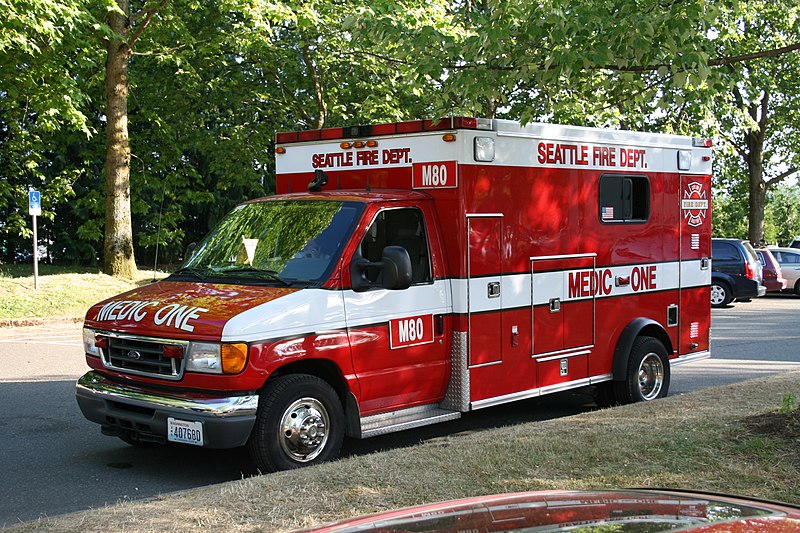
 

“Overdose Patients Can Become Violent”: Fire and Police Respond to Questions About Pedestrian Death

File:Seattle fire department medic 80.jpg
Atomic Taco, CC BY-SA 2.0, via Wikimedia Commons

By Erica C. Barnett

On Wednesday, the Seattle Police and Fire Departments responded to questions from the Community Police Commission about some of the circumstances that may have contributed to the death of Jaahnavi Kandula, a 23-year-old pedestrian who was killed in a marked crosswalk by SPD Officer Kevin Dave. Dave was driving to join Seattle Fire Department EMTs at a suspected overdose in South Lake Union. According to the response from Seattle Fire Chief Harold Scoggins, Seattle Fire Department policy requires police to be present when SFD responds to overdoses, because “overdose patients can become violent during treatment to reverse the overdose.”

The CPC asked the Fire Department to explain the reason it requires police officers to be present when Fire responds to overdose calls, posing four questions about the policy, how it came about, and “What percentage of drug overdose calls prior to the implementation of this policy included compromised safety, assaults, and/or injuries to SFD personnel related to reversing the effects of an overdose?”

In his response, Seattle Fire Chief Harold Scoggins said that the requirement “goes back at least 20 years and is designed to provide scene safety for firefighters and paramedics as overdose patients can become violent during treatment to reverse the overdose.” He did not answer the CPC’s question about how common it is for people coming out of overdoses to be violent, saying only that “[e]ncountering combative patients or bystanders on emergency responses has unfortunately become a reality for firefighters and paramedics.”

Narcan (or naloxone), the widely available overdose reversal drug, is used daily by non-emergency responders, including drug users themselves, and other public employees are trained to use it in the absence of paramedics or any armed response. In 2019,  then-Washington state health officer Kathy Lofy signed a “standing order” that made Narcan available over the counter without a prescription to any person who wants it, calling it a “very safe,” life-saving medication.

“When weighing the decision to respond using emergency driving, officers must consider if the incident is life threatening, road conditions, vehicle and pedestrian traffic, weather, speed, lighting, and their own driving abilities.”—Police Chief Adrian Diaz

In his letter, Scoggins said SFD has developed a “new method for tracking assaults and threatening behavior experienced by firefighters in the field,” in general, and has begun reporting this information. PubliCola has asked SFD for this data and will update this post with additional information when we receive it.

Seattle Police Chief Adrian Diaz also responded to the CPC’s questions. After describing the training officers receive in “emergency driving”—driving under emergency circumstances, such as a high-priority call where someone’s life is at risk—Diaz said officers are justified in taking “risks [that] “can result in severe consequences for the public and the officer. … When weighing the decision to respond using emergency driving…. [o]fficers must consider if the incident is life threatening, road conditions, vehicle and pedestrian traffic, weather, speed, lighting, and their own driving abilities.”

Diaz said the fact that the overdose was a Priority 1 call would not, in itself, necessitate emergency driving. “The priority level is a factor to consider but is not generally controlling,” Diaz wrote. “While many Priority 1 calls would warrant emergency driving under our current policy and training, not all do and officers are expected to consider the totality of the circumstances.”

PubliCola has filed a records request the audio from the initial 911 call; SPD categorically denied a separate request for all recorded audio related to the Kandula’s death, citing their ongoing investigation into the incident.

In a conversation with PubliCola last week, SPD Chief Adrian Diaz noted that Dave is a licensed EMT who was headed to the scene of a medical emergency, implying that he was on the way to respond to the reported overdose, not to provide security for the Fire Department. On February 6, the head of the Seattle Fire Fighters Union, Kenny Stuart, expressed frustration about SPD officers getting trained as EMTs and responding to medical emergencies like overdoses directly, saying this was the responsibility of the fire department, not SPD. (It’s a longstanding, ongoing issue.)

“Our EMS delivery system under the Medic One program is arguably the best in the country, and randomly allowing additional EMTs from other city departments to self-dispatch or to perform EMS functions at an incident does not improve or support the level of care we demand from this program,” Stuart wrote. “In fact, it unnecessarily complicates our response and diminishes the service that the public depends on and expects.”

Seattle Fire Department firefighters and paramedics are “the only personnel that are dispatched as EMTs” to medical emergencies, Stuart continued, “and they should be the only personnel who deliver EMS to the people of Seattle. We need our police officers to provide scene security and protect us so we can do our jobs effectively.”

Several years ago, SFD’s medical director told PubliCola the fire department preferred to use rescue breathing—a method to restore breathing in overdose victims without Narcan—followed by intravenous naloxone to facilitate a slower return to normal breathing without putting a person into instant opiate withdrawal. We’ve asked SFD whether this is still the department’s policy, and how the emergence of fentanyl has impacted overdose response, and will update this post when we hear back.

PubliCola has also reached out to Stuart.

SPD Confirms Name of Officer Who Killed Student in Crosswalk; Seattle Councilmember Mosqueda May Run for County Council

1. SPD has confirmed that the name of the officer who killed a 23-year-old student in a crosswalk earlier this month is Kevin Austin Dave, who joined the department in 2019. Divest SPD, the police watchdog group, first reported Dave’s name on Twitter Monday morning; they described the process they used to figure out his identity on Twitter and in a Substack post.

Dave, who is in his mid-30s, was driving to provide backup to Seattle Fire Department first responders at the scene of a suspected overdose in South Lake Union when he hit Jaahnavi Kundala, who was crossing Dexter Ave. in a marked crosswalk at Thomas Street. As PubliCola reported, the city had planned to install Seattle’s first protected crosswalk at the intersection, but Mayor Bruce Harrell canceled this safety project in his 2023 budget, citing financial constraints.

Court records, obtained through a records request, confirm another detail Divest SPD posted on Twitter:  Dave received a ticket for running a red light in Puyallup in late December 2017. Documents show that he didn’t pay his $124 fine, and the ticket went into collections last year.

Initially, in response to a request to confirm Dave’s identity, an SPD spokesperson sent PubliCola to a statement published on the department’s blog on January 26, which reads in part: “for purposes of both preserving the integrity of the investigation and respecting the family’s right to privacy, [SPD] will not be putting out information over and beyond what has already been provided.” In an email confirming Dave’s identity, the spokesperson said, “We are still exploring what—if any—additional details we can release and may be able to provide more information soon.”

PubliCola has requested information about how fast Dave was driving, whether he stopped after hitting Kandula or went on to his destination a few blocks away, and whether SPD is pursuing a criminal investigation.

2. City council member Teresa Mosqueda is seriously considering a run for the King County Council District 8 seat being vacated next year by longtime County Councilmember Joe McDermott, according to numerous sources—in fact, the will she/won’t she chatter about Mosqueda’s electoral plans make this the worst-kept secret in Seattle politics right now.

Mosqueda, who lives in West Seattle, wouldn’t confirm or deny the rumors. But a run for county council would make sense on a number of levels. First, the county council is simultaneously lower-profile than the city council and has a broader scope—encompassing issues that the city doesn’t deal with directly, such as health policy and transit service. Second: It’s no secret that the Seattle City Council has become a toxic place to work; becoming a council member means accepting an endless barrage of verbal abuse, along with occasional protesters at your home. Four council members have already said they won’t seek reelection this year.

Mosqueda, like her colleagues, has to be acutely aware that the job is both riskier and less rewarding than it used to be. (One of her colleagues who is stepping down, District 1 Councilmember Lisa Herbold, for example, had a brick thrown through her window while she was home and was later among the targets of a violent “protest” encouraged by the late right-wing radio provocateur Dori Monson.)

It also makes sense that, if Mosqueda plans to eventually run for higher office, such as Congress, she might want to put some distance between herself and the eternally unpopular city council.

Two others who we heard were considering a bid for the seat Jeanne Kohl-Welles is leaving, Seattle City Councilmembers Andrew Lewis and Dan Strauss, said they aren’t running; Lewis has announced he’s seeking reelection to the city council, and Strauss told PubliCola by text, “Love my job representing D6!”

If Mosqueda was elected to county council this year, the council would have to appoint her replacement, since her citywide council seat won’t be on the ballot until 2025.

Other rumored) candidates for McDermott’s current seat include West Seattle attorney Rob Saka, who has also considered a run for the District 1 city council seat Lisa Herbold is leaving; Burien Deputy Mayor Kevin Schilling; and Burien City Councilmember Jimmy Matta. The district includes much of downtown Seattle, West Seattle, Burien, part of Tukwila, and Vashon Island.

Jeanne Kohl-Welles, who represents Ballard, Queen Anne, and Magnolia also announced that she plans to leave her seat after her term ends this year. So far, only one candidate—managing assistant state attorney general Sarah Reyneveld, who ran for the 36th District state House seat in 2020, losing to Liz Barry—has announced in that race. Two others who we heard were considering a bid for the seat Jeanne Kohl-Welles is leaving, Seattle City Councilmembers Andrew Lewis and Dan Strauss, said they aren’t running; Lewis has announced he’s seeking reelection to the city council, and Strauss told PubliCola by text, “Love my job representing D6!”

SDOT Decries Tactical Urbanism While Allowing Eco-Blocks All Over the City

By Erica C. Barnett

The Seattle Department of Transportation forgot the first rule of holes when its social media rep posted a testy defense of SDOT’s decision to swiftly eliminate an unauthorized crosswalk at a dangerous Capitol Hill intersection.

Responding to a person who posted a photo of an SDOT crew power-washing the guerrilla crosswalk away, SDOT wrote, “We are always interested in working with residents and businesses on ways to make walking safer and more comfortable and will evaluate the intersection to see how we might replace the unauthorized crosswalk. In the meantime, it will have to be removed. Improperly painted crosswalks give a false sense of safety which puts pedestrians in danger. There are better ways for people to work w/ us to indicate crossing improvement needs & to make sure changes achieve what is intended—get people to their destinations safely.”

In response, hundreds of Seattle residents piled on with stories about their own often-futile attempts to get SDOT to improve pedestrian safety in their neighborhoods, mocked (and interrogated) the idea that “unofficial” paint makes crosswalks less safe, and questioned why the department leaped into action to remove the guerrilla crosswalk while telling Seattle residents that their requests for safety improvements would need to go through the years-long Seattle Process.

Then, amid the furor, Mayor Bruce Harrell’s new SDOT director jumped in the thread, lashing out at one poster (among many) who suggested that SDOT’s primary mission is to make the city safe for cars (a pretty common charge against city transportation departments nationwide.) “There is not a single person at SDOT who comes to work hoping fewer people cross the street. This is a propagandistic comment that is pure disinformation,” Spotts wrote.

“Political participation is not the same as altering the public right of way yourself. Folks are invited to participate in all sorts of ways and we are listening.”—SDOT director Greg Spotts, responding to tweets supporting a guerrilla crosswalk on Capitol Hill

Down that thread, Spotts responded to a tweet about SDOT’s utter indifference to the illegal placement of “eco blocks” to prevent homeless people from parking in public rights-of-way around the city. “Placing of ecoblocks is not acceptable And “I’m unwilling to pull SDOT crews off important safety projects to remove ecoblocks,” Spotts wrote. (In other words—as SDOT has told this publication before—it is actually acceptable, in the sense that SDOT will continue to accept it.) Even further downthread, Spotts mentioned another issue with unauthorized crosswalks, one not directly related to safety: “Liability.”

In all, Spotts responded to dozens of tweets, defending SDOT’s decision and suggesting that people go through official participation channels rather than engaging in tactical urbanism. “Political participation is not the same as altering the public right of way yourself. Folks are invited to participate in all sorts of ways and we are listening,” Spotts wrote.

In the past, when citizens have altered crosswalks to represent their neighborhood—including a Pride flag on Broadway and a Pan-African black, red, and green crosswalk in the Central District—previous SDOT directors responded much differently, working with communities to paint the crosswalks in ways that make them more durable and visible to drivers. (Until 2017, there was even an official Department of Neighborhoods website for neighbors to apply for non-traditional crosswalks.) This administration, in contrast, seems intent on digging in its heels.

In response to the backlash, SDOT issued a statement that continued in the same chiding tone. “We have heard the message loudly and clearly that the public wants more crossing and safety improvements.  We appreciate the passion which has driven someone to paint their own crosswalk, however this is not the right way to voice your desire for change,” the statement reads. “There are standards which we are legally required to follow when painting a crosswalk. The unauthorized markings at E Olive Way and Harvard Ave E have been removed because they do not comply with city standards.”

Eco-blocks, which also do not comply with city law (and which residents use explicitly to deprive people of places to live), apparently do not rise to the level of urgency created by unauthorized lines on the ground.

The Story Behind Those Ads on Rainier Instructing Pedestrians: “Don’t Blend In”

Image via SDOT/NONWHITEWORKS

When the billboards and bus-stop ads started appearing along Rainier Ave. South, pedestrian and bicycling safety advocates took notice. “Best place to wear neon: Rainier Ave. S,” the billboards blared. “Rainier Ave. S averages more crashes per day than anywhere else in Seattle.” “BE ALERT. BE AWARE. BE SAFE.”

The signs are visually striking, featuring real members of the Rainier Valley community—black and brown, young and old, gay and straight and trans—decked out in arresting neon colors as they strike poses and cross the street. The intent of the ad campaign, according to the Seattle Department of Transportation, was to “encourage and empower pedestrians and bicyclists to wear bright-colored clothing that stands out” to avoid being hit.

Hundreds of pedestrians are hit by drivers on Rainier Ave. S. every year, many of them trying to cross a street where you can walk almost half a mile without coming upon a signaled crosswalk—and dozens have been killed. No other street in Seattle is nearly as dangerous—Aurora Ave. N., the runner-up, has less than half the collisions per mile, a statistic that has held steady for years despite urgent calls for the city to take action.

Safe-streets advocates resented the implication that driver-pedestrian crashes on Rainier—a city street whose highway-like design contributes massively to speeding and collisions—were somehow the fault of the people being hit. 

“You do not need special clothes to walk around your neighborhood, and we should stand up against a public agency trying to say otherwise,” Seattle Bike Blog wrote. “And if someone wearing a black jacket is hit while crossing a street with a long history of speeding and collisions, that person’s fashion choice is not the problem. The street with a long history of speeding and collisions is the problem.”

“I’m not sure that’s the way I would have started [a safety campaign] if it had been up to me. But if that’s the mandate, getting folks in the community to be sharing this message of their own volition is the most effective way to message.” —Natasha Marin, NONWHITEWORKS

Ethan Bergerson, a spokesman with SDOT, says the campaign wasn’t just billboards—it also included a series of community events featuring messages about safe driving habits (along with an art project aimed at getting kids to stop staring at their phones while crossing the street). As for the billboards, he said they came out of a process of “community engagement” with “historically underrepresented communities who live near Rainier Valley. This engagement effort resulted in the advertisement you inquired about.”

But Natasha Marin, the anti-racism marketing consultant whose firm NONWHITEWORKS designed the ads and ran the outreach events, says the decision to target safety messaging at pedestrians, rather than drivers, was “SDOT’s call” and came long before she got involved in the project. When she suggested that the campaign might want to target people driving through the Rainier Valley, rather than the community members being hit and sometimes killed by those drivers, “the response I got back was, ‘No, we want to educate, not implicate.'”

“I’m not sure that’s the way I would have started [a safety campaign] if it had been up to me,” Marin says. “But if that’s the mandate, getting folks in the community to be sharing this message of their own volition is the most effective way to message. … Frankly, I don’t recall a time where I saw SDOT put up billboards on Rainier featuring black and POC and gay and trans people. That’s awesome, and definitely the direction we need to go in terms of visual marketing.”

Support The C Is for Crank
Sorry to interrupt your reading, but THIS IS IMPORTANT. The C Is for Crank is a one-person operation, supported entirely—and I mean entirely— by generous contributions from readers like you. If you enjoy the breaking news, commentary, and deep dives on issues that matter to you, please support this work by donating a few bucks a month to keep this reader-supported site going. I can’t do this work without support from readers like you. Your $5, $10, and $20 monthly donations allow me to do this work as my full-time job, so please become a sustaining supporter now. If you don’t wish to become a monthly contributor, you can always make a one-time donation via PayPal, Venmo (Erica-Barnett-7) or by mailing your contribution to P.O. Box 14328, Seattle, WA 98104. Thank you for keeping The C Is for Crank going and growing. I’m truly grateful for your support.

“I don’t know that everybody in Seattle realizes that Rainier Ave. S is the worst place to be” for pedestrians and cyclists, Marin says. “I think if that were more commonly known, probably it would affect people’s driving and attention spans.” Continue reading “The Story Behind Those Ads on Rainier Instructing Pedestrians: “Don’t Blend In””

Morning Crank: Prohibitive and Frustrating

1. Marty Kaplan, the Queen Anne activist who has filed multiple legal challenges to delay new rules that would allow homeowners to add up to two additional units to their property, is reviewing the final environmental impact statement (EIS) on the proposal and deciding whether to press on with his appeal, according to an email he sent to members of the Queen Anne Community Council last week.

In the email, Kaplan notes that the group has until October 18 to file an appeal, and suggests that they adopt the following motion: “If the ADU FEIS is found by Martin Kaplan to be deficient in representing a comprehensive environmental study as required by the Hearing Examiner in our former appeal and outlined with our letter of comment pertaining to the ADU DEIS, then Martin Kaplan is hereby authorized to file an appeal on behalf of our QACC.” Kaplan has not said whether he plans to continue pursuing his case against the city, or whether thousands of Seattle homeowners will finally be able to build secondary units on their properties.

The FEIS, released last week, added a fourth, preferred, option to the three alternatives in the draft document, which I covered in depth in May.  If the city adopts the preferred option, homeowners will be able to build up to two accessory dwelling units (ADUs) on their property—two attached (mother-in-law) units, or one attached unit and one detached apartment, subject to maximum rear lot coverage of 60 percent. (The total maximum lot coverage—35 percent for lots over 5,000 square feet, or 15 percent plus 1,000 square feet for lots under 5,000 square feet—will remain the same). The minimum lot size for building an additional unit will be reduced from the current 4,000 square feet to 3,200 square feet, and rules requiring homeowners to build an extra parking spot for each unit, and to live on the property at least six months a year, will be lifted. However, in an odd concession to opponents like Kaplan, homeowners who want to build a second ADU won’t be allowed to do so until they’ve owned the property for at least a year. Both attached and detached units could be up to 1,000 square feet—up from the current 800—and up to 12 unrelated people could live on a lot with three units, allowing (for example) a house, basement apartment, and backyard cottage with four roommates each on a single lot. (This has been a particular sticking point with single-family activists who say so many unrelated people shouldn’t be allowed to live on a single lot). Unlike one of the alternatives the city originally considered, the preferred alternative would not require homeowners to pay into a city affordable housing fund if they want to build a second accessory unit.

Finally, in an attempt to mitigate the spread of new McMansions in Seattle’s single-family areas (and encourage homeowners to add density instead), the proposed new rules limit new houses to just 2,500 square feet or a 50 percent floor-area ratio (FAR), whichever is larger. FAR is the ratio of the square footage of a building to the lot that it’s on. A 2,500-square-foot house on a 5,000-square-foot lot would have a floor-area ratio of 0.5, even if that 2,500 square feet is spread over two stories; so would a 3,600-square-foot house on a 7,200-square-foot lot, and so on.

Because the the city used slightly different assumptions in calculating the number of second and third units that will be produced if the new rules move forward (assuming, for example, that homeowners will have access to pre-approved standard plans for accessory units, and that the city will lower other regulatory barriers that drive of the cost of adding extra units), the new preferred alternative is expected to lead to slightly more units than any of the options the city previously considered. Overall, the preferred alternative would produce about 2,460 more accessory units than the no-action alternative (a total of 4,430), which would correspond to about 3,960 additional residents in single-family areas, spread across Seattle (6,645, compared to 2,955 under the do-nothing alternative.)

2. Saul Spady—the grandson of Dick Spady, of Dick’s Burgers, and one of the most vocal opponents of the “head tax” for homelessness that was overturned earlier this year—has been busy. Since September, Spady has reportedly been meeting with prospective city council candidates for 2019, including Erika Nagy of Speak Out Seattle and Ari Hoffman, who unsuccessfully sought for $230,000 in “homeless-related damages” to a cemetery in North Seattle. On Friday, Hoffman officially filed to run for council in District 2, the South Seattle council seat currently held by three-term incumbent Bruce Harrell. Spady, whose parents spend decades advocating for charter schools,  sent out an email in September seeking funds to defeat the upcoming Families and Education Levy renewal and to recruit “common sense candidates” to defeat council incumbents—a solicitation that could put him at odds with city and state election  laws.

In addition to his work recruiting local candidates, Spady has an upcoming speaking engagement in front of members of the Washington Policy Center, a conservative/libertarian-leaning think tank. The group’s annual Young Professionals Dinner includes speeches and “exclusive Q&A sessions” with two keynote speakers: Spady, and former US House Speaker-turned-Trump apologist Newt Gingrich. Non-member tickets start at $75.

Support

3. Speaking of potential council candidates: A few other names that are starting to circulate in the rumor mill for 2019: Former Nick Licata campaign manager Andrew Lewis (District 7, currently held by Sally Bagshaw); former Seattle police chief Jim Pugel, also in District 7; Beto Yarce, a onetime undocumented immigrant and entrepreneur who now runs a nonprofit that helps launch small businesses (District 3, held by Kshama Sawant); and community organizer Tammy Morales, who came within 400 votes of beating District 2 incumbent Bruce Harrell in 2015 and is widely expected to run for his seat this year. Bagshaw is widely expected to step down this year, as is District 4 council member Rob Johnson. Sawant has given no indication that she won’t seek reelection, and Harrell’s plans are currently anybody’s guess.

4. Mayor Jenny Durkan’s proposed 2019 transportation budget includes new investments in “adaptive signal” technology—a term that typically describes systems that monitor where vehicle traffic is heavy and adjust light cycles to give traffic more time to get through crowded intersections. Seattle has a system like this in place on Mercer Street in South Lake Union, which “detects cars in each lane at every intersection … determines traffic levels, predicts the flow of traffic, and adjusts the amount of time available to each movement through the intersection.” These marginal drive time improvements often come at the expense of pedestrians, who are forced to endure long waits as the city gives cars extra time to drive through intersections (and to dash across the street on short walk cycles designed for maximum vehicle movement), which is one reason the National Association of City Transportation Officials says that “long signal cycles … can make crossing a street or walking even a short distance prohibitive and frustrating, [which] discourages walking altogether,” and recommends adaptive signals only for suburban areas.

However, the new budget also includes funding for a pilot project at the University of Washington that could at least start to restore the balance between pedestrians and cyclists and the almighty car. The project, which will also be funded by the UW and the Federal Highway Administration, will test passive pedestrian detection and pedestrian counting—technologies that could eliminate the need for walkers to push a “beg button” to cross the street and allow longer crossing times for large groups of pedestrians, respectively. (One way to obviate the need for a beg button, of course, would be to assume there are always pedestrians trying to cross the street in busy areas like South Lake Union and the U District and provide a walk cycle during every green light, as pedestrian advocates across the country have been requesting for years, but baby steps.)

The pilot project will also test an app that will enable cyclists to trigger signals at intersections that equipped with weight-sensitive sensors in streets, which don’t detect vehicles lighter than cars. Cyclists (and, presumably, motorcyclists, who are also usually too light to trip pavement-embedded signals) will be able to download an app that will notify any signals equipped with the new technology that a bike is present, causing the light to change even if there aren’t any cars around. This “solution,” of course, will only work in the limited number of signals near the University of Washington that are equipped with detectors, and for cyclists who download the app and have it running on their phones when they approach those intersections.

This post has been edited to reflect that maximum lot coverage rules will remain the same under all accessory dwelling unit options; the change is to maximum rear yard coverage, which would increase to 60 percent for new detached accessory dwelling units.

This post has been updated (March 25, 2019) to reflect the fact that Ari Hoffman submitted a claim to the city for $230,000 in “homeless-related damages”; he did not, as KIRO Radio originally reported at the link provided in this article, which has since been altered, sue the city.)