Tag: Election 2026

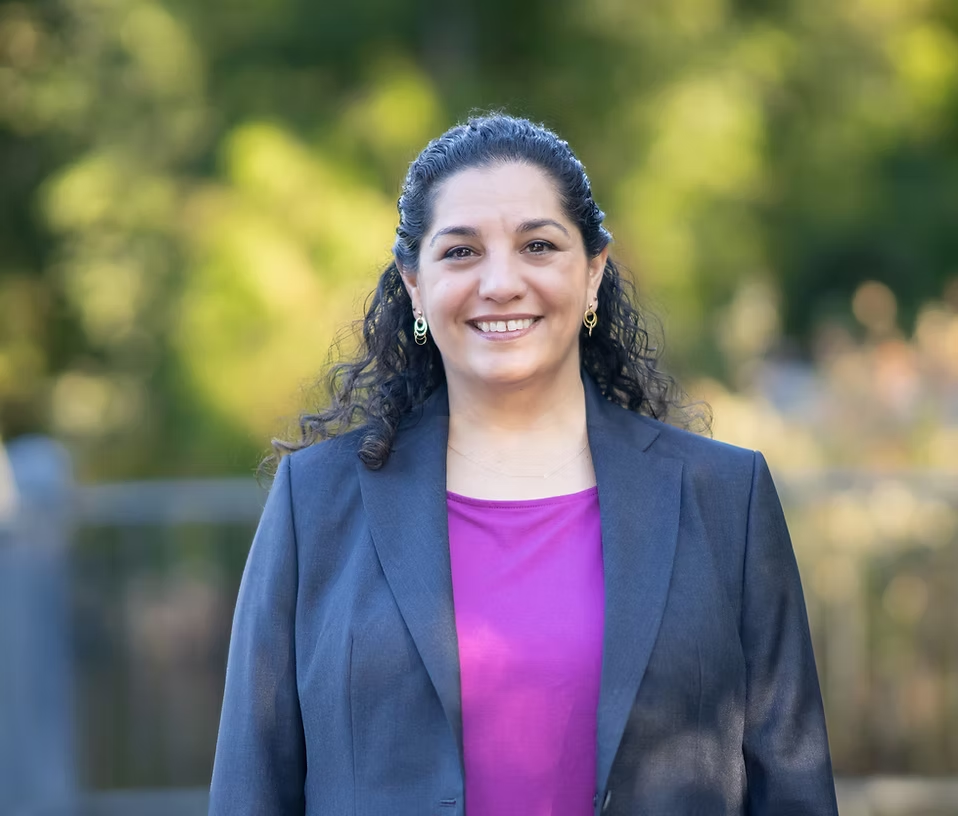
PubliCola Questions: District 5 City Council Candidate Nilu Jenks


Source: Nilu Jenks campaign

By Erica C. Barnett

This year, voters in North Seattle will be choosing a councilmember to replace former District 5 councilmember Cathy Moore, who quit a year and a half into her four-year term. The district has lacked an elected councilmember for an unusually long time thanks to the timing of Moore’s resignation, which came just a few days too late for the city to schedule a special election for the district. As a result, former councilmember Debora Juarez has served as Moore’s city council-appointed replacement since mid-2024.

North Seattle’s choices in this long-awaited election are FairVote Washington political director Nilu Jenks, a second-time candidate for this position, and longtime university educator Julie Kang. Seattle Nice, the podcast co-hosted by me, political consultant Sandeep Kaushik, and longtime radio journalist David Hyde, will be hosting a live debate between the two candidates at the not-quite-in-D5 National Nordic Museum at 6:00 tomorrow, October 21; if you can’t make it, we’ll be publishing the whole debate on our podcast the following day. Election Day is November 3, but please vote early if you vote by mail, or drop your last-minute ballot in your nearest drop box before 8pm on November 3!


This is Nilu Jenks’ third attempt at winning the District 5 city council election: She ran and lost in the primary in 2023, and unsuccessfully sought the appointment when Moore quit the following year. Jenks, like her opponent Julie Kang, is a first-generation immigrant; her parents fled Iran for the US when she was a toddler.

A longtime climate and pedestrian advocate, Jenks now works on elections and democracy as the political and partnerships Director at FairVote Washington, which advocates for ranked-choice voting—a system in which voters rank the candidates they prefer rather than choosing just one. Jenks said she’s hopeful that ranked-choice votingwill lead to a council that’s more representative when Seattle voters start using it in to elect the seven district-based councilmembers next year.

“Seattle, I think, can be a place where we can show that democracy works‚ and you know, 20 to 30 percent of the country doesn’t think that anymore,” Jenks said. “Blue cities should have to show they can govern.”

Jenks has been endorsed by the Stranger, Progressive Voters Guide, and the Urbanist, as well as four City Councilmembers: Joy Hollingsworth, Alexis Mercedes Rinck, Eddie Lin, and Dionne Foster.

We met last week at Kaffeeklatsch Seattle, a German bakery and coffee shop on Lake City Way. This interview has been edited for length and clarity.

PubliCola (ECB): You’ve said that you want to expand the city’s CARE Team. And you’ve mentioned that it takes a long time to get responses to Priority 3 calls.

NJ: Yeah, 160 minutes on average.

ECB: Right. And the CARE Team is restrained in what they can do by the police union contract. They can respond to certain kinds of calls, but not others, for instance. Given the constraints, what role do you see for an expanded CARE Team in D5?

NJ:  Well, they’re in a labor dispute, and I hope that gets resolved to expand where they can respond. And also, I want to see a new chief of police who supports the CARE Team, so they can actually redirect some of those calls. I went on a ridealong with the CARE Team. There was a young man who called. He was in distress, and they gave him some food, some clothes, and let him know that he’d actually missed his court date. And he had lost his phone somewhere living on the streets, and they let him call his caseworker. And they had actually helped him a couple weeks before. He called specifically asking for the CARE Team. A lot of people just don’t want to call the police.

I don’t know if you listened to the debate last week. They asked, “What does Lake City need?” [Kang said] “Clorox.” I’m like, cool. Yeah. I love that perception of Lake City. I feel like we’re okay.

I went to the interagency high school and sat in a sobriety circle. I was very touched that the kids were as open as they were. I like teenagers. I like kids. Well, they all said they would love to be able to call CARE. They’re like, when my guidance counselor isn’t available, it’s 9pm, I want to call. They expressly all said they wish they could call the CARE Team. It was fascinating that they knew about it.

ECB: What are some of your top criteria for the next police chief?

NJ: I think the police chief sets a lot of the tone. I want a tone of, “I love Seattleites. I love Seattle. I want to be here. This is my city.” Someone that likes our alternate response team and sees it as part of their toolkit to help achieve their goals, rather than like a territorial thing. Someone that has the goal of reducing the 911 response times in a holistic way. And also, our homicide clearance rate could be better.

I’m not sure Seattle is as dangerous as some people think. We’re here in Lake City. People consider this a place that needs Clorox. We can’t let that be the perception of this area.

Why are a lot of people pushing this narrative of Seattle being this place where you should be terrified? I would love to have a police chief that is like, “This is a great city—a great city that I love that is actually pretty safe. We will, of course, work on making it safer.” People have told me they’ve had an officer come and tell them that LEAD’s a joke, CoLEAD’s a joke, the CARE Team’s a joke. I know that’s not the official department stance. I get that that’s a personal opinion the officer is giving, but that personal opinion is harmful to the perception of public safety, and I would love for that to not be okay.

ECB: Is your opponent stirring up that fear? That seems to be what you’re suggesting.

NJ: Well, I think she’s afraid. I’m like, have you ever walked down that Lake City at night? I’m not afraid. I would walk home from here (on Lake City Way). I don’t know if she means to, or that’s what she’s hearing. But that’s clearly the perception she had of Lake City.

ECB: Do you think the surveillance cameras and other strategies that the city is currently using on Aurora, like the Stay Out of Areas of Prostitution (SOAP) zone, are working?

NJ: We know SOAP and SODA [Stay Out of Drug Areas] aren’t working because you’re asking me about it, and this is the second time we’ve implemented them. I think they also require pretty intensive police staffing, and we hear a lot about our lack of staffing.

The cameras are not working. We just had that shooting at the gas station [at Denny Way and Broad Street]. The CCTV cameras were right there. Didn’t seem to make a difference. There were over 40 shots fired right there, and I do worry. Because I work on democracy, I’m like, governments change, your leaders change. Okay, you like this mayor’s opinion on the cameras. What’s the next mayor’s opinion?

I don’t think there’s not a lot of data that shows that cameras particularly prevent crime. I think the goal is addressing the root causes. But if we’re going to have them, we should have a lot more data privacy provisions over them and check who’s asking for the [footage]. And I feel like our federal situation doesn’t give confidence. Why would we do this right now?

ECB: If you are elected, there will be a five-four progressive majority on some issue. I know you said whether to have and expand the camera program is up to the mayor, but it’s also up to the council, and councils change, too

NJ: I’ve been surprised, because it’s not actually that popular at the doors. I think that people are afraid and just want things to work, and they’re being told that this tool will work. We live a city without community violence interrupters funded at the level they should be. We don’t have them on the north end, and s people are latching on to tools, hoping they’ll work. And I think the cameras may become less popular as people are like, “Well, they didn’t work.” And I think what we need is to say, here are the tools that work. This is what worked in Baltimore. This is what worked in Boston. Instead of just shortcuts.

ECB: What is your strategy for improving public safety Aurora, if it’s not SOAP zones and cameras? I’ve heard you mentino the difference between street design on Aurora in Shoreline versus Seattle.

NJ: We haven’t had a briefing on Aurora in the [council] transportation committee, despite having $50 million from the state legislature. Meanwhile, Shoreline is up there saying “the number one thing we did is environmental design.” That money has to be spent by 2029. If they’re struggling to spend that money or need more help or more money or whatever it is, why don’t they ask the [state legislative] delegation for that help? And so, you have Aurora Reimagined Coalition that has done quite a lot of work, has developed a lot of relationships. They’re asking for all this help, and it’s like, how many walks are you going to go with this group and not initiate anything? Especially when Shoreline says that’s the number one thing they did that improved things there.

ECB: What are community violence interrupters doing in the south end that you think they could be doing here?

JK: They’re in the schools. They’re going to the hospital bedside, and saying “don’t retaliate.” I don’t know how effective they’re being on the south end. I think we don’t fund them consistently enough that you can get data. This is also a thing in Seattle: “Here you go. You got your year. Now what?” That’s not how this works. This is not a one year at a time, one chunk at a time thing. It needs robust investment.

I have two teenagers myself. This age group needs help. They went through this pandemic and now you can print ghost guns, and it’s a lot of young people doing the shooting. Drugs are available on social media. It’s a different world.

ECB: The city has largely focused on what’s happening on Aurora as criminal activity and addressing it with police-oriented approaches, but there’s never much funding for women and girls in the sex trade who are victims of violence, exploitation, and trafficking.

NJ: I’ve talked to a number of sex workers in the last few weeks, and their big ask is making sure that there’s housing available for people, especially domestic violence victims. I think the other part is there’s no safe exit, especially for children—a place where you can take somebody being trafficked as a child to give them the help and resources they need, and also job training or whatever they need to exit. For the women, it’s not that different. It’s just that they have more agency. I don’t think there are 12- and 14-year-olds that you know are choosing this as work. So for me, making sure that we get a shelter for minors is a top priority, and also funding people who are working [with women] on the street itself, who have those relationships

And then one very explicit ask was a shelter that’s 24/7. They’re like, if something happens Friday at 11 p.m. there’s nowhere to go until, like, 9 am on Monday morning. Also, a lot of shelters won’t often take in someone if they think they’re a sex worker.

And then  decriminalization is pretty important. That’s come up over and over again, so that if they do want to call the police, they feel safe. They said there are police officers taking advantage of that power dynamic. They’re the ones that are like standing there on the street, often in the direct line of fire, that could give provide [police] a lot of information, and they’re like, “I don’t feel safe doing that because I can’t talk about my job.”

One thing I have found and have been really kind of impressed by is that Aurora neighbors are pretty understanding of the situation. Part of what’s traumatizing them is seeing, like, 15-year-old girls running into their yards.People soliciting children on their way to school is unacceptable. That is a thing that is happening, and that is disgusting. And also for drugs. And so the safe passages that they have on the south end, I’d love that on the north end, around Robert Eagle Staff [Middle School] and Ingraham [High School].

ECB: Let’s switch gears a bit and talk about upzoning and Pinehurst Station. Do you support the proposed upzone, or do you want it to go further? And what should the city going to do about Jackson Park Golf Course [which takes up 160 acres adjacent to the new light rail station]?

NJ: Yes, I support the upzone. We need a lot of housing around a light rail station. Transit-oriented development is really important, and there’s a lot of speculation around that area, which is why a publicly owned golf course is maybe not the best use of land. It’s a nine- and an 18-hole, and we should have a community conversation around, what is the best use of this land. Should it be just one nine-hole golf course? 

PubliCola is supported entirely by readers like you.
CLICK BELOW to become a one-time or monthly contributor.

Support PubliCola


ECB: You’ve also mentioned the idea of creating a new business improvement area—a taxing district to pay for business assistance. How would that work?

NJ: The University District has a very big employer. Downtown has very big employers. But how do we make it such that smaller areas that are struggling can also be supported? Is there a progressive revenue tax that the entire business community, instead of just big business, can support small businesses so that like Lake City or any other small communities across the city can be supported too?. Because we have a new business group, the Lake City Business Alliance, here, and they’ve struggled. They’ve tried for a very long time to create a BIA. There’s no reason that we shouldn’t be supported too.

ECB: What kind of support do smaller business areas like Lake City need?

NJ: Maybe technical assistance, or help with permits. Ambassadors just helping clean the street up. I don’t know that a volunteer should be watering our flower baskets. It could be a grant that an area can apply for. What Lake City needs as support is different from what Aurora needs as support. It’s different from what Maple Leaf needs as support. It’s different from what businesses just down the street at 35th and 95th need for support. Just some way to do a small business support system that doesn’t require you to have the university or Amazon as your [anchor] employer.

We had Seattle Restored [the storefront business investment program] come here. We had a salsa place open and then move to Ravenna. We had the romance bookstore open and then move away. How do we make it so that they actually stay here? Because it doesn’t feel good, as someone that lives a 15-20 minute walk from here, that we get to do this little pilot and then it leaves and helps another area thrive.

ECB:  It feels like progressive taxation is not very popular right now.

NJ: Yeah, which makes no sense when our taxes are the 49th most regressive [in the nation]. One thing I’ve talked about is an AI token tax. You talk to anybody that works in this industry, and they’re like, “I had 10 agents fighting 10 agents for me at work and I ran out of tokens today.” I’m sitting listening to conversations, and they all know how many tokens they use. It’s a literally a line item for them. And the climate impact of you having 10 agents fighting 10 agents using up all your tokens today—I want you to think about it. And maybe it should pay for a BIA like I’m describing, or a community violence interruption fund. Something that a lot of people would like and think it’s worth the investment.

ECB: The problem seems to be that it just gets turned into a slush fund—like JumpStart.

NJ: That’s what we don’t want, and honestly, that is an erosion of democracy, and that is an erosion of public trust, and that can’t happen. It makes people say, I was promised one thing, and you made it [pay for] something else. That is a violation of public trust. That  has got to stop.

ECB: We’ve talked about a lot of things, but is there anything you wanted to discuss that I didn’t ask you about?

 NJ: I feel like District 5 just has been left behind. Like even—no offense—the reporting. It just feels like we’re just a forgotten land up here. [Former city councilmember] Sara Nelson came here and said, “I didn’t even know your Fred Meyer was closing.”  ReWA up here is the most diverse preschool, I believe, in the whole city now. We speak some of the most languages in the whole city up here. It makes me very angry that an election season starts, and that’s when all of a sudden, Lake City and Aurora are now these places that matter. I’m like, I don’t think you actually care. I do not think any of you care. You do not come here and spend your money.

It’s not easy to get here. Even our 911 response times are slower. We have a third of the affordable housing in District Five now, and we’re not getting a third of the funding. And then they’re like, “How come you’re struggling?” I don’t need Clorox. I need funding. I need support. I need to address crime and poverty, We’re treated like this forgotten land that people don’t come to spend money or support, and then say, “What went wrong there?” What went wrong was your lack of investment. That’s what went wrong, and don’t blame us for that.

PubliCola Questions: Seattle City Council District 5 Candidate Julie Kang

Source: Julie Kang campaign

By Erica C. Barnett

This year, voters in North Seattle will be choosing a councilmember to replace former District 5 councilmember Cathy Moore, who quit a year and a half into her four-year term. The district has lacked an elected councilmember for an unusually long time thanks to the timing of Moore’s resignation, which came just a few days too late for the city to schedule a special election for the district. As a result, former councilmember Debora Juarez has served as Moore’s city council-appointed replacement since mid-2024.

North Seattle’s choices in this long-awaited election are FairVote Washington political director Nilu Jenks, a second-time candidate for this position, and longtime university educator Julie Kang. Seattle Nice, the podcast co-hosted by me, political consultant Sandeep Kaushik, and longtime radio journalist David Hyde, will be hosting a live debate between the two candidates at the not-quite-in-D5 National Nordic Museum at 6:00 tomorrow, October 21; if you can’t make it, we’ll be publishing the whole debate on our podcast the following day. Election Day is November 3, but please vote early if you vote by mail, or drop your last-minute ballot in your nearest drop box before 8pm on November 3!


Julie Kang is a first-generation immigrant who grew up in Los Angeles, came to Seattle as a PhD student at the University of Washington, and has worked for UW, Seattle University, and Seattle Public Schools as a teacher and administrator overseeing professional development for decades.

Kang also co-founded a bank serving Korean American clients, Pacific International Bank, in 2001, to make it easier for immigrants rejected by traditional banks to access capital. The bank merged with a larger institution in 2013 after a series of headline-grabbing financial controversies.

“A lot of the board members with deep pockets did not want to contribute more, and that was one of the reasons” for the financial crisis at the bank, Kang said. “And so, by default, as the only woman and the only bilingual board member, they said, you figure out a solution.” Kang said her mother used BBCN Bank in California, “and I know they were interested in coming up” to Seattle, so she managed the merger. Kang is no long affiliated with the bank.

Kang has lived in North Seattle for about 30 years; she’s endorsed by the Seattle Times, former councilmember Sara Nelson, and current Councilmembers Bob Kettle and Maritza Rivera and Council President Joy Hollingsworth.

Our interview, conducted last week at Pilgrim Coffee just off Aurora, has been lightly edited for length and clarity.

PubliCola (ECB): The mayor just put out a budget that you have said was pretty fiscally responsible­.

Julie Kang (JK): Yes—the fact that we have not only closed [the deficit] but also anticipating that we’re not going to keep asking for these one-time things.

I believe that we need to have right amount of first responders to respond in a timely manner. So the fact that [Wilson] decided to add 66 [officers through 2027], I was like, okay, that could be the number. But I also want to make sure everybody understands that even though North Seattle’s District Five is made up of about 100,000 people, the reality is we have 250,000 people during the day. So when we have first responder calls, we need to account for that. At our Northwest Hospital, we have beds and facilities for 70 emergency visitors a day, and now they’re getting more than 130—that’s almost double. We need to think about that. When we have so many of the permanent and supportive housing [buildings], that requires 1.4 times more firefighters. This allocation of first responders based on the number of residents may not be the right approach.

ECB: Let’s talk about Aurora. Both you and your opponent, I think, believe that public spaces around Aurora need to be safer, particularly when it comes to sex trafficking and gun violence. Beyond more police or surveillance cameras, what’s your public safety plan for Aurora?

JK: We really can’t afford to have more police for everything, right? The CARE Team, when there’s behavioral wellness checks, I think they should be able to go and do those things. That’s what they’re supposed to do. And I know that there’s all of the contract issues—that sometimes because there is a possibility of a weapon or you know they’re armed, officers have to go first. But I think we need clear rules and responsibility. We got to get them to the table and have that conversation.

But what I have committed to is I want to be physically present. I want to sit at my district office. And when people think about a district office, is it fancy? Is it expensive? No. We have so many storefronts. I’m already [upstairs at] the Lake City Library at least once a week. I just need to be present because District Five hasn’t seen their council members, haven’t had the emails or phone calls returned. And how do I know? Because I’m the one who’s been the squeaky wheel, emailing behalf of my elderly neighbor, or the young, busy people who don’t have the time to always use the [Find It Fix It] app, right? So I think that establishing trust in the government, it’s important. And for me, that’s showing up. That’s the first step. So I want to set up my district office. And people have said [mimicking fear] “Oh, Aurora,” and I remind them, I lived here for 10 years. I have faith, and I know that I’ve come this far. I am gonna be fine. I grew up crossing through MacArthur Park [in LA] every day to get to the library,

ECB: The barricades are still there—

JK: They’ve been there for over 100 days.

ECB: Do you think they’re working to reduce gun violence?

JK: No, they’re not working. Well, it’s quieted down a little bit, but if you walk two blocks over, it has shifted. And if you go in the morning, you can see the foils, the condom wrappers, the needles. Those are not things that our children should be seeing. We’re normalizing this behavior. So I think a lot of my advocacy work comes from the seven-year-old, 10-year-old Julie, who did not have a choice but to go through MacArthur Park to get to the library at the end. You know, as a latchkey kid, there was no other options. But we’re in 2026, and we are still fighting, and our daughter, 22 years old now, born and raised in North Seattle—we had to have those discussions. Why can’t we enforce the laws that we have? As soon as you get over to 145th to Shoreline, why is it that their streets are clean and people understand that there are rules and we’re not going to be permissive about violent crimes?

ECB:. My understanding is that they invested quite a bit of money in improving the street design to make it safer, and Seattle has not done something similar.

JK: Even in speaking with [King County Prosector] Leesa Manion extensively, she always reminds me she’s the same King County prosecuting attorney for other places where things are working. So again, if you were here 24/7, you would understand the urgency. Aurora is in a state of emergency, and we have put a few Band-Aids here and there, but we haven’t gotten to the root of the issue.

We want to protect the victims and we want to be able to provide the mental care or the housing and all of the services that we need, right? But we should go after the johns and the pimps. I know [City Attorney Erica Evans has continued to point out that there’s over 5,000 cases [backlogged]. But I also know that there’s a little bit of disconnect between the King County and the city.

So when I changed my position on [surveillance] cameras, it’s because as a naturalized U.S. citizen, and I am also serving on the King County Immigration Commission, and we didn’t know how that information was used. Of course, surveillance—you know, I don’t want it either. But I talked to a lot of the people, including the 50 blocks of neighbors and Councilmember Kettle, and spoke with the North [SPD] Precinct and did a ridealong. And I know that nothing is 100 percent safe, but at least there are safeguards and some things that we’re doing about retention that are in place. I’m not saying it’s perfect. I thought, well, if the community most impacted wants it, let’s use it, but we can’t just use that. [alone] It’s only a tool, right?

ECB: Have you seen evidence that the cameras are working?

JK: Well, this morning when they talked about the shooting last night, at least there was a little bit of the footage from the shooting, [Editor’s note: The footage was from business surveillance cameras, not city-operated CCTV.] And again, you can have all the footage you want, but it’s what you do with it. But if you don’t have the footage, my understanding is that you can’t even open up a case. So we need evidence. And it’s interesting that we’re relying on neighbors and other people to have evidence. And I recently heard somebody says, “Oh, you can plug in your business camera to the police camera [system]. And I just thought, “Wow, we are now asking our business owners to take on that responsibility.”

ECB: A big concern for surveillance opponents is the possibility that ICE could get access. They just need to file a subpoena. And there’s a lot of faith being put in this into Axon, the company that provides Seattle’s surveillance cameras, to do the right thing and not share this footage with bad actors. I think those are legitimate concerns.

JK: That’s true, and that’s the risk. That’s why when I spoke with people who are against cameras and I proposed, what if we built our own system, they said, actually, they could live with that. So again, let’s not continue to have this fear get in the way of what our neighbors, our constituents are feeling. And if we already have the cameras on, and we’re able to maintain the terms of the contract that say long the footage can be on our servers, by the time you get a subpoena, you know, maybe [the footage will] be gone. And my understanding is we don’t keep anything unless it’s in an active investigation.

How long have we had it since all of the ICE stuff? I’ve been going to Common Power to create whistle kids since last November. It’s been over a year, right? And we also know that that’s not working perfectly because our neighbors continue to get taken at Home Depot, Lowe’s, and in our neighborhoods.

ECB: Going back to Aurora for a sec: The city hasn’t funded a lot of resources for women wanting to leave the sex trade or escape trafficking. Do you have a plan to help the women and girls working in parking lots on Aurora?

JK: We have Aurora Commons, which is one of the few resources up in North Seattle. And Liz [Vivien], the ED, you know, told me yes, they’re able to provide the OB/GYN care with the UW hospital. But if we happen to have somebody who steps up and say, “I want to get out of this business,” she doesn’t have shelters she can refer them to. We should be able to say, Julie came in for service. She needs housing. She needs the mental health [services]. She needs X, Y, and Z. And our case managers should be able to make sure that we are following through and delivering services. And I’m doing to make sure that when we advocate for funding, I want us to be connected to the outcomes and the return on investment. I think we have been compassionate, but if we’re compassionate without accountability, we’re just investing more and more. And I think that’s where the fatigue comes. 

ECB: I hear “we need more accountability for spending” from candidates every year, and I often wonder what that is supposed to look like.  Because we do have audits, we do have staff that review the budget, we have an entire budget office that looks at how money is being spent. What additional accountability are you looking for?

JK: But Erica, you also know that a lot of audits have been incomplete and are still pending. For me, that’s not acceptable. And again, going back to my university budget experience, being a project manager is when we develop a program, we review it on a quarterly basis, and we also measure that against the outcomes, the deliverables. I think on the council we also need somebody with that level of expertise. So, if we have that oversight and accountability, I don’t think we’re going to lose money or have some of the challenges that we’ve had.

ECB: Your opponent has said that District 5 needs to have community violence interrupters like the ones working in South Seattle, and also that the city should invest more in putting CARE Team members up here. How do you think your approach differs from hers when it comes to, not just Aurora, but public safety in North Seattle generally?

JK:  In terms of prevention, there’s so much that could be done, even with our two high schools and two middle schools. And not only as a mother but as a teacher, I’m already working with the principals on safe routes to schools. I’m asking, how did a 15-year-old [at Ingraham] get access to a gun? Where did that come from? And did that student have at least one person that they could confide in? So I want to make sure we focus on a lot of the interventions in schools and in community centers.  I think that’s, again, where me showing up and having the years of experience mentoring students, and mostly students of color, is going to be a benefit.

We’ve also heard from the community meeting that happened on Aurora Commons when the mom said, “My daughters are being approached with lots of cash.” The community leaders are already trying to do so much, but most of these meetings—actually all of the meetings that I’ve gone to, the people who are the decision makers, the elected officials, they are not there. There’s so much that could be accomplished by attending, listening, and activating the leaders who already come with a lot of the lived experience and solutions based on those experiences.

PubliCola is supported entirely by readers like you.
CLICK BELOW to become a one-time or monthly contributor.

Support PubliCola


ECB: Speaking of students, are you supporting or opposing the two statewide initiatives—the one banning trans girls from girls’ sports and the one that allows parents to see their kids’ school counseling notes?

JK: As teachers, we think it’s important for all children to be welcome and included, and any act of harm or hate is unacceptable. That said, I think parents have made some comments, and the students also have voiced their comments. So, for me, again, it’s listening to the constituents and the people,

ECB: But do you support the initiatives or oppose them?

JK: So, at this time, as much as I respect everybody’s identity, I just want kids to play sports. I don’t know if we need to go and do biological testing to see where they stand.

ECB: The other initiative would essentially give parents the right to see any notes that were taken about confidential conversations they had with adults at school.

JK: Right now, there’s already that protection for the kids after 13. [Editor’s note: Kids 13 and over have the right to obtain confidential mental health care in Washington state, but this does not apply to school counseling.] I understand there’s some arguments about if every kid is able to make those decisions. But I’m gonna go with supporting the kids. [Editor’s note: After our conversation, Kang reached out to clarify that she opposes both initiatives].

ECB: Do you support the proposed comprehensive plan rezone around the new Pinehurst light rail station, which has been delayed by appeals, and would you change it in any way?

JK: Right now, neighbors are in limbo about what is happening with their housing. We expect 90 percent of riders to get there using other modes of transportation. But the reality is, they’re saying, “My front yard is becoming a parking lot.” 

I definitely support that we should do density. But before we get there, you also know that we lost power multiple times, right? So we know our electric grids, our sewer systems, all of the infrastructure is also outdated. I want to make sure we take care of those infrastructures before we keep building more units, because losing power is something that the people who are already there and have been neighbors for a long time are negatively impacted by. People are losing their precious groceries. It’s $100, $150 to fill up your grocery cart, if that. So I want to make sure that we grow the community with the infrastructure and make sure that we are taking care of the sidewalks, because walkability is huge if you’re going walk to the station. And right now we have some areas that are very disconnected.

ECB: Do you support Mandatory Housing Affordability, which encourages growth in some former single-family areas?

JK: I’m actually happy with Councilmember Foster’s plan to give some relief, because what I have learned is we are missing so much revenue that was generated through the permits, creating workforce jobs for builders and plumbers. When I think about quick permitting, it’s not that we lessen the requirements, but right now that sequential model, I just don’t understand. So I think we have to look at the whole system and break it into chunks where we can have predictability. Because anytime they’re waiting for a permit, that’s lost opportunities.

ECB: The city plans to revamp the whole MHA system in the next couple of years. What do you think needs to change about the program?

JK: Well, right now I think we have to incentivize builders to build and build the right kind of housing. It doesn’t make sense if you have one lot, and you want to build eight different million-dollar tiny homes, because I think then we are going to compromise some of those mature trees that I also love. So maybe we can be creative about creating a fourplex. Everybody wants to not have their shared walls, but I also think being able to look into your neighbor’s living room with those small spaces—I’m not sure if that’s the right thing. And in LA, we had a lot of fourplexes, triplexes, and that’s how we were able to even afford our first home, because we could live in one and rent out the others and make the mortgage. So I think we have to be more creative in working with you architects who are thinking about protecting the green space and being able to build in a way that meets our neighbors’ needs.

I mean, we are number four in terms of the city rankings, and when I talk to people, it’s because of the beautiful green space, and I think that makes Seattle Seattle. And if we are going to continue to build and get rid of these 100-year-old mature trees that are healthy, I think we are not thinking about our next generation. I mean, we think about climate change. We think about all of the positive things from trees. And yet when we keep saying we’re going to just build, build, build, I don’t think that is the right answer for the next generation.

Complaints Filed Against Pass-Through Campaign Funding Group Created by Former Councilmember Sara Nelson


From Seafor’s website.

By Erica C. Barnett

The Progressive People Power (P3) PAC, a group that supports lefty candidates and causes, has filed dual complaints with the state Public Disclosure Commission and the Seattle Ethics and Elections Commission against Seafor, a new organization set up by former city councilmember Sara Nelson to support centrist candidates.

The crux of both complaints is an allegation that Seafor is illegally funding election campaigns without revealing its donors, which is illegal under state law.

Specifically, the complaints charge that Seafor is a political action committee disguised as a C(4) (yes, pronounced “Seafor”) nonprofit advocacy group, and that the purpose of the organization is to serve as a pass-through for anonymous political donations to campaigns. This would be illegal, because state law requires PACs—unlike nonprofit political groups—to disclose their donors, so that the public can see which people and organizations are bankrolling outside campaigns for candidates.

“If you are an organization in Washington state raising money for politics and then spending money on politics, then you are a political committee. You have to report where your money came from,” Dmitri Iglitzin, the attorney who filed both complaints on behalf of P3, said Wednesday. “The source of political expenditures can’t be cloaked through an intermediary entity.”

Iglitzin filed the complaints before Seafor funded a last-minute $30,000 independent expenditure, by a new group calling itself North Seattle Neighbors, on behalf of District 5 City Council candidate Julie Kang, who came in second in the August primary, trailing frontrunner Nilu Jenks, a progressive, by 21 points. North Seattle Neighbors registered as a PAC just days before a state deadline for independent expenditure campaigns to file, meaning that it’s no longer possible for anyone to register a similar campaign on Jenks’ behalf. It has since reported one additional $5,000 donation, from the founder of a private equity firm.

The complaint notes that Seafor’s website explicitly says one purpose of the group is to elect a “pragmatic majority” of “moderate candidates” to the city council, starting with the District 5 race. The site describes Seafor as a “permanent civic organization” that “recruits candidates, funds their campaigns, defends them between elections, and stays in the field after November.”

What’s more, Seafor’s site touts the fact that “Donor identities are not publicly disclosed,” allowing people who spend on local campaigns to keep their donations “private.”

From Seafor’s website.

“Washington’s 501(c)(4) structure protects the privacy of businesses and individuals historically punished for backing fiscally responsible causes,” the website guarantees. “Many of our supporters operate businesses, sit on boards, or hold positions where political activity isn’t tenable.”

Nelson, the founder of Seafor, initially responded to a phone call but did not respond to followups. The other governors of the group are former councilmember Tanya Woo, lobbyist Dan McGrady, and former Nelson policy director Erik Nielsen. Jordan Royer, the VP of external affairs for the Pacific Merchant Shipping Association (and a longtime background player in conservative Seattle politics), registered the North Seattle Neighbors PAC.

“Seafor just donated $30,000 to a political campaign. So where did that $30,000 come from? We have no idea,” Iglitzin said. “But we know from Seafor’s website that they’re raising money to make political expenditures in the fifth [council] district, which makes Seafor a political committee. The fact that Seafor then goes and says, by the way, give your money to us and no one will know that you gave it to us, just shows that they know exactly what they’re doing.”

The city’s rules for registering as a political committee go further than the state’s; Seattle requires any PAC that raises or spends more than $5,000 to register as a PAC and disclose its donors. Seafor has spent $30,000 so far—five times the legal limit—and, according to reporting in Geekwire, had a budget of $163,000 through September.

PubliCola is supported entirely by readers like you.
CLICK BELOW to become a one-time or monthly contributor.

Support PubliCola


Both complaints also allege that Seafor’s affiliated website advertising “news about city hall,” CivicTide, is also subject to city and state public disclosure rules, because it’s part of the larger Seafor political action group. Unlike actual journalism and commentary, the complaint says, CivicTide’s opinion pieces and AI-powered meeting summaries are part of a political campaign to support candidates, so their funding, too, is subject to public disclosure.

The SEEC complaint also alleges that Seafor is operating illegally as an unregistered grassroots lobbying group. Under the city’s grassroots lobbying rules, groups that raise and spend money to lobby the city on issues, including advocacy for legislation, have to register as lobbyists, which Seafor hasn’t done.

The Ethics and Elections Commission seems most likely to take up the complaint, since it deals with a local campaign; also, the PDC is facing a significant complaint backlog due to hundreds of complaints filed by a single person. On Thursday, SEEC director Wayne Barnett would only confirm that he had received the complaint.

The strongest case that Seafor violated election laws is almost certainly the fact that it advertises itself as a “private” way to fund “serious candidate support” without disclosing who is behind that funding. It’s “really blatant,” Iglitzin said.

The most recent comparable case he could think of, he told me, was a case involving the Grocery Manufacturers Association, a group of corporations including PepsiCo and Kellogg’s that poured millions into a 2013 campaign against a genetically manufactured organism (GMO) labeling initiative without disclosing the source of the money. A protracted lawsuit eventually resulted in the group (now known as the Consumer Brands Association, paying a $9 million fine, including a $3 million donation to food-security nonprofits, in 2022.

Seafor’s $30,000 spend on Kang’s behalf doesn’t compare to the food brands’ massive donation to the anti-GMO campaign. But it is, as Seafor points out repeatedly on its website, merely a “test run” for the “2027 progressive majority play,” when seven city council seats will on the ballot.

Former SPD Chief Lands on His Feet, Sound Transit Removes Candidate’s Photo from Station, More Moves at Wilson’s Office

1. As we reported on Bluesky Tuesday afternoon, former police chief Shon Barnes got a soft landing after Mayor Wilson asked him to resign, a belabored process that ended in Barnes getting a going-away gift worth almost $750,000. In his new gig will be heading up “public safety programs and strategy” for Mission Ready Technologies (or Mission RT), a Scottsdale, AZ-based company that appears to sell surveillance technology, computer-aided dispatch systems, AI-based 911 response software, and other tech tools to state and local police agencies.

In a long LinkedIn statement that three different LLM detectors assured me was 100% AI, Barnes said he’ll “focus on helping state and local public-safety agencies connect their operational needs with technology, strategy, and organizational readiness” in his new position. The details of the former chief’s new job—like what he’ll actually be doing on a daily basis—are pretty vague, but it sounds like they could involve a lot of travel to cities whose police departments are implementing new technology. Neither Barnes nor Mission RT’s press release said whether Barnes will be renting in Arizona or working remotely from his home outside Chicago.

2. Julie Kang, a candidate for Seattle City Council Position 5, got prominent placement at the grand opening of Sound Transit’s new Pinehurst station on September 30, courtesy of a large photo featuring Kang, her husband, and their daughter placed prominently at the station, The photo was one of a series featuring community groups that had supported the station just east of I-5 at NE 130th Street, and it identified Kang’s family as representatives of the Haller Lake Community Club. Kang posted it on her Instagram page.


Sound Transit did the photo shoot on June 30; Kang entered the race late last year.

According to Sound Transit spokeswoman Rachelle Cunningham, Kang was “nominated, selected and photographed as a representative of the Haller Lake Community Club” and her photo was “randomly selected as one of the photographs to be featured at the station.”

At least one community member had a problem with the transit agency giving a candidate such prominent billing just weeks before the election, and complained to Sound Transit shortly after the station opened. The agency acted fast. By Friday night, two days after it went up, the photo of Kang and her family was gone.

Asked about the swift removal of the image, Cunningham said, “we heard concerns from community members about the photos and the perception of agency funds being used to support a campaign. Sound Transit does not endorse political candidates, and the photos were removed Friday.”

Sound Transit emailed Kang late Friday afternoon to let her know the photo was coming down . In response, Kang wrote, “When our family agreed to participate in the community photo shoot, we did so because representation matters to us. As an Asian American family, we wanted our community to be visible in the public spaces and transportation system that belong to all of us. At the time, I had no expectation that I would someday be a candidate for Seattle City Council.”

“I respect Sound Transit’s responsibility to remain neutral in elections. At the same time, I hope you will reconsider whether removing a longstanding community image simply because one of the people pictured later became a candidate is the appropriate way to maintain that neutrality.”

Kang told PubliCola she was referring to her general support for the light rail station, not the photo shoot in June.

3. Ansel Herz, the former Stranger reporter who’s spent the last decade or so doing comms for progressive candidates and causes, will take over Mayor Katie Wilson’s press office as press secretary and digital strategy director next Wednesday. Wilson has had a string of temporary press secretaries since Sage Wilson left in June, including, most recently, Alex Hudson, the former Transportation Choices Coalition director, who’ll return to her previous role as a transportation policy advisor.

Alex Gallo-Brown, a longtime who was glued to her side on the campaign, will no longer be Wilson’s director of community relations; instead, he’ll step into the newly created position of  “senior advisor on public engagement.” Matt McIntosh, another Wilson campaign staffer who’s currently a community relations manager, will be Wilson’s interim community relations director. The change means that Gallo-Brown will no longer be directly managing staff, but will have more direct control, along with Herz, over Wilson’s online communications.

As we reported, Wilson fired her digital communications manager Amy Piñon earlier this year, hiring a temporary contractor to do social media in her stead.

Wilson’s communications office has had extremely high turnover since she took office, the result of both firings (Wilson axed her original comms director, Seferiana Day, in June) and voluntary departures, like former press secretary Wilson’s. The turmoil reflects, among other issues, an ongoing tension between campaign loyalists who came into office wanting to blow up the old, institutional ways of doing things and government veterans with experience working in those institutions.

Wilson recently hired Tara Lee, a longtime comms professional who’s worked for former Gov. Jay Inslee as well as the Washington Budget and Policy Center, the nerdy left-wing think tank, as communications director.

Interim Police Chief Based Complaint Against Detective on Right-Wing Characterization of Anti-Trans Initiative

Now-interim Police Chief Andre Sayles at a press conference earlier this year with Mayor Katie Wilson.

In his interview with a city investigator, interim Chief Sayles said he still hadn’t read the initiative and appeared unfamiliar with SPD’s policy on political speech.

By Erica C. Barnett

Seattle’s interim police chief, Andre Sayles, acknowledged that his misconduct complaint against a veteran detective was based, at least in part, on right-wing podcaster Brandi Kruse’s characterization of a statewide initiative that would ban trans girls from playing girls’ sports. The detective, Beth Wareing, faced a backlash from Kruse and other right-wing activists after she spoke at a press conference opposing two anti-LGBTQ initiatives.

Sayles, who was deputy police chief when he filed his complaint, also confirmed that he didn’t read the initiative or seek out other sources of information about it before or after accusing the detective, Beth Wareing of dishonesty and insubordination—both potentially career-ending allegations.

The new revelations come from a recording of Sayles’ interview with an Office of Police Accountability staffer investigating his complaint, which OPA dismissed as unfounded. PubliCola obtained the recording through a records request.

As we reported last month, Wareing retired from SPD over Sayles’ complaint against her, calling it a “poorly considered, unprofessional, and an attempted violation of my First Amendment rights.”

After hearing the details of Sayles’ interview with OPA, Wareing said it was that “Interim Chief Sayles retaliated against me at the direction of a far-right podcaster to damage my hard-earned professional reputation, despite my nearly 30 years investigating child abuse, domestic violence, hate crimes, and other threats.

“He did not read the policies, the language of the initiatives, or endeavor to understand my comments prior to filing what was effectively a career ending complaint. A simple Google search would have revealed the broad availability of analysis regarding these initiatives, which are likely to have extraordinary collateral impacts on children. I am deeply concerned for the LGBTQ+ community and for SPD’s diverse workforce under his leadership. SPD and the City of Seattle can and should do better.”

Kruse, whose claims about the initiatives Sayles parroted in his complaint, is actively involved with the campaign for two initiatives from billionaire Brian Heywood’s group Let’s Go Washington. As a campaign volunteer, Kruse has headlined campaign rallies and raised money for the campaign and used her podcast as a campaign platform

Wareing spoke, with SPD’s permission, at a rally for No Hate in WA State, which is opposing the two Let’s Go Washington initiatives. The first would require school employees, such as counselors, to turn over notes on confidential conversations with students to their parents, raising concerns that students will no longer be able to confide in trusted adults at school about issues like sexuality, gender, and reproductive health care.

The second would ban trans girls from playing girls’ sports. To verify that girls meet the criteria, the initiative would require either proof of an athlete’s sex from a girl’s “personal physician” or—for girls who lack a personal physician—a genital exam or DNA test. Initiative supporters have claimed that girls already have to prove their biological sex to participate in sports, but that isn’t true; the initiative would add proof of sex to the state’s sports physical requirements for girls.

Wareing, a former hate crimes detective who worked on cases involving child sexual abuse, said at the press conference that “sexual predators often set themselves up as authority figures to give themselves more power and access to their victims. I believe this initiative would increase the risk of sexual abuse for girls participating in sports.”

PubliCola is supported entirely by readers like you.
CLICK BELOW to become a one-time or monthly contributor.

Support PubliCola


In his interview, Sayles strongly disputed this, saying that he has three boys who played sports and “I know [that] having to take a physical doesn’t expose you to a high potential for sexual abuse. I think that was an inaccurate statement, and I believe that statement, obviously, it created some angst among people in our community.” Wareing, Sayles continued, was “saying these things without actual factual proof.” (The initiative would not apply to boys’ sports, and the high prevalence of sexual abuse in girls’ sports is not a matter of  serious debate.)

Sayles confirmed in the interview that his concerns about Wareing’s “accuracy” and “stance” were initially sparked by an email containing questions from Kruse about Wareing’s comments in which Kruse characterized Wareing’s statements as inaccurate. Kruse (who calls herself a “real girl” and refers to trans girls as “boys”) followed up on these questions with a barrage of podcasts and social media posts calling Wareing a “liar” promoting an “insane ideology” and demanding that SPD fire her.

Sayles filed his complaint against Wareing a few days after Kruse sent over her questions. By then, SPD was receiving more complaints, according to Sayles.

In his interview, Sayles initially called the pro-LGBTQ rally “not my cup of tea” before clarifying, “I didn’t know what it was about.” Once he “skimmed” a transcript of Wareing’s comments, however, he believed her remarks were “basically fearmongering” about “people’s sexual orientation and potentially being exposed to sexual assault due to potentially having to do physicals to participate in sports.”

If she had wanted to be “accurate,” Sayles said, Wareing should have included specific data points in her remarks.

“[She said] there’s ‘high potential'” for sexual assault, Sayles said. “Is [that] 10 cases, and seven of those 10 cases you can identify that because a person had to do a physical with an adult, that sexual abuse occurred for that child, or that person who identifies as LGBTQ plus or whatever a person may identify?” Sayles said. “And then, when she said, ‘increases the risk of sexual abuse for girls participating in sports,’ how is that accurate? Does it increase it just for girls, or can it increase sexual abuse for boys as well,  or whatever they may identify as? So, I think those statements and those comments were inaccurate.”

The OPA investigator also asked Sayles about the other allegation in his complaint—that Wareing had disobeyed a direct order by representing herself as an SPD officer after agreeing in advance not to do so, in compliance with SPD rules for political advocacy. Sayles acknowledged that Wareing never identified herself as a Seattle police officer, but said that was a “tricky line” to navigate in the modern world when anyone can look up information online, and where a member of the media might have asked Wareing where she works.

“There’s probably someone here at this police department or in the city that probably says the police department should have never let her [speak],” Sayles said. “I’m not going to tell people what they should be doing on their off duty time. But my thing is, if we’re gonna speak and we’re gonna say that we’re law enforcement, knowing that somebody can just Google our name unless we paid the money to have our stuff scrubbed on the internet, we have to give them factual information because they’re going to take it and people are going to run with it.”

Wareing, Sayles elaborated, should have been more careful about expressing such a strong political “stance” because people tend to believe anything a police officer says. “I think a majority of our country cherish the work that we do, and they take what we say and they take it, they take it as as gospel.,” Sayles said. “So they … are going to say, ‘Holy smokes! … This person is an expert in this, and what they’re saying is what’s going to occur.'”

Sayles’ complaint was dismissed after the OPA found that Wareing had not violated any policy  and was expressing her right to express her opinions as a private citizen, which is protected by both the Constitution and SPD’s internal policies. At one point, the investigator asked if Sayles, who was previously police chief in Beloit, Wisconsin, whether he had read SPD’s policy on political participation. Sayles said, “I have not.”

After reading the policy and saying Wareing seemed to have followed it, Sayles appeared to backtrack. “It’s that sticky and uneven line that we have to walk,” Sayles said. “Just as much as she’s giving her opinion… with this OPA complaint, is it me giving my opinion as well?” When weighing whether to submit the complaint, he said, it came down to “Well, I think some of the comments were not objective.”

Greater Seattle: Primary Election Edition

By Josh Feit

Mayor Wilson > Theories of Mayor Wilson’s Demise

As the mainstream media and the Seattle Times pounce on Mayor Wilson, please keep their bias (and incoherence) in mind.

As fans (and endorsers) of former mayor Bruce Harrell, the Seattle Times hasn’t liked Wilson from the start. Long before the brouhaha over now-former police chief Shon Barnes, they were hyperventilating about Wilson’s supposed gaffes. What that meant was that they didn’t agree with her support for State Sen. Jamie Pedersen’s millionaires tax. (Of course, they now love it because Pedersen is Exhibit A in their argument that last week’s election amounted to a backlash against progressives.)

If you can overlook the contradictions in that line of thinking, can I interest you in a victorious peace deal to open the Strait of Hormuz?

I also don’t follow their objection to firing Barnes in the first place. Or did they do a 180 on that one too, now that Erica has made any defense of  the OOO chief laughable thanks to the comprehensive reporting she did on his schedule?

It’s true that the city council is steamed at the mayor—and has been, as PubliCola has reported, for a host of reasons that date back to well before Wilson pushed Barnes out earlier this month. But tension between the second and seventh floors is hardly new—and certainly not grounds for the kind of hyperventilating at the Seattle Times.

The premature death notices are wishful thinking. And I must say: If wacky temporary councilmember Debora Juarez —who went on KOMO recently to say she had “no confidence in this administration”—is your champion, you don’t have a bead on the Seattle electorate. P.s. The progressive candidate in last week’s primary running to fill Juarez’s open D5 seat, Nilu Jenks, is currently beating the establishment choice Julie Kang, 54 to 33 percent.

Get a bead on this, though: Last week, popular lefty council member Alexis Mercedes Rinck turned to supposedly down-and-out Mayor Wilson for backup on her new, progressive Mamdani-esque legislation to stop supermarkets from gouging poor people with what amounts to surge pricing for groceries.

15,288 > 7,327, 11,085, or 6,635

In more evidence that we aren’t looking at a reversal of 2025’s progressive sweep, those are the number of votes cast for the winner of each District 5 council primary, in reverse-chronological order going back to 2015 (the first year of district elections.) That’s Nilu Jenks’ vote total this year, followed by Cathy Moore in 2023 and Debora Juarez in 2019 and 2015.

In addition to getting more votes than any previous primary winner, Jenks also got the highest percentage of any primary winner, and is the first D5 candidate to ever come out of the primary with a firm majority of the vote—currently 54 percent to her more conservative challenger Julie Kang’s 33 percent. (Not all ballots have been counted).

Granted, the field in D5 was smaller this year than previous primaries, with four candidates rather than the six, eight, or ten that showed up in previous elections. But this year’s D5 turnout was higher than usual, too—around 29,000 voters so far, more than any previous primary in the district—and Jenks’ vote is larger than the combined total of the top two contenders (Moore and Christiana ObeySumner) in 2023’s 10-way primary. Jenks ran in that primary but only got 19 percent, so her showing this year represents a real and significant growth in support.

Jenks was endorsed by council member Rinck, while Kang has support from the council’s centrist bloc—including Maritza Rivera and Bob Kettle alongside former conservative council president Sara Nelson.

Progressive Challenger > Longtime Incumbent

We can also look to South Seattle for evidence of progressive primary results. In the race for Position 1 state representative in the 37th District, newcomer Kelabe Tewolde is leading 28-year incumbent Rep. Sharon Tomiko Santos 51 to 48 percent. Tewolde—a progressive, density advocate, and current member of the Seattle Planning Commission—was endorsed by Tech for Housing, The Urbanist, and Rinck.