
By Erica C. Barnett
This year, voters in North Seattle will be choosing a councilmember to replace former District 5 councilmember Cathy Moore, who quit a year and a half into her four-year term. The district has lacked an elected councilmember for an unusually long time thanks to the timing of Moore’s resignation, which came just a few days too late for the city to schedule a special election for the district. As a result, former councilmember Debora Juarez has served as Moore’s city council-appointed replacement since mid-2024.
North Seattle’s choices in this long-awaited election are FairVote Washington political director Nilu Jenks, a second-time candidate for this position, and longtime university educator Julie Kang. Seattle Nice, the podcast co-hosted by me, political consultant Sandeep Kaushik, and longtime radio journalist David Hyde, will be hosting a live debate between the two candidates at the not-quite-in-D5 National Nordic Museum at 6:00 tomorrow, October 21; if you can’t make it, we’ll be publishing the whole debate on our podcast the following day. Election Day is November 3, but please vote early if you vote by mail, or drop your last-minute ballot in your nearest drop box before 8pm on November 3!
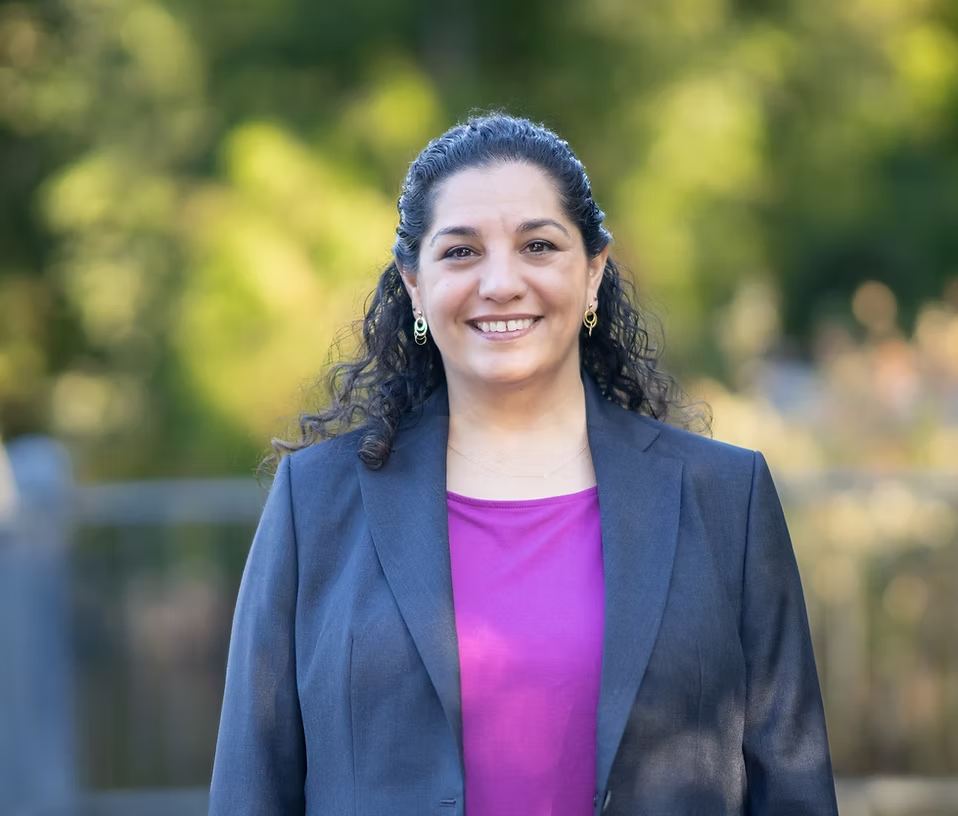
This is Nilu Jenks’ third attempt at winning the District 5 city council election: She ran and lost in the primary in 2023, and unsuccessfully sought the appointment when Moore quit the following year. Jenks, like her opponent Julie Kang, is a first-generation immigrant; her parents fled Iran for the US when she was a toddler.
A longtime climate and pedestrian advocate, Jenks now works on elections and democracy as the political and partnerships Director at FairVote Washington, which advocates for ranked-choice voting—a system in which voters rank the candidates they prefer rather than choosing just one. Jenks said she’s hopeful that ranked-choice votingwill lead to a council that’s more representative when Seattle voters start using it in to elect the seven district-based councilmembers next year.
“Seattle, I think, can be a place where we can show that democracy works‚ and you know, 20 to 30 percent of the country doesn’t think that anymore,” Jenks said. “Blue cities should have to show they can govern.”
Jenks has been endorsed by the Stranger, Progressive Voters Guide, and the Urbanist, as well as four City Councilmembers: Joy Hollingsworth, Alexis Mercedes Rinck, Eddie Lin, and Dionne Foster.
We met last week at Kaffeeklatsch Seattle, a German bakery and coffee shop on Lake City Way. This interview has been edited for length and clarity.
PubliCola (ECB): You’ve said that you want to expand the city’s CARE Team. And you’ve mentioned that it takes a long time to get responses to Priority 3 calls.
NJ: Yeah, 160 minutes on average.
ECB: Right. And the CARE Team is restrained in what they can do by the police union contract. They can respond to certain kinds of calls, but not others, for instance. Given the constraints, what role do you see for an expanded CARE Team in D5?
NJ: Well, they’re in a labor dispute, and I hope that gets resolved to expand where they can respond. And also, I want to see a new chief of police who supports the CARE Team, so they can actually redirect some of those calls. I went on a ridealong with the CARE Team. There was a young man who called. He was in distress, and they gave him some food, some clothes, and let him know that he’d actually missed his court date. And he had lost his phone somewhere living on the streets, and they let him call his caseworker. And they had actually helped him a couple weeks before. He called specifically asking for the CARE Team. A lot of people just don’t want to call the police.
I don’t know if you listened to the debate last week. They asked, “What does Lake City need?” [Kang said] “Clorox.” I’m like, cool. Yeah. I love that perception of Lake City. I feel like we’re okay.
I went to the interagency high school and sat in a sobriety circle. I was very touched that the kids were as open as they were. I like teenagers. I like kids. Well, they all said they would love to be able to call CARE. They’re like, when my guidance counselor isn’t available, it’s 9pm, I want to call. They expressly all said they wish they could call the CARE Team. It was fascinating that they knew about it.
ECB: What are some of your top criteria for the next police chief?
NJ: I think the police chief sets a lot of the tone. I want a tone of, “I love Seattleites. I love Seattle. I want to be here. This is my city.” Someone that likes our alternate response team and sees it as part of their toolkit to help achieve their goals, rather than like a territorial thing. Someone that has the goal of reducing the 911 response times in a holistic way. And also, our homicide clearance rate could be better.
I’m not sure Seattle is as dangerous as some people think. We’re here in Lake City. People consider this a place that needs Clorox. We can’t let that be the perception of this area.
Why are a lot of people pushing this narrative of Seattle being this place where you should be terrified? I would love to have a police chief that is like, “This is a great city—a great city that I love that is actually pretty safe. We will, of course, work on making it safer.” People have told me they’ve had an officer come and tell them that LEAD’s a joke, CoLEAD’s a joke, the CARE Team’s a joke. I know that’s not the official department stance. I get that that’s a personal opinion the officer is giving, but that personal opinion is harmful to the perception of public safety, and I would love for that to not be okay.
ECB: Is your opponent stirring up that fear? That seems to be what you’re suggesting.
NJ: Well, I think she’s afraid. I’m like, have you ever walked down that Lake City at night? I’m not afraid. I would walk home from here (on Lake City Way). I don’t know if she means to, or that’s what she’s hearing. But that’s clearly the perception she had of Lake City.
ECB: Do you think the surveillance cameras and other strategies that the city is currently using on Aurora, like the Stay Out of Areas of Prostitution (SOAP) zone, are working?
NJ: We know SOAP and SODA [Stay Out of Drug Areas] aren’t working because you’re asking me about it, and this is the second time we’ve implemented them. I think they also require pretty intensive police staffing, and we hear a lot about our lack of staffing.
The cameras are not working. We just had that shooting at the gas station [at Denny Way and Broad Street]. The CCTV cameras were right there. Didn’t seem to make a difference. There were over 40 shots fired right there, and I do worry. Because I work on democracy, I’m like, governments change, your leaders change. Okay, you like this mayor’s opinion on the cameras. What’s the next mayor’s opinion?
I don’t think there’s not a lot of data that shows that cameras particularly prevent crime. I think the goal is addressing the root causes. But if we’re going to have them, we should have a lot more data privacy provisions over them and check who’s asking for the [footage]. And I feel like our federal situation doesn’t give confidence. Why would we do this right now?
ECB: If you are elected, there will be a five-four progressive majority on some issue. I know you said whether to have and expand the camera program is up to the mayor, but it’s also up to the council, and councils change, too
NJ: I’ve been surprised, because it’s not actually that popular at the doors. I think that people are afraid and just want things to work, and they’re being told that this tool will work. We live a city without community violence interrupters funded at the level they should be. We don’t have them on the north end, and s people are latching on to tools, hoping they’ll work. And I think the cameras may become less popular as people are like, “Well, they didn’t work.” And I think what we need is to say, here are the tools that work. This is what worked in Baltimore. This is what worked in Boston. Instead of just shortcuts.
ECB: What is your strategy for improving public safety Aurora, if it’s not SOAP zones and cameras? I’ve heard you mentino the difference between street design on Aurora in Shoreline versus Seattle.
NJ: We haven’t had a briefing on Aurora in the [council] transportation committee, despite having $50 million from the state legislature. Meanwhile, Shoreline is up there saying “the number one thing we did is environmental design.” That money has to be spent by 2029. If they’re struggling to spend that money or need more help or more money or whatever it is, why don’t they ask the [state legislative] delegation for that help? And so, you have Aurora Reimagined Coalition that has done quite a lot of work, has developed a lot of relationships. They’re asking for all this help, and it’s like, how many walks are you going to go with this group and not initiate anything? Especially when Shoreline says that’s the number one thing they did that improved things there.
ECB: What are community violence interrupters doing in the south end that you think they could be doing here?
JK: They’re in the schools. They’re going to the hospital bedside, and saying “don’t retaliate.” I don’t know how effective they’re being on the south end. I think we don’t fund them consistently enough that you can get data. This is also a thing in Seattle: “Here you go. You got your year. Now what?” That’s not how this works. This is not a one year at a time, one chunk at a time thing. It needs robust investment.
I have two teenagers myself. This age group needs help. They went through this pandemic and now you can print ghost guns, and it’s a lot of young people doing the shooting. Drugs are available on social media. It’s a different world.
ECB: The city has largely focused on what’s happening on Aurora as criminal activity and addressing it with police-oriented approaches, but there’s never much funding for women and girls in the sex trade who are victims of violence, exploitation, and trafficking.
NJ: I’ve talked to a number of sex workers in the last few weeks, and their big ask is making sure that there’s housing available for people, especially domestic violence victims. I think the other part is there’s no safe exit, especially for children—a place where you can take somebody being trafficked as a child to give them the help and resources they need, and also job training or whatever they need to exit. For the women, it’s not that different. It’s just that they have more agency. I don’t think there are 12- and 14-year-olds that you know are choosing this as work. So for me, making sure that we get a shelter for minors is a top priority, and also funding people who are working [with women] on the street itself, who have those relationships
And then one very explicit ask was a shelter that’s 24/7. They’re like, if something happens Friday at 11 p.m. there’s nowhere to go until, like, 9 am on Monday morning. Also, a lot of shelters won’t often take in someone if they think they’re a sex worker.
And then decriminalization is pretty important. That’s come up over and over again, so that if they do want to call the police, they feel safe. They said there are police officers taking advantage of that power dynamic. They’re the ones that are like standing there on the street, often in the direct line of fire, that could give provide [police] a lot of information, and they’re like, “I don’t feel safe doing that because I can’t talk about my job.”
One thing I have found and have been really kind of impressed by is that Aurora neighbors are pretty understanding of the situation. Part of what’s traumatizing them is seeing, like, 15-year-old girls running into their yards.People soliciting children on their way to school is unacceptable. That is a thing that is happening, and that is disgusting. And also for drugs. And so the safe passages that they have on the south end, I’d love that on the north end, around Robert Eagle Staff [Middle School] and Ingraham [High School].
ECB: Let’s switch gears a bit and talk about upzoning and Pinehurst Station. Do you support the proposed upzone, or do you want it to go further? And what should the city going to do about Jackson Park Golf Course [which takes up 160 acres adjacent to the new light rail station]?
NJ: Yes, I support the upzone. We need a lot of housing around a light rail station. Transit-oriented development is really important, and there’s a lot of speculation around that area, which is why a publicly owned golf course is maybe not the best use of land. It’s a nine- and an 18-hole, and we should have a community conversation around, what is the best use of this land. Should it be just one nine-hole golf course?
PubliCola is supported entirely by readers like you.
CLICK BELOW to become a one-time or monthly contributor.
ECB: You’ve also mentioned the idea of creating a new business improvement area—a taxing district to pay for business assistance. How would that work?
NJ: The University District has a very big employer. Downtown has very big employers. But how do we make it such that smaller areas that are struggling can also be supported? Is there a progressive revenue tax that the entire business community, instead of just big business, can support small businesses so that like Lake City or any other small communities across the city can be supported too?. Because we have a new business group, the Lake City Business Alliance, here, and they’ve struggled. They’ve tried for a very long time to create a BIA. There’s no reason that we shouldn’t be supported too.
ECB: What kind of support do smaller business areas like Lake City need?
NJ: Maybe technical assistance, or help with permits. Ambassadors just helping clean the street up. I don’t know that a volunteer should be watering our flower baskets. It could be a grant that an area can apply for. What Lake City needs as support is different from what Aurora needs as support. It’s different from what Maple Leaf needs as support. It’s different from what businesses just down the street at 35th and 95th need for support. Just some way to do a small business support system that doesn’t require you to have the university or Amazon as your [anchor] employer.
We had Seattle Restored [the storefront business investment program] come here. We had a salsa place open and then move to Ravenna. We had the romance bookstore open and then move away. How do we make it so that they actually stay here? Because it doesn’t feel good, as someone that lives a 15-20 minute walk from here, that we get to do this little pilot and then it leaves and helps another area thrive.
ECB: It feels like progressive taxation is not very popular right now.
NJ: Yeah, which makes no sense when our taxes are the 49th most regressive [in the nation]. One thing I’ve talked about is an AI token tax. You talk to anybody that works in this industry, and they’re like, “I had 10 agents fighting 10 agents for me at work and I ran out of tokens today.” I’m sitting listening to conversations, and they all know how many tokens they use. It’s a literally a line item for them. And the climate impact of you having 10 agents fighting 10 agents using up all your tokens today—I want you to think about it. And maybe it should pay for a BIA like I’m describing, or a community violence interruption fund. Something that a lot of people would like and think it’s worth the investment.
ECB: The problem seems to be that it just gets turned into a slush fund—like JumpStart.
NJ: That’s what we don’t want, and honestly, that is an erosion of democracy, and that is an erosion of public trust, and that can’t happen. It makes people say, I was promised one thing, and you made it [pay for] something else. That is a violation of public trust. That has got to stop.
ECB: We’ve talked about a lot of things, but is there anything you wanted to discuss that I didn’t ask you about?
NJ: I feel like District 5 just has been left behind. Like even—no offense—the reporting. It just feels like we’re just a forgotten land up here. [Former city councilmember] Sara Nelson came here and said, “I didn’t even know your Fred Meyer was closing.” ReWA up here is the most diverse preschool, I believe, in the whole city now. We speak some of the most languages in the whole city up here. It makes me very angry that an election season starts, and that’s when all of a sudden, Lake City and Aurora are now these places that matter. I’m like, I don’t think you actually care. I do not think any of you care. You do not come here and spend your money.
It’s not easy to get here. Even our 911 response times are slower. We have a third of the affordable housing in District Five now, and we’re not getting a third of the funding. And then they’re like, “How come you’re struggling?” I don’t need Clorox. I need funding. I need support. I need to address crime and poverty, We’re treated like this forgotten land that people don’t come to spend money or support, and then say, “What went wrong there?” What went wrong was your lack of investment. That’s what went wrong, and don’t blame us for that.
Thanks. I know enough now and I’m decided to vote for Kang because I’m not going to vote anymore for people who talk about “root causes.”
I want politicians who will deal with symptoms and leave root causes to some pie-in-the-sky dream.