Category: Police

More Cops Are Training as Emergency Responders. Is That a Good Thing?

By Erica C. Barnett

The death of pedestrian Jaahnavi Kandula, killed by a police officer driving to respond to a suspected overdose, has revived a longstanding dispute between Seattle’s fire and police departments about who should respond to medical emergencies, particularly overdoses.

Last month, after SPD announced that officer Kevin Dave was rushing to respond to an overdose in his capacity as an emergency medical technician (EMT), SFD union leader Kenny Stuart wrote a letter to Mayor Bruce Harrell objecting to the “troubling trend” of SPD officers “being trained and certified as Emergency Medical Technicians (EMTs) and … deployed to medical emergencies in our city.”

The issue with this, Stuart continued, is that the fire department—not SPD—is responsible for emergency medical response as part of the county’s Medic One system; “randomly allowing additional EMTs from other city departments to self-dispatch or to perform EMS functions” has “led to delayed scene security, delayed medical care, decreased continuity and coordination of care, and general confusion in life-threatening emergencies.”

Mayor Bruce Harrell’s office did not immediately respond to an email seeking his response to Stuart’s letter, if any, on Friday.

SPD’s EMS trainings are not funded by the city; instead, the Seattle Police Foundation solicits donations to pay for trainings and equipment. The police foundation website says the police need trained EMTs to respond to life-threatening situations at active crime scenes before it’s safe for fire department medics to enter. The head of the EMS program, SPD officer Tyler Verhaar, did not immediately respond to a request for an interview; we’ll update this post with his comments if we hear back.

“If police continue to respond to [medical calls] unchecked, you will end up with officers who are EMTs jumping calls so they can get some good publicity, and that’s not what it’s about.”—Retired assistant fire chief A.D. Vickery

Stuart, from the firefighters’ union, declined to talk on the record about the union’s opposition to SPD officers responding to medical emergencies. But former SFD assistant chief A.D. Vickery, who started at the department in 1968 and retired in 2020, said he’s heard alarming reports about police officers “racing to the scene, putting everybody at risk, so they can be the first one to the patient.”

“The Fire Department responds to hundreds of thousands of alarms. We are very cautious. There’s lots of people on the rig all working to make sure we get to the scene in a  appropriate period of time without creating a hazard,” Vickery said. “If police continue to respond to [medical calls] unchecked, you will end up with officers who are EMTs jumping calls so they can get some good publicity, and that’s not what it’s about.”

SPD has declined to comment on the circumstances that led to Dave striking and killing Kandula in a crosswalk the night of January 23. Initially, an SPD blog post said the then-unidentified officer was responding to a nearby emergency call “at the request of” the fire department; later, a department spokeswoman updated the post to say SPD was responding “with” Fire. Subsequently, police chief Adrian Diaz said Dave was “responding as an EMT” to the initial 911 call itself.

Many police department officers are equipped with Narcan (naloxone) nasal spray, which can restore breathing by rapidly reversing the effects of opioids like fentanyl, sending a person who is overdosing into abrupt withdrawal. Although fire department EMTs have carried nasal naloxone since July 2022, the department prefers to deliver oxygen first to restore an overdose victim’s breathing.

“With the increase in people using both methamphetamine and fentanyl at the same time, our teams then work to stabilize the patient’s breathing with small doses of naloxone ([which]also avoids a painful opiate withdrawal from excessive naloxone) and reverse the overdose,” SFD medical director Dr. Michael Sayre said.

According to one theory, bringing people back slowly also makes it more likely they’ll agree—in their groggy state—to go to the hospital, where they can access opiate withdrawal meds and learn about treatment options. “Some patients, once recovered from the drug’s effects, may refuse transport. That is a concern because it is a lost opportunity to connect patients with support services… that could be offered through the emergency department,” Sayre said.

Although the fire department doesn’t want SPD responding to medical emergencies themselves, they do want police on site when they respond to overdoses. One reason, which Fire Chief Harold Scoggins cited in a recent letter to the city’s Community Police Commission, is that overdose patients can purportedly “become violent” after they’re revived. A spokeswoman for the fire department said patients who overdose on fentanyl while also using meth, in particular, can “become quite agitated… risking harm to themselves and others around them,” because “when both substances are present, the sedative effects of fentanyl are reversed by naloxone, and the stimulant effects of methamphetamine then predominate.”

Curious how often first responders actually encounter hostile situations from bystanders, I requested the fire department’s database of assault reports from EMS calls. In 2022, first responders logged 135 such incidents, which ranged from verbal abuse and threats to punches, “donkey kicks,” and a “wrestling match”; one person threw a hamburger at a fire truck.

But the main reason fire EMS wants police at the scene of overdoses, according to Vickery, is to “control the scene to allow the EMTs or the medical personnel to do their jobs” without having to worry about bystanders or opportunistic thieves. “The environment that the overdoses take place in now is a much more hostile environment,” Vickery said. “In 1968, you might have an overdose in a particular area and it really was isolated to the room and the people that knew them, but there was not this the hostility that exists today.” Overdoses often occur on streets or in encampments, including many that first responders won’t enter without SPD backup.

Curious how often first responders actually encounter hostile situations from bystanders, I requested the fire department’s database of assault reports from EMS calls, which only includes incidents that involved formal reports (in other words, it isn’t comprehensive). In 2022, first responders logged 135 such incidents, which ranged from verbal abuse and threats (“Stated that he was going to kill us and that we were ‘motherf***ers””) to punches, “donkey kicks,” and a “wrestling match”; one person threw a hamburger at a fire truck.

Only a few of the reported incidents involved people brought back from an overdose with naloxone who were “combative” afterward and had to be restrained.

Overall, the reports unsurprisingly include many people in obvious crisis—like the person who was “slamming his head against the sidewalk several times before being restrained by SFD crews for his own safety as well as ours,” or the “well-known [patient]” who threw water on fire fighters before “barricading himself” inside a bathroom.

The tension between police and fire about their roles as first responders isn’t going away, as the police foundation continues to solicit donations for “training, certification, and medical supplies” for cops to respond to emergency calls. Vickery says he has no problem with police officers getting EMT certification on their own time, but says “there needs to be clear delineation” between the role of police providing backup at medical emergencies and fire personnel responding to those emergencies as EMTs. “The fire department doesn’t arrest people—stay within the realm of what your responsibilities are and support each other,” he said.

The State of the City is Vibes

By Erica C. Barnett

Standing in the shadow of the Space Needle at Seattle Center’s Fisher Pavilion on Tuesday, Mayor Bruce Harrell used his second State of the City address to lay out an “optimistic” vision for Seattle—a city where there are no tents on the streets because everyone has housing, where drug users all get into “effective treatment solutions,” where a new arts district links a revitalized downtown to surrounding neighborhoods, including 24/7 streets where “you can find a restaurant, bar, grocery, or your favorite clothing boutique at any hour of the day.”

But while the vibes in the room were electric—when Harrell concluded his 45-minute speech with his trademark “One Seattle!” sign-off, a guy behind me kept saying “STRONG finish!” to the person seated next to him—the speech itself was light on concrete proposals. If you let the vibes wash over you, it wasn’t hard to believe in a better future just over the horizon, once we figure out how to solve all the pressing problems that we know we can solve if we work together.

“The Space Needle is proof positive that when Seattleites put their minds to something and act with urgency and creativity, we can do big things,” Harrell said, in one of several digressions about the city’s creativity and resilience. “Framed by images of Pike Place Market and Mt. Rainier, the Space Needle stands as a symbol of our city to the nation—a pinnacle of a forward-looking vision and trailblazing leadership rooted in our DNA, of a city where innovation is inherent and progress is paramount.”

Harrell touted work the city has done to reduce the number of encampments in parks, improve police recruitment, fill potholes, and get people back downtown. But despite strong #OneSeattle vibes, he offered only a few concrete steps toward “the city of the future we’re building today” (the official title of his speech). In the coming year, Harrell said, he will:

  • Unveil a “downtown activation plan” that will emphasize better use of public space and public safety as “employers like Amazon recognize coming back to work downtown is a great thing”;
  • Issue an executive order to “that takes steps to address the public health crisis on our streets caused by the epidemic of fentanyl and other synthetic drugs”;
  • Launch a “design competition around converting office buildings to housing” downtown;
  • Propose a “suite of legislation” on police officer hiring and “a vision for the future of public safety”
  •  Release a white paper (originally scheduled for last year) outlining a plan for a new non-police public safety department, which now has a name: the Civilian Assisted Response and Engagement Department, or CARE;
  • Issue an executive order and propose new legislation to “preserve and plant tens of thousands of trees.”

One of Harrell’s strengths—especially on display during speeches like he State of the City, which he delivered with a loose, ad-libbing style that works well in front of a friendly audience—is his ability to connect with and inspire people in a way that feels genuine and unrehearsed. But as his term enters its second quarter, it will become increasingly important to deliver on some of those lofty, aspirational goals—or come up with lesser aspirations that are actually achievable within the span of a mayoral administration. Describing people who’ve been waiting for year to see tangible improvements downtown as “cynics [who] demand the exact blueprint for our entire new downtown immediately” is dismissive, and Harrell has been in office for more than a year; no one is demanding anything “immediately” at this point.

Everyone loves a rousing speech, especially after four years of leaden rhetoric, stiffly delivered by Harrell’s predecessor, Jenny Durkan. What turns the public against mayors is when they don’t pair lofty promises with tangible, visible results. People might love the idea of a 24-hour downtown seamlessly linking arts districts in Belltown, the Chinatown-International District, and Capitol Hill, but they’ll settle for fewer pedestrian deaths, a downtick in shootings, and a sense that the city is helping people living unsheltered rather than just moving them around.

Qualified Immunity Bill Passes Key Hurdle as Other Criminal Justice Reforms Stall Out

By Andrew Engelson

Several criminal justice reform measures moved past last Friday’s deadline for bills to pass out of their committees of origin, including a bill sponsored by Rep. My-Linh Thai (D–41, Bellevue) that would give victims of unlawful police actions the right to sue for damages.

In Washington, and nearly every other state, “qualified immunity” is a doctrine established by the US Supreme Court that protects law enforcement officers from most civil misconduct lawsuits unless a person can prove that a previous case with very similar circumstances resulted in an officer or agency being held accountable. (Qualified immunity does not apply to use of excessive force.) In the past two legislative sessions, Rep. Thai introduced similar bills that would eliminate qualified immunity, but both failed to pass. 

This time around, Thai’s bill no longer includes provisions giving the state attorney general’s office power to investigate and bring cases against police officers or law enforcement agencies for violating a person’s constitutional rights. As a result, it might have a better chance passing the House. (A separate bill, also sponsored by Thai, would give the attorney general the authority to investigate and sue law enforcement and corrections agencies.)

Thai’s bill could face a tougher road in the Senate, where police unions, local law enforcement agencies and the Association of Washington Cities have wielded considerable clout opposing similar bills in the past. Thirty-five states have tried and failed to eliminate qualified immunity since the protests over the murder of George Floyd in 2020, and only Colorado succeeded passing a law in 2020 that allows victims of misconduct to sue law enforcement agencies.

“Without accountability, there cannot be true justice,” Thai said in a press release. “This bill provides avenues to justice for victims of police misconduct. By holding municipalities accountable when their employees violate a resident’s state constitutional rights, I hope we can encourage them to properly train, support, and discipline their police forces.”

Candice Bock, a spokesperson for the Association of Washington cities, said the organization still opposed to Rep. Thai’s bill. “Our concern is that it’s not going to really lead to greater accountability – which I know is what the proponents hoped for,” Bock said. “It’s going to result in an increase in claims and litigation costs, and cities settling those claims because the litigation costs are too expensive.”

Two other bills to reform the state’s juvenile justice system made it out of their committees last week. One bill, sponsored by Sen. Yasmin Trudeau (D-27, Tacoma), would raise the minimum age for a child to be prosecuted in juvenile court from 8 years old to 13. The other, sponsored by Rep. David Hackney (D-11, Tukwila), would reform the state’s criminal sentencing system so that juvenile convictions no longer lead to longer sentences for crimes people commit as adults.

Bills that failed to make the deadline included one that would have prevented evidence gathered during police misconduct from being admissible in court, another that would have limited the use of solitary confinement, and one that would have allowed judges to consider releasing people who are serving long sentences for crimes they committed before the age of 25. 

Bill to Allow More Police Pursuits Would Sunset in 2025

By Ryan Packer

Two years ago, as part of a slate of police reform bills, state legislators passed a law barring police officers from pursuing people who fail to pull over when an officer directs them to do so. The only exceptions were if the officer had probable cause to believe the person had committed a violent or sexual crime, or when the officer had reasonable suspicion—a lower standard—to believe they were driving under the influence of drugs or alcohol.

On Thursday, the House’s House Community Safety, Justice, and Reentry committee advanced an amended version of House Bill 1363, which would allow pursuits under the lower reasonable suspicion standard for a broad number of offenses, including any violent offense, but would not allow police pursuits for any non-violent property crimes. Organizations like the Washington Association of Sheriffs and Police Chiefs have blamed the change in the law has been blamed for a spike in property thefts statewide, particularly stolen vehicles. Law enforcement agencies across the state had been putting their weight behind the original version of the bill, sponsored by Rep. Alicia Rule (D-42, Blaine), that would have allowed pursuits for all criminal offenses. 

Committee chair Roger Goodman (D-45, Redmond) put forward the new version of the bill, which he said is intended to “limit the scope of this bill, but also to keep the conversation going.” The bill includes a 2025 expiration date; if the legislature doesn’t adopt new pursuit rules before then, the rules for pursuits would automatically revert to the 2021 law. 

Only one member of the committee, Rep. Darya Farivar (D-46, Seattle), voted against advancing HB 1363, saying she wants to make long-term changes to the current law this year. While 1363 moves forward on the House side, Democrats in the state senate are advancing a proposal to take a broader look at pursuits.

“I’ve never seen, in my 31 years of law enforcement, the state and the condition of our state when it comes to open lawlessness and complete disregard for our laws that keep the community safe.”—Kent Police Chief Rafael Padilla

When they passed police pursuit law in 2021 reform, legislators said they wanted to reduce the number of high-speed police pursuits because of the risk they posed to the public, including pedestrians. According to an analysis by retired University of Washington researcher Dr. Martina Morris, just three people (all bystanders) have been killed as the result of police pursuits since the new law went into effect in July 2021, compared to nine in a comparable period immediately pre-reform.

Advocates for changing the law, including multiple mayors (though not Bruce Harrell), the Association of Washington Cities (AWC), and the Washington Association of Sheriffs and Police Chiefs, said the new law resulted in significant numbers of people taking advantage of it to flee police.

Many cities (though not Seattle) included the issue at the top of their official legislative agenda for 2023. “In 2021, AWC was an engaged supporter on many of the police reforms that the Legislature adopted, but we understand that law enforcement is complex and that sometimes legislation needs revising when the impacts become clearer,” the AWC more than 200 local elected officials said in a letter to legislators this week. ”In the case of the limits adopted on police pursuits, we think revisions are necessary to improve public safety outcomes in our communities.”

“I’ve never seen, in my 31 years of law enforcement, the state and the condition of our state when it comes to open lawlessness and complete disregard for our laws that keep the community safe,” Kent Police Chief Rafael Padilla told the House Community Safety, Justice, & Reentry committee last month.

Police accountability advocates argue that rolling back the law would erase progress toward reform. “From our view, we’ve got something that’s working. It’s not fun, it’s not comfortable, we have a lot of work to do as a society to figure this stuff out. This bill absolutely does not represent what that positive change and momentum needs to be,” Kurtis Robinson, president of the Spokane NAACP speaking on behalf of the Washington Coalition for Police Accountability, told that committee.

Morris’ analysis found that the law has been effective. (An earlier version of the analysis included two deaths caused by a driver who believed he was being pursued. Morris removed that incident during a review of all the pursuit incidents after its inclusion was questioned.)

“Estimates are that on the order of 30 percent of all pursuits end in an accident. When I’m talking about the fatalities, these were the key thing we were interested in, but it’s the tip of the iceberg in terms of the damage that’s caused by pursuits.”—Retired UW researcher Dr. Martina Morris

Morris told PubliCola the benefits of reducing police pursuits go beyond lives saved. “There are public safety risks from pursuits. Fatalities are just one of the parts of the collateral damage with these vehicle pursuits,” she said. “There are also injuries, property damage, and estimates are that on the order of 30 percent of all pursuits end in an accident. When I’m talking about the fatalities, these were the key thing we were interested in, but it’s the tip of the iceberg in terms of the damage that’s caused by pursuits.”

The data primarily comes from the website fatalencounters.org, a database created by researchers at the University of Southern California to track all types of deaths occurring nationwide where police officers are involved. Individual police departments are not required to provide information on these events on their own, so the information has to be obtained through media reports.

An alternative to HB 1363 is currently working its way through the state senate. Senate Bill 5533, sponsored by former Washington State Trooper John Lovick (D-44, Lake Stevens) would keep current state law in place until 2024 while a work group within the state’s Criminal Justice Training Commission, comes up with a model pursuit policy for the state to adopt, and do so by fall of 2024. This proposed model policy would outline exactly when police should be able to pursue suspects, and would be created in coordination with representatives of the state’s law enforcement groups.

Any model policy would likely only be binding on police departments who wanted to adopt a more loose pursuit policy; cities like Seattle, which had more stringent requirements on when officers could pursue, would be able to leave those policies in place, leaving open the possibility that some departments could decide to stick with current state law.

But the bill creating a model policy has come under fire by some Republicans, like Sen. John Braun (R-20, Centralia) who said it would be “letting legislative Democrats off the hook” in an op-ed in the Seattle Times last week. Braun is pushing for an immediate fix.

But waiting would also provide additional time for Washington to see how the current law is impacting public safety— whether Dr. Morris’s conclusions continue to bear out. “I can’t create more time for this law to have been in place,” she said of the relatively small sample size at the heart of her study. “But the legislature can.”


“Overdose Patients Can Become Violent”: Fire and Police Respond to Questions About Pedestrian Death

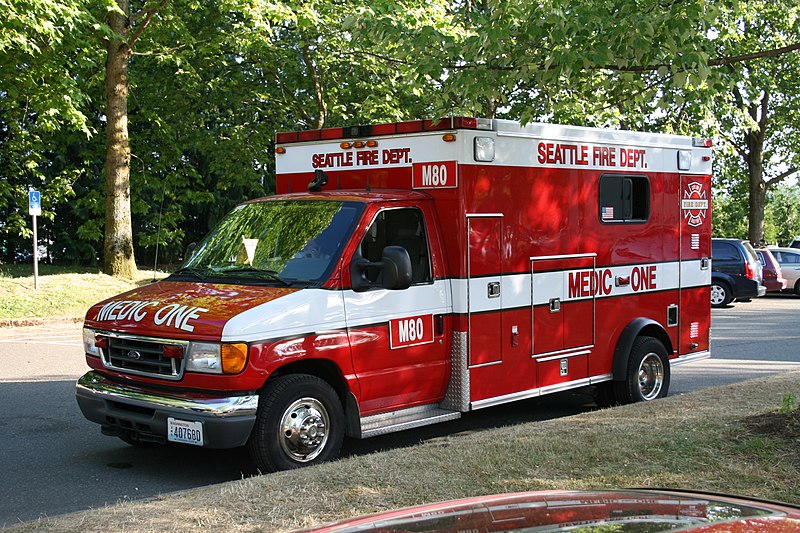
File:Seattle fire department medic 80.jpg
Atomic Taco, CC BY-SA 2.0, via Wikimedia Commons

By Erica C. Barnett

On Wednesday, the Seattle Police and Fire Departments responded to questions from the Community Police Commission about some of the circumstances that may have contributed to the death of Jaahnavi Kandula, a 23-year-old pedestrian who was killed in a marked crosswalk by SPD Officer Kevin Dave. Dave was driving to join Seattle Fire Department EMTs at a suspected overdose in South Lake Union. According to the response from Seattle Fire Chief Harold Scoggins, Seattle Fire Department policy requires police to be present when SFD responds to overdoses, because “overdose patients can become violent during treatment to reverse the overdose.”

The CPC asked the Fire Department to explain the reason it requires police officers to be present when Fire responds to overdose calls, posing four questions about the policy, how it came about, and “What percentage of drug overdose calls prior to the implementation of this policy included compromised safety, assaults, and/or injuries to SFD personnel related to reversing the effects of an overdose?”

In his response, Seattle Fire Chief Harold Scoggins said that the requirement “goes back at least 20 years and is designed to provide scene safety for firefighters and paramedics as overdose patients can become violent during treatment to reverse the overdose.” He did not answer the CPC’s question about how common it is for people coming out of overdoses to be violent, saying only that “[e]ncountering combative patients or bystanders on emergency responses has unfortunately become a reality for firefighters and paramedics.”

Narcan (or naloxone), the widely available overdose reversal drug, is used daily by non-emergency responders, including drug users themselves, and other public employees are trained to use it in the absence of paramedics or any armed response. In 2019,  then-Washington state health officer Kathy Lofy signed a “standing order” that made Narcan available over the counter without a prescription to any person who wants it, calling it a “very safe,” life-saving medication.

“When weighing the decision to respond using emergency driving, officers must consider if the incident is life threatening, road conditions, vehicle and pedestrian traffic, weather, speed, lighting, and their own driving abilities.”—Police Chief Adrian Diaz

In his letter, Scoggins said SFD has developed a “new method for tracking assaults and threatening behavior experienced by firefighters in the field,” in general, and has begun reporting this information. PubliCola has asked SFD for this data and will update this post with additional information when we receive it.

Seattle Police Chief Adrian Diaz also responded to the CPC’s questions. After describing the training officers receive in “emergency driving”—driving under emergency circumstances, such as a high-priority call where someone’s life is at risk—Diaz said officers are justified in taking “risks [that] “can result in severe consequences for the public and the officer. … When weighing the decision to respond using emergency driving…. [o]fficers must consider if the incident is life threatening, road conditions, vehicle and pedestrian traffic, weather, speed, lighting, and their own driving abilities.”

Diaz said the fact that the overdose was a Priority 1 call would not, in itself, necessitate emergency driving. “The priority level is a factor to consider but is not generally controlling,” Diaz wrote. “While many Priority 1 calls would warrant emergency driving under our current policy and training, not all do and officers are expected to consider the totality of the circumstances.”

PubliCola has filed a records request the audio from the initial 911 call; SPD categorically denied a separate request for all recorded audio related to the Kandula’s death, citing their ongoing investigation into the incident.

In a conversation with PubliCola last week, SPD Chief Adrian Diaz noted that Dave is a licensed EMT who was headed to the scene of a medical emergency, implying that he was on the way to respond to the reported overdose, not to provide security for the Fire Department. On February 6, the head of the Seattle Fire Fighters Union, Kenny Stuart, expressed frustration about SPD officers getting trained as EMTs and responding to medical emergencies like overdoses directly, saying this was the responsibility of the fire department, not SPD. (It’s a longstanding, ongoing issue.)

“Our EMS delivery system under the Medic One program is arguably the best in the country, and randomly allowing additional EMTs from other city departments to self-dispatch or to perform EMS functions at an incident does not improve or support the level of care we demand from this program,” Stuart wrote. “In fact, it unnecessarily complicates our response and diminishes the service that the public depends on and expects.”

Seattle Fire Department firefighters and paramedics are “the only personnel that are dispatched as EMTs” to medical emergencies, Stuart continued, “and they should be the only personnel who deliver EMS to the people of Seattle. We need our police officers to provide scene security and protect us so we can do our jobs effectively.”

Several years ago, SFD’s medical director told PubliCola the fire department preferred to use rescue breathing—a method to restore breathing in overdose victims without Narcan—followed by intravenous naloxone to facilitate a slower return to normal breathing without putting a person into instant opiate withdrawal. We’ve asked SFD whether this is still the department’s policy, and how the emergence of fentanyl has impacted overdose response, and will update this post when we hear back.

PubliCola has also reached out to Stuart.

They Want to Stay: Tammy Morales and Andrew Lewis on Why They’re Running for Reelection

By Erica C. Barnett

A lot has been written—including here on PubliCola—about the coming mass exodus from the Seattle City Council. Five council members—Lisa Herbold, Kshama Sawant, Alex Pedersen, and Debora Juarez— have either said they will not run for reelection this year or that they will run for a different office. At least four, and probably five, council seats will be filled by new people next year; depending on how things shake out, the most senior council member could have just four years’ experience.

Amid that churn, two freshman council members—Tammy Morales and Andrew Lewis, whose districts encompass southeast Seattle and downtown, respectively—have said want to stay on the job. (Dan Strauss, who represents northwest Seattle, has not announced his intentions yet.)

In conversations with PubliCola, both cited unfinished business, a need for continuity in the legislative branch, and a sense of optimism about the future among their reasons for running again despite a working environment that has been chaotic, toxic, and full of unexpected challenges—including the COVID pandemic, a racial reckoning whose promise is largely unfulfilled, and a mainstream backlash against people experiencing unsheltered homelessness.

“None of us expected the kind of term we had… and it takes a toll,” Morales said. “There were definitely times when I was like, ‘What the hell? This was not what I expected.’ It’s stressful and I don’t begrudge any of my colleagues for wanting to find a different way to give back to the community.”

That said, Morales added, “given that I represent a district that has historically been ignored, I don’t want to lose momentum.”

When Morales ran for her seat four years ago, she focused on issues like preventing economic displacement and ending encampment sweeps. Four years later, she says she’s still focused on those issues, but with a deeper understanding of how the city’s policies promote gentrification and make long-term solutions to Seattle’s housing crisis a complex challenge. “I’m especially interested in seeing through the comprehensive plan”—a planning document that guides housing, parks, jobs, and transportation in Seattle—”and really trying to change the way we manage growth in the city … so we’re not just rubber-stamping a perpetuation of the existing strategy,” Morales said.

“We know that transit corridors have high rates of pollution associated with them, at least the way we have allowed them to be built. Now we’re saying, ‘put a lot of poor people there and let’s use them a as buffer between homeowners and the road.'”

For example, Morales said, one major reason for the housing shortage is the city’s decades-old “urban village” strategy, which concentrates dense housing along busy, polluted arterial roads while locking up most of the city’s residential land for suburban-style single-family houses. Next year, the city will adopt a new comprehensive plan that will guide development for the next 20 years, and some of the options under consideration would concentrate development along “transit corridors”—those same busy, polluted arterials.

Morales wants to work to ensure that doesn’t happen.

“We know that transit corridors have high rates of pollution associated with them,” Morales said, “at least the way we have allowed them to be built,” with buses and cars competing for space along fast-moving arterials like Rainier Ave. S. “Now we’re saying, ‘put a lot of poor people there and let’s use them a as buffer between homeowners and the road.'”

Morales, who has a background in urban planning, emerged as a vocal advocate for pedestrian safety during her term, a time when almost half the fatal crashes in the entire city of Seattle occurred in her district. For decades, the city has failed to meaningfully address traffic violence along most of Rainier Ave. S., with the exception of the gentrified Columbia City neighborhood, where a controversial road-narrowing project successfully calmed a section of the road where crashes were once frequent.

Morales has been critical of the Seattle Department of Transportation’s uninspiring traffic-calming efforts, like lowering the speed limit on arterials by five miles an hour and posting signs encouraging drivers to slow down.

“We need to design roads differently so that people slow down” while also enforcing traffic laws in places where people continue to speed—for example, with automated traffic cameras that result in warnings, then fines, Morales said. “I drive down Rainier and I see people blow past me in the bus lane, the turn lane—that is a problem. But we’re not going to solve it with a public education campaign.”

If she’s reelected, Morales said she plans to focus on building generational wealth for Seattle residents of color through programs like community land trusts, which enable low-income people to buy homes, programs that help potential homebuyers qualify for loans, and a pilot program, which she’s introducing this spring, to give developers incentives to work with small, community-based groups to build 35 small affordable housing project throughout the city.

In addition to securing public funds for public parks, beach restoration, sidewalks, and other “quote-unquote back to basics things,” Morales says her office has “really increased the explicit discussion of racial equity” on the council. “When I first got here and I was talking so much about racial equity, I feel like I got a lot of pats on the head,” she said. “Because of the team that I’ve built and the work [we’ve done[ on behalf of District 2, I think other council member are  talking more about the need to center racial equity and acknowledging the ways that the South End has been left out.”

Lewis, like Morales, said he’s motivated to run again by the desire to complete work that he started in his first term, particularly when it comes to alternatives to police response. For more than two years, the city has been debating whether and how to establish a program that would send unarmed civilian responders to some non-emergency calls, with little progress; last year, Mayor Bruce Harrell agreed to move forward with a small pilot program while his office and the police department continue to analyze 911 call data.

During his confirmation hearing last month, then-interim Police Chief Adrian Diaz estimated that over the next two years, the police department would gain a net total of about 18 officers, assuming the rate at which officers leave the department continues to decline. “We have to have leaders who are willing to soberly acknowledge that even that 982 number may unfortunately be an optimistic one,” Lewis said. “We have a civic consensus that we need more police, but where that conversation never goes is that it may be necessary, but it’s not in and of itself sufficient.”

While Lewis noted that Harrell has been far more willing to work with the council, in general, than his predecessor, Jenny Durkan, the time could eventually come to “call the question” on civilian responders by amending the city charter to create a new department dedicated to certain kinds of non-emergency calls.

“We have this really difficult and intractable public safety challenge that comes down to the fact that—very, very stubbornly—we haven’t been doing the things that we need to do as a modern American city to keep people safe,” Lewis said. “I don’t know what it is about our local politics that holds us back from making similar progress that other cities have,” like Denver and Albuquerque, which both set up alternative response programs in 2020, during nationwide calls to reduce reliance on police for many types of emergencies.

Albuquerque Mayor Tim Keller, a moderate Democrat, is “not too dissimilar from the folks who tend to be mayor in the city of Seattle, but … they have a very mature (alternative response) system while we are still screwing around on this,” Lewis said.

“To the extent that things are more collegial now, the council didn’t really change all that much but the mayor did. Maybe that is a clue to where the preponderance of the problem was.”

Lewis currently heads up the council’s homelessness committee, and has advocated for more spending on tiny house villages, in particular, throughout his term. If he gets a second term, he says he’d like to serve on the council’s transportation committee in addition to working on homelessness and police accountability.

“My district has quite a few bridges that need work done,” including the high bridge to Magnolia, Lewis said. “I think bridges are going to be a dominant infrastructure issue over the next decade, because we are going to see more bridge failures.” Part of the problem, he added, is that “there’s been a lot of instability” at the Seattle Department of Transportation, which has had five directors since 2018.

“Despite the fact that we’ve come up with a lot of resources that we’ve directed toward bridges as a council, SDOT hasn’t taken that money and actually done anything to help those bridges. A lot of that money gets reshuffled for other priorities or put on hold.” Urbanists, meanwhile, often understandably advocate for other priorities, like safe bike lanes and pedestrian safety projects, instead of road infrastructure that primarily serves cars. Continue reading “They Want to Stay: Tammy Morales and Andrew Lewis on Why They’re Running for Reelection”