Category: Business

First Hill Fire Displaces Dozens of Very Low-Income Tenants, Shutters Vito’s Restaurant and Lounge

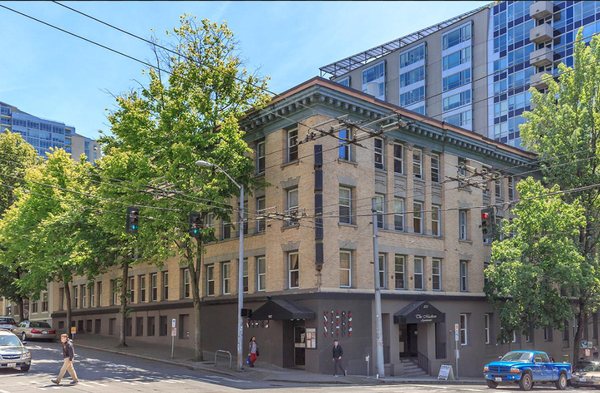
Image via Yelp

By Erica C. Barnett

Dozens of very low-income residents of a subsidized apartment building on First Hill, the Madison Apartments, have been displaced, possibly permanently, by a massive fire that broke out last Sunday night. The five-alarm fire badly damaged the third and fourth stories of the four-story 1902 brick building and forced residents of all 75 studio and one-bedroom units to leave their homes.

A relatively small number of residents have been staying at a temporary shelter run by the Red Cross at Garfield Community Center; the city had no information about where the rest of the residents, who are considered homeless until and unless they find new permanent housing, have gone.

According to Office of Housing (OH) spokeswoman Stephanie Velasco, 38 apartments on the top two floors of the building “sustained fire damage and are uninhabitable. …OH is working with the Seattle Housing Authority to identify new permanent housing options for residents of the third and fourth floors, as they will be unable to re-occupy those units in the near term.” At the moment, no one is supposed to return to their apartments (although some may be doing so against the advice of the city and building management).

Although Velasco said the “current target for [basement, first-, and second-floor] residents to re-occupy some parts of the building is early July,” that could be optimistic. Because of the building’s age, the fire may have exposed asbestos insulation, contaminating apartments with the airborne carcinogen. We’ve asked the city for more information about contamination from asbestos and other hazards.

Units at the Madison Apartments are subsidized through a number of programs, including federal Housing Choice (AKA) Section 8) vouchers, and are restricted to people making less than half the Seattle area median income, or around $45,000 for a single person.

A spokeswoman for the Seattle Housing Authority, Kerry Coughlin, said SHA is helping displaced residents with Housing Choice vouchers holders to find new apartments through an expedited process.  However, Coughlin added, “That process is all we can ‘expedite.’ We can’t issue new vouchers to residents at the Madison building. If and when we can issue new general purpose vouchers (not restricted to special populations), we draw in order from our wait list.”

In Seattle, rent-restricted and affordable units can be extremely hard to come by; the “affordable” rent for a person making 50 percent of median ranges from $1,123 for a studio to $1,416 for a one-bedroom, including utilities, according to the Office of Housing. Meanwhile, the list to apply for Section 8 vouchers is closed due to excess demand, and people who have vouchers in hand often end up returning them because they can’t find an affordable apartment. Currently, the lottery to get on SHA’s wait list for vouchers is closed; the last time it was open, in 2015, 3,500 households were added to the list.

According to Velasco, SHA is “coordinating with American Red Cross to assist residents with Housing Choice (Section 8) Vouchers, with the intent to help expedite the process of voucher reissuance and relocation for residents needing relocation.” People without vouchers, or who can’t afford market-rate apartments, will have to seek shelter or temporary housing through already overburdened local nonprofits.

“[I]t’s been a heavy, unfortunate week for everyone that lives and works there. We are still assessing the damage and extent of work that needs to be done… in order to reopen.”—Greg Lundgren, co-owner, Vito’s Lounge

Residents at the Madison Apartments were not required to have renters’ insurance.

On the first floor of the building, the longtime First Hill institution Vito’s Restaurant and Lounge is another temporary casualty of the fire. Co-owner Greg Lundgren said the business sustained major water damage from efforts to put out the fire and that it will probably be at least a month, if not longer, before Vito’s can reopen.

“Our electronics were fried, our hood ventilation was cooked in the fire (it runs up through the center of the building and was exposed to the fire on the fifth floor), our ceilings are water damaged and most likely need replacement, and everyday another issue is revealed,” Lundgren said. “We are also focused on our staff, the musicians that we have programmed and support, and try and get better clarity ourselves on the extent of the damage and the road back to operating.”

Vito’s first opened in 1953. It closed in 2009 after a shooting inside the restaurant. In 2010, Lundgren and his business partner, Jeff Scott, bought the bar and reopened it, leaving the interior—with its red vinyl banquettes and taxidermied back-room cougar—largely unchanged.

“[I]t’s been a heavy, unfortunate week for everyone that lives and works there,” Lundgren said. “We are still assessing the damage and extent of work that needs to be done—while we did not see smoke or fire damage, there is extensive water damage, and we have a professional service cleaning, drying and addressing a long list of concerns and work that needs to happen in order to reopen.”

According to the Seattle Fire Department, the fire was “caused by an open flame that tipped over onto a mattress and ignited it. The fire spread to other combustible materials, then burned through the roof and void spaces.”

One Thing We Learned During the Pandemic: Transit’s Not Dead

SounderBruce, CC BY-SA 4.0 , via Wikimedia Commons

by Josh Feit

There’s a stat in the latest report from Commute Seattle that offers a glimmer of hope for transit advocates. In a report that otherwise shows a stark drop in transit commutes between 2019 and 2021, coupled with a dramatic rise in telecommuting—arguably a double whammy of bad news for future transit investments—there is one finding that points toward a potential transit renaissance.

The survey showed that a key bloc of downtown workers, employees at small businesses (between 1 and 49 employees), represent the greatest untapped market for transit.

According to the City’s Office of Economic Development, small business—places with 50 employees or less—make up 95 percent of Seattle’s companies. Given small businesses’ big footprint, it’s time for the city to make policy that not only serves this important workforce, but also serves Seattle’s goal to be a sustainable, green city.

In its report, Commute Seattle, the local nonprofit that facilitates alternatives to solo car commuting, describes the encouraging news this way: “Unmet demand for employer-paid transit is higher among employees at smaller worksites than their counterparts in larger ones.” In other words, despite all the doom and gloom soothsaying about transit, the untapped demand is actually there.

At a time when some urbanists are anxious about a post-pandemic world that sidelines train and bus commuting, the news that employees at small businesses would like to ride transit, but aren’t, is particularly welcome because small businesses employ an outsized percentage of the downtown workforce. The most recent info on downtown employment comes from a November 2020 report from the Office of Economic Development, which, in addition to the 95 percent number noted above, also found that businesses with fewer than 50 employees make up provide nearly 200,000 jobs, about a third of all jobs in the city.

The numbers about transit demand tell the story: At downtown Seattle’s smallest businesses, those with between one and nine employees, more than 40 percent of employees said that transit passes are “not available” from their employer, but “they would use them” if they were. For companies with 10 to 49 employees, the number was 25 percent. Based on Commute Seattle’s outreach work, the people who work at small businesses citywide are overwhelmingly hospitality, restaurant, health care, and in-home health care workers, they say.

Just 23 percent of employees at the smallest companies and 32 percent of workers at larger small businesses report that subsidized transit programs are actually available and that they use them. This means that interest in transit at these small businesses totals 64 percent and 56 percent, respectively, as the chart above indicates.

At downtown Seattle’s smallest businesses, those with between one and nine employees, 40 percent of employees said that transit passes are “not available” from their employer, but “they would use ‘them'” if they were.

By the way, at the city’s largest companies, 100 or more employees, transit benefit usage is high, at 60 percent. This high use is easy to explain: State law requires large employers to make a “good faith effort” to use commute trip reduction plans to meet state environmental and traffic congestion goals. What jumps out about this number is that it’s about equal to the pro-transit number among employees at Seattle’s smallest businesses. This raises a question: Why is public policy only about getting white-collar workers to the job, but not employees at smaller businesses, including working-class people?

It’s worth pointing out that the high demand for transit benefits from workers at smaller businesses is coming from people who’ve yet to experience the practical benefits of transit—no gas bills, for one—at their current jobs. Just imagine how those numbers would climb if these employers offered to subsidize their ORCA cards and word spread among coworkers about the benefits. As Commute Seattle’s communication manager Madeline Feig puts it: “The best way to get people to know if transit will work for them is to get transit passes in their hands—it makes the decision easy. It is difficult for folks to know whether they would use that type of benefit if they have never had it.” In short, total interest in riding transit may be much higher than what Commute Seattle’s report suggests.

The data about the intense demand at small worksites overlaps with another reality that became clear during the pandemic: Ridership data for transit agencies nationally, including Sound Transit and Metro, showed that that people in working-class communities and communities with high BIPOC populations continued to ride, or returned more quickly to transit, during the COVID-19 crisis.

I’m tying these two blocs of commuters together—those who work at small businesses and low-income and essential workers—because it reveals a strategy that could bring public transportation back to the forefront of our city vision, even as hybrid work models in the corporate world seem poised to undermine it. The strategy: Investing in public policy that brings transit to those who want it most.

“One of the most immediate actions we can take to address transportation inequities,” says Commute Seattle’s longtime program manager Nick Abel, “is offering transit opportunities to essential employees.”

Of course, subsidizing transit—or providing free transit— for 200,000 workers costs money. The good news is: Big employers are already paying. Sound Transit, for example, received about half its fare revenues from employer business accounts—more than $48 million of the $97 million the agency received in farebox revenue in 2019.

Given that status quo, given the environmental and city planning pluses of getting more people on transit, and given the unmet demand, it would make sense to replace this private cost with a broader, progressive business tax (smaller businesses pay less) to cover both the current cost at big companies and the cost to bring in new riders from small businesses.

Josh@publicola.com

Editor’s note: Columnist Josh Feit is an employee of Sound Transit, the regional transit agency. His views do not represent the agency’s.

Chamber Poll Asks Leading Questions, Gets Predictable Answers

By Erica C. Barnett

The head of the Seattle Metropolitan Chamber of Commerce, Rachel Smith, expressed optimism during a press briefing to roll out the Chamber’s latest poll, which concludes that a supermajority of Seattle residents “actively” considered moving last year and that only one in four people would feel safe going downtown after dark. “This data shows us that the voters know what’s going on in our community, they understand it, they have complex reactions to it, and fundamentally, they want action… and I think that’s good news for the kind of leadership that they need,” Smith said.

The editorial board of the Seattle Times didn’t take long to read between the lines, publishing an editorial that called the poll a “cold-water shock” that should prompt the City Council to take a hardline approach to crime and homelessness. The Times piece paid particular attention to a poll question about encampment sweeps, gloating that “[e]ven 55% of the dozens of self-identified Socialists in the poll said the ‘stop all sweeps’ idea is wrong.”

As with all polls, though, how you ask the question matters. The Chamber’s question about encampments was particularly misleading, creating a false choice between an option that does not currently exist in the city of Seattle—offering appropriate housing or shelter, along with health care, treatment, and other services that meet the needs of people living outdoors, and only then asking them to move—and the most extreme “no sweeps under any circumstances” option. Would you rather “provide outreach and offer shelter and services to individuals before closing encampments,” or do you agree that “no individual should be moved unless they agree to alternative shelter or housing”? Given that false choice between two options that no one in city government has proposed, it’s little wonder that both socialists and self-identified Democrats overwhelmingly picked the former.

The pandemic has raised the level of discontent across the nation, so it can be easy to forget that just two years ago, national pundits were waving around polls saying people planned to flee San Francisco and New York City to move here.

Similarly, the poll set up a question about police spending in terms that pitted an option most voters would consider reasonable—hiring better-trained police while implementing “alternative policing and sentencing programs”—with one many people would consider an extreme approach: Decriminalizing all nonviolent misdemeanors and eliminating police. Not surprisingly, just 23 percent of respondents said the city should legalize misdemeanors and get rid of the cops.

So what can such a poll tell us? Questions about whether the city is on the right track or the wrong track, whether people have considered moving somewhere else, and whether people trust the city council perennially receive responses suggesting that everything is worse than ever, and that the city council, which has far less power in Seattle’s political system than people generally assume, is to blame. (Having covered such polls for the better part of 20 years, I can’t recall a single example of a business group releasing a poll showing that voters think things are going great and that they trust the council more than they would a random guy on the street).

In a sense, surveys like this one serve as early indicators of how people will feel about (or whether they will vote for) policies that business groups support, like increased police funding, crackdowns on homelessness, and tax breaks. They are less useful, however, at predicting things like how many people actually will leave Seattle (Republicans perennially say they plan to leave, and yet here they still are) and whether people are, individually, happier living here than they would be somewhere else. The pandemic has raised the level of discontent across the nation, so it can be easy to forget that just two years ago, national pundits were waving around polls saying people planned to flee San Francisco and New York City to move here.

And because many questions are designed in a way that produces maximal results for certain outcomes, it can be hard to tease out what voters are actually “saying.” When 61 percent of voters identify homelessness as the issue that they are “most concerned or frustrated about,” that response almost certainly includes people who actively work against encampment sweeps as well as those who are annoyed at the sight of tents on the freeway.

Questions about “crime and public safety,” similarly, look different from the perspective of someone living in a neighborhood deeply impacted by gun violence and the owner of a $2 million house in Laurelhurst who hears about what’s happening in the “inner city” from their local TV fearmonger.

And, as always, there are internal contradictions: Most people agree that the city to spend more money on all sorts of things, including behavioral health care and homelessness solutions, but also overwhelmingly oppose more taxes to pay for all that new spending uamid a $150 million deficit.

The poll did include one somewhat surprising result: Most people, including homeowners, say they support “more housing” not just along commercial streets but in their own neighborhoods. There’s a caveat for that one, though, too: The Chamber only asked about duplexes and triplexes, not apartments; had they asked homeowners whether they would welcome a three-story apartment building next door, they might have gotten a much different response.

Outdoor Seating Is Here to Stay, City Extends Hiring Deadline for Police Accountability Director, “Seattle Nice” Debates “Operation New Day”

Councilmember Dan Strauss, at La Carta de Oaxaca in Ballard

1. Back in 2013, when the city opened its first “parklet” in two former parking spaces on Capitol Hill, opponents (like this guy, who called the city “vehemently, virulently anti-car”) claimed that repurposing parking spaces for non-car uses would lead to all kinds of calamities, including lost parking revenue, traffic congestion, and the collapse of business districts—after all, why would anyone go to a business if they couldn’t park out front?

Parklets eventually caught on, and none of the dire consequences opponents predicted came to pass—in fact, the outdoor seating made business districts more appealing by bringing people into areas that used to be choked by cars. During the pandemic, the city decided to expand the program (allowing larger, more permanent structures) and make it free, providing safe, semi-permanent spaces for restaurants and bars to operate and helping businesses that might otherwise have closed.

Sitting under one of these temporary outdoor structures outside the La Carta de Oaxaca restaurant in Ballard Tuesday morning, Mayor Bruce Harrell signed legislation sponsored by District 6 Councilmember Dan Strauss to extend the program until January 31, 2023, with a goal of making it permanent. Eventually, Strauss said, the city will start charging for the permits and impose design standards for street dining structures, but that it won’t be “the same amount as [revenue from] five parking spots”—the pre–pandemic cost. “We don’t want to rush and jump to conclusions about how much a permit should cost or what the design standards should do,” Strauss said.

In a sign of how much things have changed since the parklet program started, only one reporter asked how making the program permanent would impact “parking and traffic congestion,” and Strauss responded with a hand wave. Gesturing to cars parked across the street, Strauss said, “As you see, we are having both the ability to have people eating outside and to park their cars. There’s many parking stalls here. What we also see here in Ballard is with increased density, we have more people living close to [businesses]”—people who don’t need to drive.

2. Seattle’s Office of Police Accountability won’t have a new permanent director until this summer at the soonest, giving the mayor’s office and city council time to launch a national candidate search for the high-profile role. Former OPA Director Andrew Myerberg left the office in January to join Mayor Bruce Harrell’s office as the new Director of Public Safety; Dr. Gráinne Perkins, an adjunct professor of criminology at Seattle University and a former detective in the Irish Police Service, currently runs the OPA as interim director.

During a city council public safety committee meeting on Tuesday, committee chair Lisa Herbold said the council will waive the standard 90-day deadline for the mayor to appoint a replacement for a departing OPA director; ordinarily, if the mayor misses the 90-day deadline, the public safety committee is responsible for appointing a new director. Instead, Deputy Mayor Monisha Harrell said her office will hire a recruiting firm that specializes in police oversight positions, with a goal of identifying six candidates and starting to interview them by May 27.

Deputy Mayor Harrell added that the next OPA director will need to be a “special unicorn” who can navigate increased public scrutiny of police oversight agencies. During Myerberg’s four years at the OPA, police accountability advocates criticized his  cautious approach to investigating police misconduct—particularly allegations of excessive force, which Myerberg argued were rarely black-and-white enough to justify firing an officer. Myerberg said he was wary of recommending discipline that officers could get overturned on appeal; his wariness may be one reason for the overall decline in the number of disciplinary appeals filed by Seattle police officers over the past five years.

Harrell added that her office will also form a committee, which will include members of Seattle’s Community Police Commission, to review the OPA director’s job description. In the past year, the CPC has increasingly challenged the OPA for what it views as inadequate disciplinary recommendations in high-profile misconduct cases.

3. This week on the Seattle Nice podcast, Erica and political consultant Sandeep Kaushik debate the merits of Mayor Harrell’s “Operation New Day” effort to crack down on crime in downtown Seattle. Continue reading “Outdoor Seating Is Here to Stay, City Extends Hiring Deadline for Police Accountability Director, “Seattle Nice” Debates “Operation New Day”” →

Fremont Brewing Is Still Using Concrete Blocks to Prevent RV Parking. So Are the City of Seattle and the US Postal Service.

Ecology blocks outside Seattle City Light's substation in Ballard
Ecology blocks outside Seattle City Light’s substation in Ballard

By Erica C. Barnett

After at least one formal complaint, the Seattle Department of Transportation has issued a warning—but no penalty—to Fremont Brewing, the company co-owned by city council member-elect Sara Nelson, for obstructing the public right-of-way around its Ballard brewing facility with massive concrete “ecology blocks.”

As PubliCola reported last summer, eco blocks—so called because they are a byproduct of concrete production that uses waste that would otherwise occupy landfills—are an inexpensive way for business owners to prevent people living in their vehicles from parking on the street next to their properties.

Since the beginning of the pandemic, when the city stopped enforcing a law requiring people to move their vehicles every three days, the blocks have proliferated throughout Seattle’s industrial areas, which are the only places where people living in oversized vehicles can legally park. Business owners say that the presence of RVs and other types of large vehicles, such as box trucks, discourages patrons, and that large concentrations of RVs can lead to health and safety problems that impact their customers and employees.

Obstructing public streets is illegal, but SDOT has treated eco-blocks differently than other street obstructions; instead of penalizing business owners for taking over public space that belongs to everyone, as they might if a random person set up a tire fort or craft fair in the middle of the street, the department has responded to the proliferation of eco-blocks by essentially throwing up its hands.

Eco-blocks line the street next to Fremont Brewing's production facility in Ballard.
Eco-blocks line the street next to Fremont Brewing’s production facility in Ballard.

This is true not just of Fremont Brewing, which received a written warning, but of many other businesses around the city’s industrial areas as well as the US Postal Service, which surrounded its Ballard sorting facility with eco blocks way back in August 2020.

At the time, USPS spokesman Ernie Swanson told PubliCola that “USPS got the OK from the city to put in the concrete barriers” in response to a proliferation of RVs in the area. The Seattle Department of Transportation disputed this, calling the road-blocking barricades “unpermitted,” but took no action. They’re still there today, graffiti-covered and looking dingy compared to their more recently installed counterparts in front of a Bevmo!-anchored strip mall across the street. 

Contacted for information about why the blocks are still in place more than a year later, Swanson said, “The concrete blocks were placed in front of the Ballard PO as well as other neighboring businesses as a response to a proliferation of needles, human waste and other hazardous materials being discarded on the property. As of this date, the blocks remain not only in front of the PO but also other businesses in the area. We have no knowledge that a permit was ever required.”

"Eco-blox matta": Graffiti on an ecology block in Ballard.

The city’s process for dealing with Fremont Brewing’s ecology blocks was typical. After someone filed an anonymous complaint about the blocks in September, SDOT performed an inspection “and observed ecology blocks” in the street around Fremont Brewing, according to a notice SDOT sent to the company September 17. “We do not allow this type of use in public right-of-way due to traffic safety concerns as well as transportation and utility access needs. Please remove these unpermitted encroachments from public right-of-way by the compliance date indicated below”—November 10.

November 10 came and went; the blocks remained. About a week later, the case was closed.

SDOT spokesman Ethan Bergerson told PubliCola the department followed “standard procedure” in responding to the complaint. “The first step in the enforcement process is to mail a letter to the adjacent businesses or property owners notifying them of their responsibilities to remove the concrete blocks,” Bergerson said. “The purpose of this letter is to initiate a conversation with the responsible party so that we can find a path forward leading to their removal of the unpermitted concrete blocks. To date, we have sent letters of this nature to property owners and businesses adjacent to concrete blocks left in about a dozen locations around Ballard, SoDo, and Georgetown. … Our approach [with Fremont Brewing] has been consistent with the other locations.”

A reminder for dog walkers is visible behind a fence that blocks sidewalk access next to City Light's Canal substation.
A reminder for dog walkers is visible behind a fence that blocks sidewalk access next to City Light’s Canal substation.

Fremont Brewing owner (and Nelson’s husband) Matt Lincecum, who runs the company day to day, declined to comment for this story, as did Nelson.

SDOT has the authority to take enforcement action against any business (or government entity) that obstructs the public street with eco blocks or other objects that make it impossible for the public to access streets, sidewalks, or parking strips. To date, it has not done so, beyond warnings like the one it issued to Fremont Brewing.

As if to emphasize the city’s lackadaisical approach to enforcement, Seattle City Light has installed its own anti-RV fortifications at its Canal Substation, located two blocks away from Fremont Brewing and the rest of the eco-block-littered Ballard brewery district. In addition to eco-blocks in the street, the north side of the substation is walled off by two layers of fencing that completely obstruct the public sidewalk. A review of historical Google Maps reveals that the eco-blocks were installed sometime after this past August, when several RVs were parked along the south side of the substation. The fence, too, is new; as of June 2021, per Google Maps, several RVs were parked on that side of the substation, too. Since then, the RVs appear to have moved around the corner, to a narrower residential street on the east side of the building.

We’ve reached out to City Light as well as SDOT about the obstructions around the Canal Substation and will update this post when we hear back.

Old and new ecology blocks next to the Ballard postal sorting facility, which installed blocks on parking strips and (around the corner) on the street itself last year.
Old and newer ecology blocks next to the Ballard postal sorting facility, which installed blocks on parking strips and (around the corner) on the street itself last year.

From the point of view of a property owner, ecology blocks solve an immediate problem—people living in RVs or parking large vehicles indefinitely in front of their business—that the city has failed to address. But the fact remains that even if the city continues to turn a blind eye to vigilante street obstructions, nothing will really change until the region stops ignoring the needs of people living in vehicles, who make up as much as half of King County’s homeless population. In the absence of “safe lots,” social services, and affordable, permanent housing, people sleeping in their vehicles will continue to take up space in public,

But no amount of semi-sanctioned street and sidewalk obstruction will fix the underlying problem: The city and county have dedicated virtually no resources to people living in vehicles, who make up as much as half of the region’s unsheltered homeless population.


Ballot Measure Would Reinstate Sweeps, Harrell Joins Mayor’s Race, and Republicans Hedge Bets on Capital Gains

The look on mayoral candidate Bruce Harrell’s face when KOMO TV’s Jonathan Choe asked how he felt about Black-on-Asian crime, given that “you’re biracial, your mother is Japanese American and your dad’s Black”

1. After months of will-he-won’t-he speculation, three-term former city council member Bruce Harrell announced Tuesday that he’s running for mayor. As a well-known political figure who will likely have support from the Seattle business community, Harrell joins the ranks of instant frontrunners in the race, which also includes current city council president Lorena González, Chief Seattle Club director Colleen Echohawk, South East Effective Development director Lance Randall, and city council aide Andrew Grant Houston.

At a press conference outside Garfield High School, his alma mater, Harrell said he would seek public-private partnerships to fund investments in solutions to homelessness, clean up city parks where unsheltered people have taken long-term refuge during the pandemic, and work to “reimagine” the city’s police force rather than defunding it.

In a conversation with Fizz after the announcement, Harrell said the biggest problem at city hall, Harrell said, is a “lack of relationships”—between the mayor and council, the council and departments, and with outside organizations like Seattle Public Schools.

True to his past campaigns (in addition to serving three terms on the council, Harrell ran for mayor in 2013, receiving 15 percent of the primary vote), Harrell focused on style, more than policy, in our conversation. “Quite honestly, I am attracted to a situation that requires rebuilding,” Harrell said. “It’s sort of easy to hop into a leadership position when an organization is going smoothly and is high-performing. It’s a different skill set for someone to consciously jump into a situation that is plagued with dysfunction, and that doesn’t bother me.”

But he did have a few specific policy prescriptions. He said he would work to revitalize neighborhoods including, but not limited to, downtown, by promoting not just brick and mortar businesses but partnerships between small businesses (particularly women- and minority-owned) and larger ones—a kind of “business-to-business on steroids” approach to saving local businesses. “The first thing we must learn how to do is recycle our money within the economy by making sure the relationship between small businesses and big business is intact,” Harrell said.

He also said he would propose divvying up $10 million between the seven council districts so that the council member from each geographic area could determine, through conversations in that community, what local priorities should be funded. Asked how this would differ from the ongoing participatory budgeting process, which is supposed to determine how the city will spend $30 million set aside for alternatives to policing last year, Harrell said, “I think participatory budgeting is a step in the right direction, but what it still doesn’t do, I think, is have each council member directly accountable to their particular constituents in their community.”

Harrell, who grew up in the Central District and often talks about his deep roots in Seattle, provided more details about his platform in an “open letter” Tuesday morning.

2. Another former city council member, Tim Burgess, is preparing to propose a ballot measure that would change Seattle’s constitution (known as the city charter) by directing the city’s Human Services Department to fund mental health and substance abuse disorder treatment, expand access to shelter, and “collaboratively work with other City departments to ensure that City parks, playgrounds, sports fields, public spaces and sidewalks and streets (“public spaces”) remain open and clear of unauthorized encampments.”

The proposal would mandate (but not fund) new shelter and services and reinstate sweeps, including the removal of encampments that pose a “public health or safety risk,” a term that is not defined and would be subject to interpretation.

The proposal does not appear to include a funding plan.

The charter amendment would require HSD to create a plan to provide services to people living unsheltered (along with individual written “service plans” for every person living unsheltered in the city) and would “require the cleaning and removal of unauthorized encampments in public spaces as these services are available.” In addition, any encampment that poses “a public health or safety risk may be immediately removed,” the proposed amendment says.

In plain language, the proposal would mandate (but not fund) new shelter and services and reinstate sweeps, including the removal of encampments that pose a “public health or safety risk,” a term that is not defined and would be subject to interpretation.

It also directs HSD to work with prosecutors, police, and public defenders to create new “diversion” programs for people who commit non-violent offenses; these programs would include unspecificed “treatment programs as an alternative to incarceration.”

Burgess did not respond to a request for comment.

Support PubliCola

If you’re reading this, we know you’re someone who appreciates deeply sourced breaking news, features, and analysis—along with guest columns from local opinion leaders, ongoing coverage of the kind of stories that get short shrift in mainstream media, and informed, incisive opinion writing about issues that matter.

We know there are a lot of publications competing for your dollars and attention, but PubliCola truly is different. We cover Seattle and King County on a budget that is funded entirely by reader contributions—no ads, no paywalls, ever.

Being fully independent means that we cover the stories we consider most interesting and newsworthy, based on our own news judgment and feedback from readers about what matters to them, not what advertisers or corporate funders want us to write about. It also means that we need your support. So if you get something out of this site, consider giving something back by kicking in a few dollars a month, or making a one-time contribution, to help us keep doing this work. If you prefer to Venmo or write a check, our Support page includes information about those options. Thank you for your ongoing readership and support.

To place a charter amendment on the ballot, proponents must get signatures from as many registered voters as 15 percent of the turnout in the most recent mayoral election, or about 33,000 people. After that, the city council can choose to enact the amendment, put it on the ballot, or add their own alternative to the mix. This last scenario played out in 2014, when the council proposed an alternative to a preschool initiative that opponents said gave too much power to unions. The council’s winning alternative was sponsored by Tim Burgess.

3. Despite claiming the Democrats’ capital gains tax legislation (SB-5096) would put an unconstitutional law in place, Republicans are worried that if it passes, taking the law to the Supreme Court will backfire and open the door for an income tax.

Luckily for the Republicans, moderate Democratic Senator Steve Hobbs (D-44, Lake Stevens) added an amendment to the capital gains tax during  the Senate vote that stripped the bill of its emergency clause and took out language saying that the revenue from the legislation is tied to government functions. Legislation with an emergency clause, or legislation that includes language saying it’s necessary to support the functioning of state government, can’t be overturned by voter referendum. The removal of both sections clearly signals that opponents prefer to leave the bill open to a statewide referendum, rather than battling over its legality in court. Continue reading “Ballot Measure Would Reinstate Sweeps, Harrell Joins Mayor’s Race, and Republicans Hedge Bets on Capital Gains” →