Tag: community police commission

Changing Seattle’s Police Hiring Test Won’t Fix SPD’s Recruitment Issues, City’s Test Administrator Tells Council President

A demographic chart shows SPD is losing out on a huge potential hiring pool: Women.

By Erica C. Barnett

The head of the city commission that administers tests for new Seattle Police Department recruits, the Public Safety Civil Service Commission, pushed back against several of City Council President Sara Nelson’s claims about police hiring and recruitment at a meeting of the Community Police Commission this week.

Nelson has proposed legislation that would push the PSCSC to switch to a test called the Public Safety Test (PST), which has a 90 percent passing rate and is used by smaller jurisdictions around the region.

In contrast, about 75 percent of applicants pass the test Seattle uses, which was developed by a company called the National Testing Network in response to a federal consent decree that required SPD to implement policies to reduce biased policing and excessive force. The test, which the city has used since 2012, is designed to eliminate applicants who are biased, dishonest, or unable to react appropriately in various scenarios, including crises.

Switching to the PST test, Nelson argued, would mean that applicants would no longer have to take a different test to apply in Seattle—an extra step Nelson said is preventing “highly qualified [people] that we think would be great candidates for our force” from applying. “We are competing against” other cities like Bellevue that use the PST, Nelson said. “That is why there is an interest [in using the same] exam so that you can just order the scores to be sent to the several jurisdictions at the same time.”

PSCSC director Andrea Scheele, who addressed the CPC after Nelson wrapped up, said the NTN test has never been a deterrent for applicants in the past, suggesting that the test is not the problem. Just a few years ago, she said, thousands of people took the test during each testing cycle, and the test has only become more accessible since then—for example, applicants can now take it online. “Personally, I don’t believe that the problem is that people can’t find us or people don’t want to take our test, or that people don’t know that Seattle Police Department is hiring,” Scheele said.

Scheele and police reform advocates have noted that the NTN test was specifically designed for Seattle in response to the consent decree, and tests for specific qualities that may not be captured by the more generic PST.

Addressing those concerns, Nelson argued that it would be a straightforward and relatively speedy process to add new questions to the PST that would effectively make it as rigorous as the NTN test. This would occur, she said, through a “validation study,” which Nelson described as “about eight weeks in which the people that design the test meet with stakeholders, the accountability partners, the chief, and … anybody [else who] wants to be involved in the formation of this exam, and they figure out what do we want to test for, and then then design the test around that.”

But Scheele told PubliCola that “customizing” the PST exam, which Public Safety Testing licenses from another company called Industrial/Organizational Solutions, would probably take much longer than eight weeks. “My estimate is that to do a full validation study would take six to 12 months,” she said—and that’s if the company cooperates by providing information about the test itself. Scheele said she’s already  “due diligence” to determine if there are other tests that would work in Seattle, but that process has been hampered by the fact that the president of Public Safety Testing, Jon Walters, has refused to participate or respond to any of the PSCSC’s questions.

“I sent a list of 44 questions to each of the two companies, and NTN got back really quickly with what appeared to be complete and thorough responses,” Scheele said. In contrast, Walters “said ‘I’m not going to answer your questions.”

“I don’t think I’m going to persuade them to participate,” Scheele told the CPC, “but I’m still going to complete my due diligence process.”

Nelson also said she hoped her bill would encourage applicants to stick with the process by funding a new PSCSC staffer to do outreach and engagement to applicants, something she claimed the PSCSC doesn’t do. “Think about if you’ve ever applied for a job and you hear nothing from the from the prospective employer,” Nelson said.  “Most jurisdictions acknowledge that application within 48 hours and invite the candidate to be able to ask some questions and be guided through the next steps. We don’t do that.”

Scheele said Nelson is misinformed. “Of course their application is acknowledged,” Scheele told PubliCola. “They receive an email almost immediately from us, they get at least six messages throughout the application process, and they can call us at any point if they have a problem with the actual test,” an opportunity Scheele said many candidates take full advantage of.

One recruitment opportunity Nelson and the CPC did not discuss was hiring more women, by addressing SPD’s culture of misogyny; recent articles in PubliCola and on KUOW have shone light on the issues faced by female officers, from overt sexual harassment to getting passed over for promotions and opportunities because of their gender.

Last year, according to a slide Scheele used in her presentation, just 7.4 percent of the candidates who passed the test were women, while to 90.1 percent were men (another 1.8 percent declined to identify their gender, and a handful were trans or nonbinary)—a fraction of the percentage of women SPD has pledged to hire by 2030 as part of the “30 by 30” initiative.

As Questions Swirl About SPD Accountability, City Announces “Dual-Dispatch Pilot” for Low-Priority Calls

By Erica C. Barnett

On Thursday, during a press conference outlining his proposal to expand, reorganize, and rename the city department that responds to 911 calls, Mayor Bruce Harrell said he believed “the process is working” in the case of Daniel Auderer, a police officer and Seattle Police Officers Guild vice president who was caught on body-worn video mocking the death of 23-year-old student Jaahnavi Kandula with SPOG president Mike Solan. The video, which only captured Auderer’s side of the conversation, was recorded shortly after Officer Kevin Dave struck and killed Kandula on January 23.

Harrell was announcing $6 million in new funds for the Community Assisted Response and Engagement (CARE) department, formerly known as the Community Safety and Communications Center; that money will help hire 13 new staff, including behavioral health specialists, to respond alongside police to low-priority calls.

The question about Auderer came from a trainee at the 911 call center in SPD’s West Precinct where the announcement took place.

“Sometimes justice is not quick, due process sometimes is not quick, certainly not as quick as people would like to see,” Harrell said. “But everyone accused of misconducth as the right to due process and I will defend that process. We can’t be quick to judgment. … I have a member of my administration who was sentenced to prison for over 20 years without the possibility of parole. He was unfairly convicted because of the lack of due process. So I will defend due process … and hopefully we’ll see outcomes that people will say, ‘the system worked’.”

As PubliCola reported last week, an SPD employee saw the disturbing video and reported it to supervisors on August 2. Six days later, Auderer sent a letter to the Office of Police Accountability (OPA) attempting to minimize his and Solan’s comments, saying the two SPOG leaders were laughing at “the ridiculousness of how I have watched these incidents play out as two parties”—in this case, Kandula, who was killed by a speeding police officer just hours earlier, and SPD’s own lawyers—”bargain over a tragedy.”

Earlier this week, the Community Police Commission, a civilian oversight body, wrote a letter calling on Police Chief Adrian Diaz to immediately suspend police officer Daniel Auderer without pay while the investigation is ongoing.

SPOG released Auderer’s August 9 letter to a conservative radio commentator the day before PubliCola and the Times received the video in response to records requests, and posted, on social media on September 15.

Earlier this week, the Community Police Commission, a civilian oversight body, wrote a letter calling on Police Chief Adrian Diaz to immediately suspend Auderer without pay while the investigation is ongoing. The CPC also asked Diaz to “immediately engage in a workgroup consisting of the Seattle Police Accountability Partners and members of the community to address repeated concerns with the culture of policing and police practices at SPD.” The other accountability “partners” are OPA and the Office of Inspector General, an independent office that reviews and audits SPD as well as OPA.

Mayor Bruce Harrell and 911 dispatcher Jordan Wallace discuss a Priority 3 call about someone selling stolen merchandise in the International District Thursday.

Auderer’s statements, the three CPC co-chairs wrote, “are horrifying and raise serious concerns about his attitude toward and interactions with members of the community, and his ability to investigate cases equitably, accurately, and without bias and keep the City’s residents safe. While the [body-worn video] does not capture SPOG President Mike Solan’s comments on the other end of the call, there is simply no context that could possibly make these comments acceptable.”

As of Friday, CPC co-chair Joel Merkel said SPD had not responded to the letter; a spokesperson for SPD said they had no comment beyond the statement they released on their website shortly after we published the video last week.

The city has been promising to send civilian first responders to calls that don’t require a police response since 2020, when thousands protested police misconduct after the death of George Floyd. In 2021, then-mayor Jenny Durkan announced the launch of a new crisis response team within the fire department to respond to some crisis calls, but the proposal never got off the ground.

Harrell, similarly, has vowed since taking office in 2022 to create a new “third public safety department,” in addition to police and fire, that would include a new type of civilian first responder. This week’s announcement does include new civilian responders. But they won’t be going out to most calls involving people in crisis.

Instead, they’ll be deployed, along with police, to two call types that police have already determined do not necessarily require a police response. Priority 4 calls, the lowest priority, are non-emergency calls that generally don’t require a police response at all. Priority 3 calls are for minor issues that may or may not get a police response, depending on officer availability—everything from noisy neighbors to off-leash dogs to illegal parking.

Priority 3 calls do include “person down” calls, where someone is unconscious in public, and welfare checks—two call types that might benefit from a behavioral health response, Diaz noted. “Sometimes, a highly intoxicated [person] might actually be … experiencing some level of crisis. Not always, but in some cases,” Diaz said.

However, the majority of Priority 3 calls, Diaz said, are so-called “paper calls”—calls where the incident already happened and the only thing left to do is file a report. Harrell characterized the new program as a “dual dispatch pilot” that the city will evaluate in a year or two “to see where it makes sense… [and] where the data leads us.”

SPD, Diaz noted, already has an internal crisis response team; more than 60 percent of officers have also taken a 40-hour course in crisis intervention training.

“Overdose Patients Can Become Violent”: Fire and Police Respond to Questions About Pedestrian Death

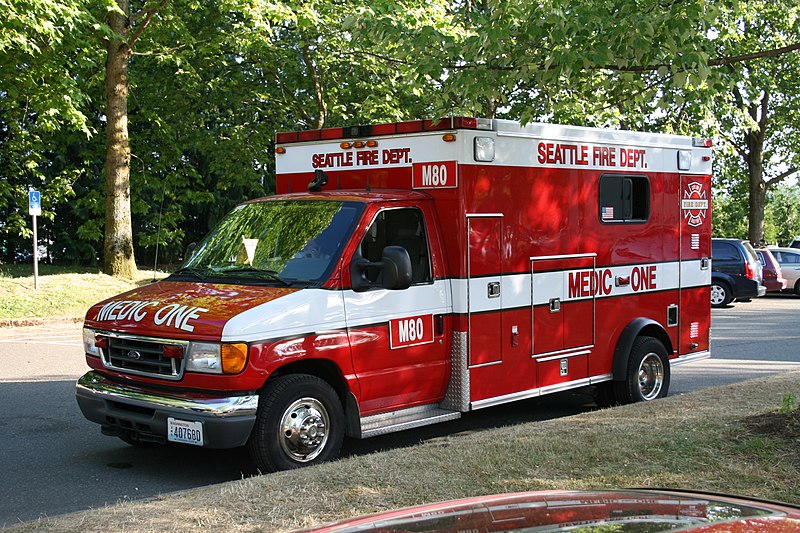
File:Seattle fire department medic 80.jpg
Atomic Taco, CC BY-SA 2.0, via Wikimedia Commons

By Erica C. Barnett

On Wednesday, the Seattle Police and Fire Departments responded to questions from the Community Police Commission about some of the circumstances that may have contributed to the death of Jaahnavi Kandula, a 23-year-old pedestrian who was killed in a marked crosswalk by SPD Officer Kevin Dave. Dave was driving to join Seattle Fire Department EMTs at a suspected overdose in South Lake Union. According to the response from Seattle Fire Chief Harold Scoggins, Seattle Fire Department policy requires police to be present when SFD responds to overdoses, because “overdose patients can become violent during treatment to reverse the overdose.”

The CPC asked the Fire Department to explain the reason it requires police officers to be present when Fire responds to overdose calls, posing four questions about the policy, how it came about, and “What percentage of drug overdose calls prior to the implementation of this policy included compromised safety, assaults, and/or injuries to SFD personnel related to reversing the effects of an overdose?”

In his response, Seattle Fire Chief Harold Scoggins said that the requirement “goes back at least 20 years and is designed to provide scene safety for firefighters and paramedics as overdose patients can become violent during treatment to reverse the overdose.” He did not answer the CPC’s question about how common it is for people coming out of overdoses to be violent, saying only that “[e]ncountering combative patients or bystanders on emergency responses has unfortunately become a reality for firefighters and paramedics.”

Narcan (or naloxone), the widely available overdose reversal drug, is used daily by non-emergency responders, including drug users themselves, and other public employees are trained to use it in the absence of paramedics or any armed response. In 2019,  then-Washington state health officer Kathy Lofy signed a “standing order” that made Narcan available over the counter without a prescription to any person who wants it, calling it a “very safe,” life-saving medication.

“When weighing the decision to respond using emergency driving, officers must consider if the incident is life threatening, road conditions, vehicle and pedestrian traffic, weather, speed, lighting, and their own driving abilities.”—Police Chief Adrian Diaz

In his letter, Scoggins said SFD has developed a “new method for tracking assaults and threatening behavior experienced by firefighters in the field,” in general, and has begun reporting this information. PubliCola has asked SFD for this data and will update this post with additional information when we receive it.

Seattle Police Chief Adrian Diaz also responded to the CPC’s questions. After describing the training officers receive in “emergency driving”—driving under emergency circumstances, such as a high-priority call where someone’s life is at risk—Diaz said officers are justified in taking “risks [that] “can result in severe consequences for the public and the officer. … When weighing the decision to respond using emergency driving…. [o]fficers must consider if the incident is life threatening, road conditions, vehicle and pedestrian traffic, weather, speed, lighting, and their own driving abilities.”

Diaz said the fact that the overdose was a Priority 1 call would not, in itself, necessitate emergency driving. “The priority level is a factor to consider but is not generally controlling,” Diaz wrote. “While many Priority 1 calls would warrant emergency driving under our current policy and training, not all do and officers are expected to consider the totality of the circumstances.”

PubliCola has filed a records request the audio from the initial 911 call; SPD categorically denied a separate request for all recorded audio related to the Kandula’s death, citing their ongoing investigation into the incident.

In a conversation with PubliCola last week, SPD Chief Adrian Diaz noted that Dave is a licensed EMT who was headed to the scene of a medical emergency, implying that he was on the way to respond to the reported overdose, not to provide security for the Fire Department. On February 6, the head of the Seattle Fire Fighters Union, Kenny Stuart, expressed frustration about SPD officers getting trained as EMTs and responding to medical emergencies like overdoses directly, saying this was the responsibility of the fire department, not SPD. (It’s a longstanding, ongoing issue.)

“Our EMS delivery system under the Medic One program is arguably the best in the country, and randomly allowing additional EMTs from other city departments to self-dispatch or to perform EMS functions at an incident does not improve or support the level of care we demand from this program,” Stuart wrote. “In fact, it unnecessarily complicates our response and diminishes the service that the public depends on and expects.”

Seattle Fire Department firefighters and paramedics are “the only personnel that are dispatched as EMTs” to medical emergencies, Stuart continued, “and they should be the only personnel who deliver EMS to the people of Seattle. We need our police officers to provide scene security and protect us so we can do our jobs effectively.”

Several years ago, SFD’s medical director told PubliCola the fire department preferred to use rescue breathing—a method to restore breathing in overdose victims without Narcan—followed by intravenous naloxone to facilitate a slower return to normal breathing without putting a person into instant opiate withdrawal. We’ve asked SFD whether this is still the department’s policy, and how the emergence of fentanyl has impacted overdose response, and will update this post when we hear back.

PubliCola has also reached out to Stuart.

Police Accountability Group Wants Answers on Fatal Collision

By Erica C. Barnett

UPDATE February 15, 2023: The Seattle Police Department and Seattle Fire Department chiefs responded to the CPC’s questions in separate letters today.

The CPC asked the Fire Department to explain the reason it requires police officers to be present when Fire responds to overdose calls, which are categorized as Priority 1 calls, the most urgent priority level. (Officer Kevin Dave was responding to an overdose call when he struck and killed Jaahnavi Kandula last month).

In his response, Seattle Fire Chief Harold Scoggins said that the requirement “goes back at least 20 years and is designed to provide scene safety for firefighters and paramedics as overdose patients can become violent during treatment to reverse the overdose.”

Although the letter continues, “Encountering combative patients or bystanders on emergency responses has unfortunately become a reality for firefighters and paramedics,” Scoggins does not quantify how often this happens or why; Narcan, the widely available overdose reversal drug, is used daily by non-emergency responders, including drug users themselves, and other public employees are trained to use it in the absence of paramedics or any armed response.

Seattle Police Chief Adrian Diaz also responded to the CPC’s questions. After describing the training officers receive in “emergency driving”—driving under emergency circumstances, such as a high-priority call where someone’s life is at risk—Diaz said officers are justified in taking “risks [that] “can result in severe consequences for the public and the officer. … When weighing the decision to respond using emergency driving…. [o]fficers must consider if the incident is life threatening, road conditions, vehicle and pedestrian traffic, weather, speed, lighting, and their own driving abilities.”

Diaz said the fact that the overdose was a Priority 1 call would not, in itself, necessitate emergency driving. “The priority level is a factor to consider but is not generally controlling,” Diaz wrote. “While many Priority 1 calls would warrant emergency driving under our current policy and training, not all do and officers are expected to consider the totality of the circumstances.”

Original story follows.

It’s unclear how fast Dave was driving or whether his decision to engage in emergency driving was within department policy.

The Seattle Community Police Commission, one of three city police oversight bodies, sent letters to the Seattle Police Department and Seattle Fire Department last week seeking information about policies that may have contributed to the death of Jaahnavi Kandula, the 23-year-old woman who was struck and killed by SPD officer Kevin Austin Dave last month. Kandula was crossing Dexter Ave. in a marked crosswalk when Dave, who was driving in an SPD SUV to join Seattle Fire Department first responders at a potential overdose nearby, struck and killed her.

SPD has not responded to questions about how fast Dave was driving or whether he stopped to help Kandula after striking her. In a statement , Police Chief Adrian Diaz noted that Dave is an EMT and said he “did have his emergency lights on and was clearing intersections with his siren,” a comment that implies Dave had “cleared” the crosswalk where Kandula was walking.

According to the AAA Foundation for Traffic Safety, a person struck by a vehicle at 25 miles per hour, the speed limit on Dexter, stands just over a 10 percent chance of dying from their injuries; at 40 mph, that risk goes up to 45 percent, and 75 percent of people hit at 50 mph will die.

The CPC’s questions for SPD revolve around the department’s policies and training for “emergency driving,” including how officers are trained to decide when driving faster or with less caution outweighs the risks, whether an officer who hits a bystander on the way to a call is supposed to stop and render aid, and whether officers are trained to always treat every high-priority call as an emergency requiring a speedy response. (Overdoses are classified as Priority 1 calls, the same category as active shooters and armed robberies).

The questions for the fire department concern an SFD policy that requires police to accompany them on overdose calls; as we’ve reported, this policy appears to stem from concerns that people revived from overdoses may be violent toward first responders, although it’s unclear how often this has actually happened or whether the presence of police has been effective at reducing this purported risk.

CPC co-chair Joel Merkel, who spearheaded the letter, says the department’s manual includes detailed instructions for pursuing drivers who fail to stop (an issue that’s at the heart of a heated legislative battle in Olympia right now), but comparatively little information about how officers are supposed to drive when responding to various types of emergencies. Last year, lawmakers barred police from chasing drivers except for violent crimes and suspected DUIs; despite data showing the new law has already saved lives, lawmakers are considering legislation that would roll back the partial ban.

“One of the reasons the vehicle pursuit bill was enacted in 2021 is because operating a police vehicle outside of a normal traffic pattern is very dangerous. Well, so is emergency response,” Merkel said. “When I as looking at SPD’s policies on pursuing vehicles and emergency response, I saw a huge variable—there’s a ton of parameters on pursuits, but if you look at the emergency response policy it’s comparatively [vague].”

“There’s a ton of non-governmental responses to overdoses that don’t involve the police and they go just fine.”—Joel Merkel, co-chair, Seattle Community Police Commission

Similarly, Merkel said, the CPC couldn’t find a written policy requiring police to respond to overdoses or documentation of people attacking first responders upon being revived by emergency breathing or Narcan. “There’s a ton of non-governmental responses to overdoses that don’t involve the police and they go just fine,” Merkel said.

It’s unclear whether this call even involved an overdose reversal; a Fire Department spokeswoman said “the patient was evaluated and did not want to be transported to the hospital” but did not provide additional details about the incident.

Spokespeople from both departments told PubliCola they plan to respond to the CPC’s questions as early as this week.

According to the AAA Foundation for Traffic Safety, a person struck by a vehicle at 25 miles per hour, the speed limit on Dexter, stands just over a 10 percent chance of dying from their injuries; at 40 mph, that risk goes up to 45 percent, and 75 percent of people hit at 50 mph will die.


Report Shows Ongoing Racial Disparities in Use of Force, Sparking Criticism and Questions About Future of Consent Decree

By Erica C. Barnett

A review of the Seattle Police Department’s use of force over the last three years, released by the federal monitor who oversees the consent decree over the department, found that despite a decline in the use of all levels of force, officers remain far more likely to use force against Black and Native American people than white suspects, and that Black people were most likely to experience the most serious type of force, which includes shootings by police. Thirty-six percent of use of force incidents involved Black individuals, who make up just over 7 percent of Seattle’s population.

Between 2019 and 2021, SPD officers used the highest level of force (known as Type 3 force) against 15 Black people, compared to 15 white people and 15 whose race officers listed as “unknown.” Overall, the race of nearly one third of all use-of-force subjects (and more than half of the people police used force against during the summer 2020 protests) was recorded as “unknown” (compared to 9 percent of people arrested overall), making it hard to draw clear conclusions about the true extent of racial disproportionality in use of force. This data gap could simply mean “a box wasn’t checked,” Oftelie said during a public meeting about the report Tuesday night, or it could be “something a bit deeper and more culturally nefarious, like officers have not wanted to check that box… in order to avoid repercussions” related to racial bias.

At Tuesday’s meeting, community members, including members of the city’s Human Rights Commission and a staffer for City Councilmember Alex Pedersen, raised questions about the report’s conclusions and how they’ll be incorporated into upcoming negotiations with the city’s largest police union, the Seattle Police Officers Guild. Malik Davis, a staffer for Pedersen, expressed frustration about the secrecy surrounding contract negotiations, noting that SPOG’s 2018 contract, which invalidated major elements of the city’s landmark 2017 police accountability ordinance, was the reason the federal judge overseeing the consent decree, James Robart, ruled the city partly out of compliance with the agreement the following year.

Oftelie is expected to recommend a path toward ending the consent agreement later this spring.

Meanwhile, the city’s Human Rights Commission, which is not one of the city’s official “accountability partners,” is seeking amicus status on the consent decree in order to share “the stories and solutions of our residents and community stakeholders most affected,” according to an SHRC press release. “In simple terms, the amicus status will enable the Commission to be a ‘friend of the court’ and have the ability to petition the court for permission to submit a brief in support of our neesd for continuous police accountability,” the SHRC wrote.

Two members of the city’s Community Police Commission, which does have amicus status with the court, said Tuesday night that amicus status does not give them carte blanche to “petition the court” or communicate with Judge Robart directly; it does allow them to “file on on the city’s brief, like we did in 2020 when the city tried to come out from under the consent decree,” CPC member Rev. Harriett Walden said. Continue reading “Report Shows Ongoing Racial Disparities in Use of Force, Sparking Criticism and Questions About Future of Consent Decree”

Lambert’s Colleagues Denounce Racist Mailer, Cops Debate Use of Projectile Launchers, and a Provider Recounts Street Sink Frustration

1. Six members of the King County Council—all Democrats—condemned Republican County Councilmember Kathy Lambert yesterday for a campaign mailing to some of East King County constituents that implied Lambert’s opponent, Sarah Perry, is being controlled by a shadowy cabal made up of Jews, socialists, and people of color.

The mailer showed three unrelated elected officials of color—Vice President Kamala Harris, Seattle City Councilmember Kshama Sawant, and Lambert’s own colleague, King County Councilmember Girmay Zahilay—along with US. Sen. Bernie Sanders, looming above a Photoshopped image of Perry as a marionette, a classic anti-semitic trope. Harris, Sanders, and Sawant appear to be laughing while Zahilay pulls Perry’s strings.

The message to white Eastside voters is as clear as an “OK” hand sign: If you don’t reelect Lambert, brown, Black, and Jewish Democrats will take over the Eastside and impose their left-wing values on you and your family. But just in case the dog whistles were too subtle, the mailer is emblazoned: “SARAH WOULD BE A SOCIALIST PUPPET ON THE EASTSIDE PUSHING THEIR AGENDA. SARAH PERRY IS BACKED BY SEATTLE SOCIALIST LEADER GIRMAY ZAHILAY WHO WANTS TO DEFUND THE POLICE.” The flip side calls Perry an “ANTI-POLICE PUPPET.” 

Lambert is currently fighting for her political life in a diversifying East King County district where 60 percent of primary-election voters supported one of two Democrats over the 20-year Republican incumbent.

“Put simply, this is a racist piece of political mail. It has no place in any public or private discourse here in King County,” the six council members said. “Planning, authorizing and mailing a communication like this betrays ignorance at best, deep seated racism at worst. Regardless, it demonstrates disrespect for the fundamental duty that the residents of King County give to all of their elected representatives—the duty to respect and serve everyone who resides in King County, regardless of race or ethnicity.”
The council members—Zahilay, Claudia Balducci, Jeanne Kohl-Welles, Dave Upthegrove, Joe McDermott, and Rod Dembowski—demanded that Lambert apologize to Zahilay and Perry “for subjecting everyone, especially our friends, families and constituents of color, to this hurtful and painful communication.”
PubliCola first posted the full mailer on Twitter Wednesday morning.

“Although it’s led and orchestrated by the city, the city is not interested, really, in bringing anyone to help us… They’re looking for partners like nonprofit organizations that have direct access to water that would be able to make their water available. So it’s like—now you’re relying on us.”—David Sauvion, Rainier Beach Action Coalition

2. The Rainier Beach Action Coalition, which works to promote affordable housing and equitable development in Southeast Seattle, was one of many organizations that expressed an interest in setting up a street sink to help prevent the spread of communicable diseases, particularly among people experiencing homelessness.

But, according to RBAC Food Innovation District strategist David Sauvion, the organization decided against installing a sink after the city informed them that they would be wholly responsible for providing water to the location, making sure it was ADA compliant, and maintaining the sink, all without any direct support from the city.

“Although it’s led and orchestrated by the city, the city is not interested, really, in bringing anyone to help us… They’re looking for partners like nonprofit organizations that have direct access to water that would be able to make their water available. So it’s like—now you’re relying on us.”

Sauvion said RBAC wouldn’t have minded paying for the water; the problem was that RBAC wanted to install a sink where it would actually get some use, next to a bus stop on the southeast corner of South Henderson Street and MLK Way South, rather than directly in front of their office, which is in a house on a quiet corner across the street. “It’s just not a place where we see a lot of homeless people,” Sauvion said.

As for the city’s insistence that nonprofit groups should be willing to provide ongoing maintenance, including graywater disposal, without help from the city, Sauvion said, “why don’t we do that? Why don’t we just rely on everybody else to provide the services the city should be providing?”

The founders of the Street Sink project, Real Change, spoke to about 100 organizations about hosting a street sink. Of those, just nine met all of the city’s requirements, and only five told the city they were interested in moving forward. Since the Street Sink project started in May 2020, just one sink has been installed.

3. During Seattle’s Community Police Commission (CPC) meeting Wednesday, Mark Mullens—the sole police officer on the commission—revisited an ongoing point of tension between the Seattle Police Department’s command staff and its rank-and-file.

“Is it not true that the 40 millimeter launcher is banned?” he asked Interim SPD Chief Adrian Diaz, referring to a gun that fires large rubber projectiles as an alternative to live ammunition.

“That is not true,” replied Diaz, who was attending the meeting to answer questions from the commission. Continue reading “Lambert’s Colleagues Denounce Racist Mailer, Cops Debate Use of Projectile Launchers, and a Provider Recounts Street Sink Frustration”