Tag: Adrian Diaz

Discrimination Complaints, High Turnover, and Disputes Over Strategy Roil SPD’s Communications Office

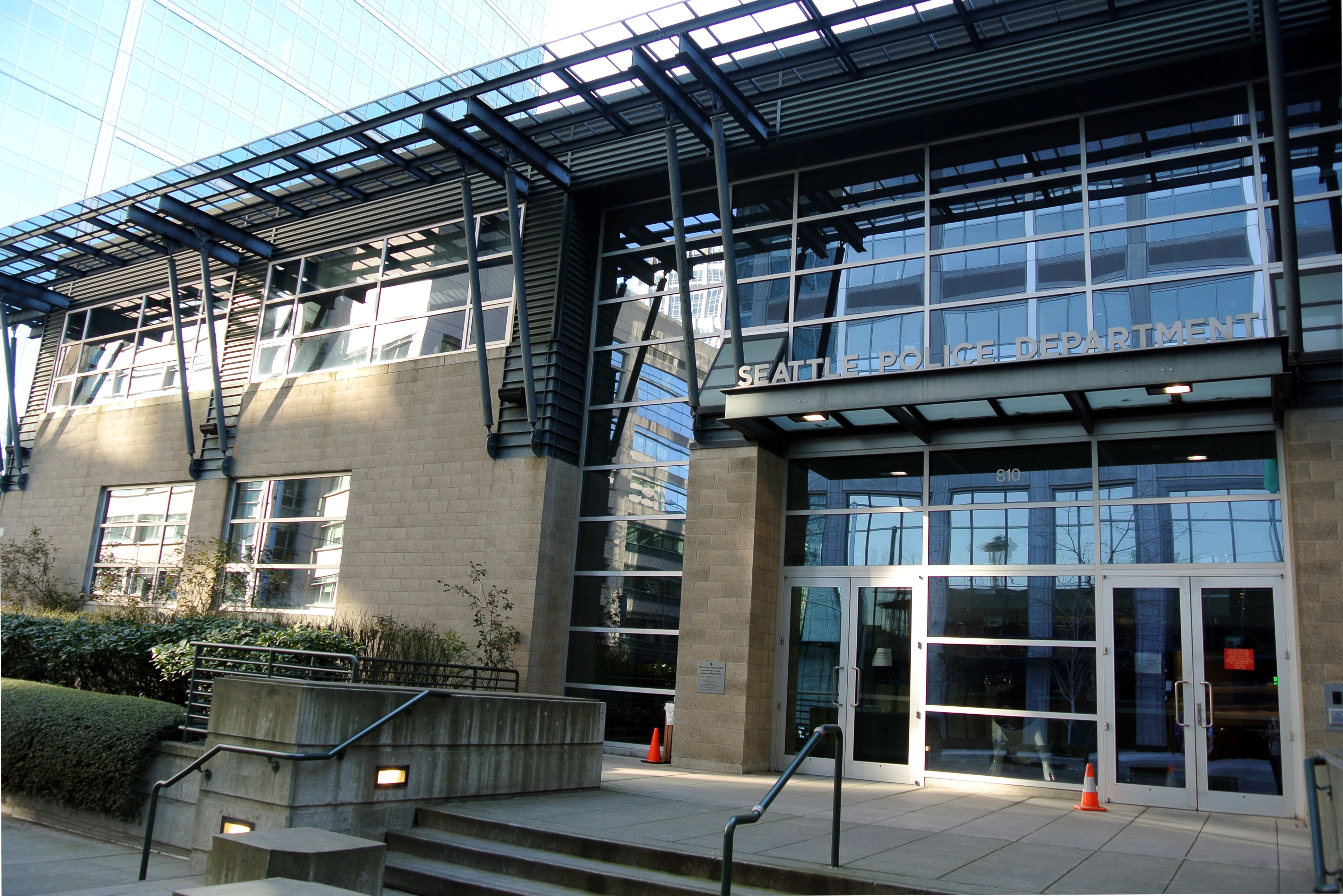
Seattle Police Department West Precinct; image by Adbar, Creative Commons license

By Erica C. Barnett

Tension between the head of the Seattle Police Department’s communications office, Lt. John O’Neil, and his staff boiled over last year, when a detective in the division, Valerie Carson, accused him of retaliation after he addressed an internal dispute by filing a police-misconduct complaint against her.

The complaint against O’Neil, by one of just 150 or so female officers in the department, came at a time when SPD is openly struggling to recruit and retain women (of 61 officers who left last year, nearly a quarter were women), and when female officers are speaking out about what they describe as an environment of casual misogyny, discrimination, and harassment.

In a recently released report commissioned by SPD, women in the department described it as a hyper-masculine, misogynistic environment—one in which male officers frequently characterize female officers as inherently inept, comment on their appearance, and gossip about their sexual history.

Carson and O’Neil had clashed previously, including once when she failed to respond to a text while volunteering for on-call duty from a scheduled vacation on the East Coast. But the conflict reached a breaking point when Carson turned down an interview with a TV station, something she said she ordinarily had discretion to do. After a junior officer, Judinna Gulpan, told Carson she didn’t feel prepared to do the interview herself, O’Neil ordered Gulpan to tell Carson she had to do it. Carson refused again, went home, and requested medical leave for her mental health.

An hour after Carson informed O’Neil she was taking leave, O’Neil filed a complaint against her with the Office of Police Accountability, alleging that Carson had violated SPD’s policy requiring officers to obey any lawful order. (O’Neil said he was already planning to file the complaint but had been busy all day and didn’t get around to it until late that afternoon).

  Citing reports from “a couple of lieutenants,” O’Neil continued, “One person said that she looked like she just came from a club, and it was a very short skirt and the shoes were inappropriate. … It was more party attire, stuff like that.” “I received complaints, which is what happened, and one of the main complainants was Chief [Adrian] Diaz—that’s who the main complainant was.”

Carson declined to speak on the record for this story. In an interview with SPD’s internal EEO investigator, Rebecca McKechnie, Carson said she declined the interview with FOX 13 News because she was stressed to the breaking point after being on call every day for months and “felt as though I could burst into tears at any moment.”

“I was not feeling well that day,” Carson told McKechnie. “I was physically, mentally and emotionally exhausted [by the] increasingly frustrating situation at work which I had already reached out to HR about. … I did not want to be at work, but I felt an obligation to stay because our office is very understaffed and because I was the most experienced person in the office.”

McKechnie also investigated O’Neil’s complaint against Carson. In his interview with McKechnie, O’Neil brought up a number of issues outside the scope of his official complaint, including whether Carson really had a legitimate mental health condition and the way she dressed.

O’Neil said Carson’s clothes were often “inappropriate,” and claimed that she “argued with me” over the requirement that she wear “business attire” when showing up to calls. “She is the face … on TV—we are the face of the department,” O’Neil said.

Citing reports from “a couple of lieutenants,” O’Neil continued, “One person said that she looked like she just came from a club, and it was a very short skirt and the shoes were inappropriate. … It was more party attire, stuff like that.”

“I received complaints, which is what happened, and one of the main complainants was Chief [Adrian] Diaz—that’s who the main complainant was.”

O’Neil acknowledged that he didn’t see the “club” gear Carson was allegedly wearing, and did not mention any evidence, such as TV footage, that would substantiate these secondhand claims. He also mentioned one instance—which is not in dispute—when Carson wore Birkenstocks and casual clothes when she showed up to an incident while off-duty.

PubliCola is supported entirely by readers like you.
CLICK BELOW to become a one-time or monthly contributor.

Support PubliCola


In his interview with McKechnie and a later email appealing OPA’s decision, O’Neil referred to Carson as “combative,” “angry,” and “hostile,” and claimed that her only “mental health condition” was being too emotional about a recent breakup. “Not a disability. A breakup,” he said.

Far from being a victim, O’Neil told investigators, Carson and two other white staffers were engaged in a racist effort to oust him and prevent him from receiving a promotion by filing baseless complaints and refusing to follow orders. (O’Neil is Black). The issues, he said, started as soon as Diaz appointed him to head the communications office in August 2022. Previously, O’Neil was in the department’s canine unit, where he was the subject of multiple EEO complaints that he called “frivolous.” (Prior to that, he was part of a nightlife safety team that, according to bar owners, cracked down on porn at gay bars on Capitol Hill.)

“This all has to do with me being a Black sergeant,” O’Neil told McKechnie.

Ultimately, both Carson’s complaint against O’Neil and O’Neil’s complaint against Carson fizzled. The OPA dismissed Carson’s complaint because they found his timeline credible, and dismissed her complaint. They recommended a “supervisor action”—effectively, a slap on the wrist—in O’Neil’s complaint against Carson, calling her refusal to do the interview “minor misconduct” at most.

In an email objecting to OPA’s decision in his case, O’Neil said investigators may not have considered the possibility that “racist undertones, biases, and mistreatment due to color” were the reason three white staffers were “giving me and [Gulpan] (Asian) a hard time and ultimately being insubordinate.” PubliCola was unable to reach Gulpan for comment.

OPA director Gino Betts said he couldn’t comment on specific cases.

In an email objecting to OPA’s decision in his case, O’Neil said investigators may not have considered the possibility that “racist undertones, biases, and mistreatment due to color” were the reason three white staffers were “giving me and [Gulpan] (Asian) a hard time and ultimately being insubordinate.” PubliCola was unable to reach Gulpan for comment.

O’Neil told PubliCola he believes the EEO complaint process is “being misused, and is absolutely being weaponized, and it’s terrible because it overshadows the true victims.”

“Valerie was given the opportunity to come back to the unit and then work and follow the rules and regulations, and she didn’t do it,” O’Neil said.

“I realize people are trying to throw out misogyny and all this stuff, which is nonsense when it comes to my unit,” O’Neil continued. “With this unit, it [was] three males, three females”—O’Neil, two other men, and three women, including O’Neil’s own supervisor, Amy Clancy, who supported his complaint against Carson.

“The issues were the same” with all his employees, O’Neil said. “It had to do with insubordination, chain of command, and things that were violations of policy.”

Clancy left the department in April.

After working on light duty in another division after her leave ended, Carson took an demotion in rank and is now a patrol officer.

And Gulpan, who had just started when Carson went on leave, recently filed her own EEO complaint against O’Neil. Earlier this year, she—like Carson—took a demotion in rank and now works on patrol.

O’Neil received his promotion from sergeant to lieutenant last year.

“We had structure and rank in the unit, but we also treated each other like people with thoughts, ideas, and feelings, and routinely challenged each others’ ideas to make sure we were doing the right thing,” said former communications office staffer Jonah Spangenthal-Lee, who left the office earlier this year.

The allegations of discrimination and bias occurred during a heated internal debate over the office’s communications strategy. According to O’Neil, Police Chief Diaz directed the office to put out more information on all platforms—adding video, posting on social media and SPD’s Blotter blog more often, and highlighting the work of individual officers with posts and videos. Internally, some staffers objected to this strategy, saying the office should consider things like newsworthiness and the overall impression the department was creating about the level and severity of crime in Seattle.

“That was absolutely, definitely part of the conflict—the chief wanted to go in a certain direction, [and] I got fought on that,” O’Neil told PubliCola. When I was asking them to do certain tasks, I was told no.”

“This is a paramilitary organization,” O’Neil continued, meaning that people down the chain of command can only say no in certain circumstances, such as a situation that endangers their life or requires them to break the law. “They had no right to tell me no, no matter how much they disagreed,” he said. “You have people with a little bit of time on [duty], and they want stuff their way. It just doesn’t work like that.”

Staffers who worked in the communications office before O’Neil arrived, however, said that even within SPD’s top-down structure, there was room for collaboration and debate. Media relations staffers helped shape SPD’s communications strategy and made suggestions or pushed back when they thought an idea might backfire with the public—like a tour of SPD’s north precinct, requested by then-councilmember Kshama Sawant, that gave critics a chance to confront police in front of reporters and at least one embarrassing story in the Stranger.

“We had structure and rank in the unit, but we also treated each other like people with thoughts, ideas, and feelings, and routinely challenged each others’ ideas to make sure we were doing the right thing,” said former communications office staffer Jonah Spangenthal-Lee, who left the office earlier this year.

Carson told SPD investigator McKechnie that O’Neil took the concept of disobeying orders to an extreme. “I was in the military for five years and no one has ever used the word ‘insubordination’ more than I’ve heard him use that word,” Carson said.

Clancy, O’Neil’s former supervisor, sent an email to OPA supporting O’Neil after the office issued its decision last March.

“I am very concerned that if there is no discipline related to Sgt O’Neil’s filed complaint, the insubordination will only continue in the office, making it nearly impossible for him to lead,” Clancy wrote. “He is an excellent leader, and has always deserved the support of his people. Currently we have three additional employees in the Unit who have been added recently and all of them support Sgt O’Neil and work with him incredibly well. We have harmony for the first time in a very long time.”

But that “harmony”—if it exists—came at a real cost to institutional knowledge and strategic leadership in the media relations division. Since O’Neil was hired, the division has seen turnover of more than 100 percent, including the loss of one staffer, Spangenthal-Lee, who had worked in the office for more than 12 years. The division, which once had gender parity, now has an all-male staff.

Council’s Public Safety Focus Will Be “Permissive Environment” Toward Crime

By Erica C. Barnett

The new attitude of the city council’s public safety committee, headed by former Queen Anne Community council public safety chair Bob Kettle, was evident from the first slide of Councilmember Kettle’s presentation on the scope of the committee, titled “Public Safety Vision.” It read: “We envision a future where families feel safe sending their children on the bus to school, businesses can operate without paying for private security, and the city can respond in a timely and appropriate manner to people experiencing acute crises.”

The implication—that Seattle is so dangerous that businesses need security to operate, buses are so unsafe that kids can’t take them to school, and police are so understaffed they can no longer respond swiftly to crises—went unquestioned throughout the two-and-a-half hour meeting. Instead, council members lavished praise on the police department, asked what they could do personally to “improve officer morale,” and assured Police Chief Adrian Diaz, who talked at length about the “trauma” police have experienced “after George Floyd,” that they would—as Councilmember Cathy Moore put it—”allow police to police.”

“Doesn’t this feel different?” Council President Sara Nelson asked Diaz, smiling broadly, before diving into questions about how the council could support the police department.

“I think we’ve had a lot of micromanaging in the prior councils,” Moore said. “I think there was a sense among rank and file that we are constantly micromanaging and that we’ve taken their power away to police.” Additionally, Moore said, she wanted to “have [a] hard conversation about the jail space” that the city is paying for, but not using, “because we do need to be able to send a message that people are going to be held accountable. That doesn’t mean that we’re going to run them through the system and create long records for them, but you need a place to go police need to feel like the work that they’re doing matters.”

Other council members emphasized how much friendlier the committee would be toward police. “Doesn’t this feel different?” Council President Sara Nelson asked Diaz, smiling broadly, before diving into questions about how the council could support the police department.

During her two years on the council, Nelson has advocated to keep vacant police positions open and funded, and to provide bonuses of up to $25,000 for new police hires. The previous chair of the public safety committee, 27-year City Hall veteran Lisa Herbold, also supported police hiring, but she also focused on accountability, frequently requiring the police department to report back to her committee on the results of initiatives the council agreed to fund.

PubliCola is supported entirely by readers like you.
CLICK BELOW to become a one-time or monthly contributor.

Support PubliCola

Without regular reports on things like SPD’s use of overtime, the efficacy of the overdose response program Health 99, and the cost to staff up the new CARE Department to take over some police calls (to name just three reports that will be required this year thanks to Herbold’s budget “meddling”), the council would have significantly less information to help it judge the job police are doing. Which, perhaps, is precisely the point.

As public safety chair, Kettle has transferred his key campaign message—that Seattle has a “culture of permissiveness” that has allowed crime to flourish—directly into the mission of his committee, whose official mission statement previously highlighted police accountability, alternatives to arrest and jail, and “programs to reduce the public’s involvement with law enforcement and decrease involvement with the Criminal Legal System.” Now, the mission can be summarized in a single slide, which defines a “permissive environment” as “the underlying factors behind crime tied to the lack of deterring structures that allow people to endanger themselves and our city.

The slide includes six “pillars of public safety.” “Public health” appears fifth, after “graffiti remediation.” Police reform, alternatives to arrest and prosecution, and human services appear nowhere on the list.

As Questions Swirl About SPD Accountability, City Announces “Dual-Dispatch Pilot” for Low-Priority Calls

By Erica C. Barnett

On Thursday, during a press conference outlining his proposal to expand, reorganize, and rename the city department that responds to 911 calls, Mayor Bruce Harrell said he believed “the process is working” in the case of Daniel Auderer, a police officer and Seattle Police Officers Guild vice president who was caught on body-worn video mocking the death of 23-year-old student Jaahnavi Kandula with SPOG president Mike Solan. The video, which only captured Auderer’s side of the conversation, was recorded shortly after Officer Kevin Dave struck and killed Kandula on January 23.

Harrell was announcing $6 million in new funds for the Community Assisted Response and Engagement (CARE) department, formerly known as the Community Safety and Communications Center; that money will help hire 13 new staff, including behavioral health specialists, to respond alongside police to low-priority calls.

The question about Auderer came from a trainee at the 911 call center in SPD’s West Precinct where the announcement took place.

“Sometimes justice is not quick, due process sometimes is not quick, certainly not as quick as people would like to see,” Harrell said. “But everyone accused of misconducth as the right to due process and I will defend that process. We can’t be quick to judgment. … I have a member of my administration who was sentenced to prison for over 20 years without the possibility of parole. He was unfairly convicted because of the lack of due process. So I will defend due process … and hopefully we’ll see outcomes that people will say, ‘the system worked’.”

As PubliCola reported last week, an SPD employee saw the disturbing video and reported it to supervisors on August 2. Six days later, Auderer sent a letter to the Office of Police Accountability (OPA) attempting to minimize his and Solan’s comments, saying the two SPOG leaders were laughing at “the ridiculousness of how I have watched these incidents play out as two parties”—in this case, Kandula, who was killed by a speeding police officer just hours earlier, and SPD’s own lawyers—”bargain over a tragedy.”

Earlier this week, the Community Police Commission, a civilian oversight body, wrote a letter calling on Police Chief Adrian Diaz to immediately suspend police officer Daniel Auderer without pay while the investigation is ongoing.

SPOG released Auderer’s August 9 letter to a conservative radio commentator the day before PubliCola and the Times received the video in response to records requests, and posted, on social media on September 15.

Earlier this week, the Community Police Commission, a civilian oversight body, wrote a letter calling on Police Chief Adrian Diaz to immediately suspend Auderer without pay while the investigation is ongoing. The CPC also asked Diaz to “immediately engage in a workgroup consisting of the Seattle Police Accountability Partners and members of the community to address repeated concerns with the culture of policing and police practices at SPD.” The other accountability “partners” are OPA and the Office of Inspector General, an independent office that reviews and audits SPD as well as OPA.

Mayor Bruce Harrell and 911 dispatcher Jordan Wallace discuss a Priority 3 call about someone selling stolen merchandise in the International District Thursday.

Auderer’s statements, the three CPC co-chairs wrote, “are horrifying and raise serious concerns about his attitude toward and interactions with members of the community, and his ability to investigate cases equitably, accurately, and without bias and keep the City’s residents safe. While the [body-worn video] does not capture SPOG President Mike Solan’s comments on the other end of the call, there is simply no context that could possibly make these comments acceptable.”

As of Friday, CPC co-chair Joel Merkel said SPD had not responded to the letter; a spokesperson for SPD said they had no comment beyond the statement they released on their website shortly after we published the video last week.

The city has been promising to send civilian first responders to calls that don’t require a police response since 2020, when thousands protested police misconduct after the death of George Floyd. In 2021, then-mayor Jenny Durkan announced the launch of a new crisis response team within the fire department to respond to some crisis calls, but the proposal never got off the ground.

Harrell, similarly, has vowed since taking office in 2022 to create a new “third public safety department,” in addition to police and fire, that would include a new type of civilian first responder. This week’s announcement does include new civilian responders. But they won’t be going out to most calls involving people in crisis.

Instead, they’ll be deployed, along with police, to two call types that police have already determined do not necessarily require a police response. Priority 4 calls, the lowest priority, are non-emergency calls that generally don’t require a police response at all. Priority 3 calls are for minor issues that may or may not get a police response, depending on officer availability—everything from noisy neighbors to off-leash dogs to illegal parking.

Priority 3 calls do include “person down” calls, where someone is unconscious in public, and welfare checks—two call types that might benefit from a behavioral health response, Diaz noted. “Sometimes, a highly intoxicated [person] might actually be … experiencing some level of crisis. Not always, but in some cases,” Diaz said.

However, the majority of Priority 3 calls, Diaz said, are so-called “paper calls”—calls where the incident already happened and the only thing left to do is file a report. Harrell characterized the new program as a “dual dispatch pilot” that the city will evaluate in a year or two “to see where it makes sense… [and] where the data leads us.”

SPD, Diaz noted, already has an internal crisis response team; more than 60 percent of officers have also taken a 40-hour course in crisis intervention training.

“Overdose Patients Can Become Violent”: Fire and Police Respond to Questions About Pedestrian Death

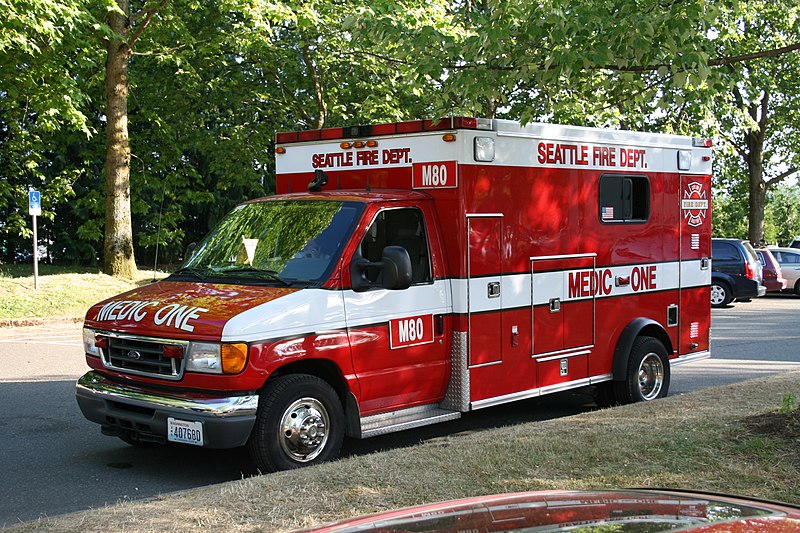
File:Seattle fire department medic 80.jpg
Atomic Taco, CC BY-SA 2.0, via Wikimedia Commons

By Erica C. Barnett

On Wednesday, the Seattle Police and Fire Departments responded to questions from the Community Police Commission about some of the circumstances that may have contributed to the death of Jaahnavi Kandula, a 23-year-old pedestrian who was killed in a marked crosswalk by SPD Officer Kevin Dave. Dave was driving to join Seattle Fire Department EMTs at a suspected overdose in South Lake Union. According to the response from Seattle Fire Chief Harold Scoggins, Seattle Fire Department policy requires police to be present when SFD responds to overdoses, because “overdose patients can become violent during treatment to reverse the overdose.”

The CPC asked the Fire Department to explain the reason it requires police officers to be present when Fire responds to overdose calls, posing four questions about the policy, how it came about, and “What percentage of drug overdose calls prior to the implementation of this policy included compromised safety, assaults, and/or injuries to SFD personnel related to reversing the effects of an overdose?”

In his response, Seattle Fire Chief Harold Scoggins said that the requirement “goes back at least 20 years and is designed to provide scene safety for firefighters and paramedics as overdose patients can become violent during treatment to reverse the overdose.” He did not answer the CPC’s question about how common it is for people coming out of overdoses to be violent, saying only that “[e]ncountering combative patients or bystanders on emergency responses has unfortunately become a reality for firefighters and paramedics.”

Narcan (or naloxone), the widely available overdose reversal drug, is used daily by non-emergency responders, including drug users themselves, and other public employees are trained to use it in the absence of paramedics or any armed response. In 2019,  then-Washington state health officer Kathy Lofy signed a “standing order” that made Narcan available over the counter without a prescription to any person who wants it, calling it a “very safe,” life-saving medication.

“When weighing the decision to respond using emergency driving, officers must consider if the incident is life threatening, road conditions, vehicle and pedestrian traffic, weather, speed, lighting, and their own driving abilities.”—Police Chief Adrian Diaz

In his letter, Scoggins said SFD has developed a “new method for tracking assaults and threatening behavior experienced by firefighters in the field,” in general, and has begun reporting this information. PubliCola has asked SFD for this data and will update this post with additional information when we receive it.

Seattle Police Chief Adrian Diaz also responded to the CPC’s questions. After describing the training officers receive in “emergency driving”—driving under emergency circumstances, such as a high-priority call where someone’s life is at risk—Diaz said officers are justified in taking “risks [that] “can result in severe consequences for the public and the officer. … When weighing the decision to respond using emergency driving…. [o]fficers must consider if the incident is life threatening, road conditions, vehicle and pedestrian traffic, weather, speed, lighting, and their own driving abilities.”

Diaz said the fact that the overdose was a Priority 1 call would not, in itself, necessitate emergency driving. “The priority level is a factor to consider but is not generally controlling,” Diaz wrote. “While many Priority 1 calls would warrant emergency driving under our current policy and training, not all do and officers are expected to consider the totality of the circumstances.”

PubliCola has filed a records request the audio from the initial 911 call; SPD categorically denied a separate request for all recorded audio related to the Kandula’s death, citing their ongoing investigation into the incident.

In a conversation with PubliCola last week, SPD Chief Adrian Diaz noted that Dave is a licensed EMT who was headed to the scene of a medical emergency, implying that he was on the way to respond to the reported overdose, not to provide security for the Fire Department. On February 6, the head of the Seattle Fire Fighters Union, Kenny Stuart, expressed frustration about SPD officers getting trained as EMTs and responding to medical emergencies like overdoses directly, saying this was the responsibility of the fire department, not SPD. (It’s a longstanding, ongoing issue.)

“Our EMS delivery system under the Medic One program is arguably the best in the country, and randomly allowing additional EMTs from other city departments to self-dispatch or to perform EMS functions at an incident does not improve or support the level of care we demand from this program,” Stuart wrote. “In fact, it unnecessarily complicates our response and diminishes the service that the public depends on and expects.”

Seattle Fire Department firefighters and paramedics are “the only personnel that are dispatched as EMTs” to medical emergencies, Stuart continued, “and they should be the only personnel who deliver EMS to the people of Seattle. We need our police officers to provide scene security and protect us so we can do our jobs effectively.”

Several years ago, SFD’s medical director told PubliCola the fire department preferred to use rescue breathing—a method to restore breathing in overdose victims without Narcan—followed by intravenous naloxone to facilitate a slower return to normal breathing without putting a person into instant opiate withdrawal. We’ve asked SFD whether this is still the department’s policy, and how the emergence of fentanyl has impacted overdose response, and will update this post when we hear back.

PubliCola has also reached out to Stuart.

Diaz Almost Permanent Chief; Sawant Wants Impact Fees; Another Residential Treatment Center Shuts Down

1. Members of the city council’s public safety committee, which voted unanimously to appoint interim police chief Adrian Diaz to the permanent police chief position on Tuesday, were mostly effusive about Diaz’ performance at the final public hearing on his appointment, praising him for his efforts to recruit new officers, reinstate the community service officer program, and work collaboratively with the council. Council members did have a few pointed questions, though, about Diaz’ commitment to replacing police with civilian responders.

Like many other cities across the country, Seattle committed to creating new community-based alternatives to traditional policing amid protests against police violence in 2020; since then, other cities have moved forward with new strategies while Seattle has bogged down in process.

“Around the same time that members of this council were talking about creating a third public safety department and civilian alternatives to police, Albuquerque also started their journey. The difference between them and us is that we have two years of resolutions, workgroups, promises, talking, [and] misrepresentations [from the previous administration].”—Councilmember Andrew Lewis

“Around the same time that members of this council were talking about creating a third public safety department and civilian alternatives to police, Albuquerque also started their journey,” Councilmember Andrew Lewis said. Albuquerque, Lewis noted, has a similar budget to Seattle’s and has also seen its police department shrink from around 1,400 to fewer than 1,000 officers.

“The difference between them and us is that we have two years of resolutions, workgroups, promises, talking, [and] misrepresentations” from the previous mayoral administration, while Albuquerque stood up its new public safety department in 2021 and has diverted thousands of calls from the police department.

As we’ve reported, SPD is still in the middle of a lengthy risk analysis that is supposed to determine which kind of 911 calls are safe enough for a civilian response. That process is expected to stretch into 2024. Meanwhile, according to SPD’s latest hiring projections, the department will only grow by 18 fully trained officers in the next two years.

While transferring some low-risk work to trained civilian responders would be one way to free up SPD officers for police work and investigations, another option could be reducing the amount of overtime police burn through directing traffic and providing security for sports events, which added up to more than 91,000 hours through October of this year. Diaz didn’t seem particularly open to this suggestion, either, noting that there is always a risk of violence at large events, such as someone trying to drive through a barricade.

2.  Also on Tuesday, the city council voted unanimously to move forward with a plan to exempt many affordable housing projects from the design review process for another year—effectively signing off on the once-controversial view that design review leads to unnecessary delays that makes housing more expensive.

However, one of those “yes” votes, Councilmember Kshama Sawant, voted “no” on a separate package of amendments to the city’s comprehensive plan because they did not include “developer impact fees,” which some cities levy on housing developers to offset the toll new residents create on urban infrastructure like roads and sewers. One reason such fees are controversial is that they imply that new housing has a negative impact on the city, without considering the positive impacts (such as reduced traffic congestion, less sprawl, and more customers for local businesses) of dense, vibrant neighborhoods.

Since the city can’t pass developer impact fees until they’re included in the comprehensive plan, Sawant said, the vote to approve the amendments “means that we need to wait another year to make big developers pay for the impacts they have on our city infrastructure and for the profits they make without paying even this minimum of compensation for the city’s working people.” During the 2020 budget deliberations, Sawant joined her colleague Councilmember Alex Pedersen in seeking $350,000 for a study of impact fees; although Pedersen is generally far to the right of socialist Sawant, a shared opposition to most development frequently puts them on the same side of housing-related issues.

Low-income people and people experiencing homelessness often have to wait weeks or months before getting into residential treatment—a fact that flies in the face of calls to force more people in crisis into treatment under the state’s involuntary treatment law.

3. Pioneer Human Services, which offers treatment to low-income people with substance use disorder, is closing its 50-bed Pioneer Center North facility in Skagit County next month amid an acute regional shortage of residential treatment beds for low-income people and people seeking treatment during or after serving time in jail.

According to agency spokeswoman Nanette Sorich, there were a number of reasons for the “difficult decision,” including the fact that “the building has been operating on a short-term lease and the facility is past its useful life. Additionally, like many behavioral health providers, we have faced significant challenges with staffing and these labor force shortages have become more acute over time,” Sorich said.

The Sedro-Wooley inpatient clinic had 77 beds before the pandemic. Pioneer Human Services will now refer potential clients to its other clinics in Everett and Spokane, Sorich said.

Low-income people and people experiencing homelessness often have to wait weeks or months before getting into residential treatment—a fact that flies in the face of calls to force more people in crisis into treatment under the state’s involuntary treatment law. Since 2018, King County has lost more than 110 residential treatment beds and is now down to 244 beds countywide. A countywide levy, on the ballot next April, would restore the number of residential beds in King County to 2018 levels; the bulk of the $1.25 billion proposal would go toward five new walk-in crisis stabilization centers across the county.

Harrell Picks Diaz for Police Chief; Council Park District Alternative Would Keep Park Rangers, Raise Tax

Mayor Bruce Harrell, Interim Police Chief Adrian Diaz, and supporters
Mayor Bruce Harrell, Interim Police Chief Adrian Diaz, and supporters at Tuesday’s announcement

1. After a City Charter-mandated process that led to a list of three finalists, Mayor Bruce Harrell announced Tuesday that interim police chief Adrian Diaz will become Seattle’s permanent police chief, pending confirmation by the City Council.

Diaz expressed his desire to become permanent chief as early as 2020, when he replaced former chief Carmen Best, and was widely viewed as the most obvious choice for the position. Harrell’s office announced the finalists for the position less than two weeks ago, and the public had its first look at all three finalists in a live Seattle Channel interview five days before the mayor announced his selection.

The compressed recent timeline, combined with Harrell’s choice of the most widely predicted candidate, gave the chief selection the air of a fait accompli, prompting questions Tuesday about whether the city r revisit how it picks police chiefs in the future. Harrell defended the process, calling it “an extremely effective and efficient use of dollars” that involved “all communities in the city. “There was nothing broken in this process. The process was a good process. And so nothing out of this process suggested to me [that] we needed to fix or change anything,” Harrell said.

The police department currently has fewer than 1,000 officers on duty, a number Diaz and the mayor have said they want to increase to more than 1,400 over the next five years. Diaz said the public is demanding “action on crime, on gun violence, on perceived and real issues of safety,” and vowed to continue efforts to hire hundreds of new officers while committing to accountability, diversity, and new types of policing, including co-responder models, in which police partner with social service workers when responding to some crisis and non-emergency calls.

This approach, like the choice of Diaz itself, represents a commitment to the status quo: Reform, not a radical rethinking of the relationship between police and the communities they serve. Aggressive hiring, rather than redistributing some duties to non-police responders. More and better officer training, rather than example-setting discipline for cops who abuse their power. Even Diaz’s characterization of the 2020 protests outside the East Precinct, which he repeatedly referred to as “riots” both yesterday and during his Seattle Channel interview, represents a pre-2020 perspective in which police are the only bulwark against everything from violent crime to people protesting against police violence.

2. On Tuesday City Council member Andrew Lewis presented his budget proposal for the upcoming six-year Metropolitan Parks District plan, which PubliCola previewed earlier this week. Lewis’ proposal amends and expands on the plan Mayor Bruce Harrell proposed earlier this month, increasing the proposed property tax to 39 cents per $1,000 of home valuation (up from Harrell’s 38 cents/$1,000), adding two new off-leash areas, funding the electrification of additional community centers, planting more trees, and renovating four more restrooms than Harrell’s plan, among other changes.

Climate advocates have argued that the city needs to invest more heavily in decarbonizing the city’s 26 community centers. Lewis’ proposal would add $4 million in 2025 and 2026 to accelerate this process, along with $18 million in debt, which the city would begin paying off near the end of the park district cycle, in 2027, with a goal of decarbonizing 13 community centers by 2028.

The plan would also fund $5 million for additional maintenance at the planned downtown waterfront park, which would come out of the existing park stabilization fund and reserves.

Lewis noted Monday that his proposal also includes spending restriction meant to ensure that parks rangers can’t remove encampments or exclude people from parks for anything other than felony-level crimes. As we reported on Monday, although a 1997 law empowers parks rangers to exclude people from parks for violating park rules, a more lenient policy adopted in 2012 has effectively superseded that law. Lewis’ proposal would make funding for 26 new rangers contingent on following the 2012 rule, and would require the mayor to “immediately inform the Park District should these park rules be modified.”

Two public commenters were extremely upset about nudity they’d witnessed at Denny Blaine Park, an unofficial nude beach on Lake Washington, and said they hoped the new park rangers would put a stop to it and, as one speaker put it, make the park a “family friendly place again.” One outraged speaker, who seemed to be a frequent visitor, said she had witnessed people “walking down Lake Washington Boulevard naked, in the middle of Denny Blaine Park, naked, in trees, naked, displaying themselves, naked, on the low walls in the park, [and] naked people swimming, paddle boarding, laying on rafts, etc.”

The parks district board, which is made up of all nine members of the city council, will meet this Friday, and the council itself could vote on a final proposal as soon as Monday, September 27.