Tag: encampments

Company Owned by Recent City Employee Is Largest Recipient of Encampment Cleanup Contracts

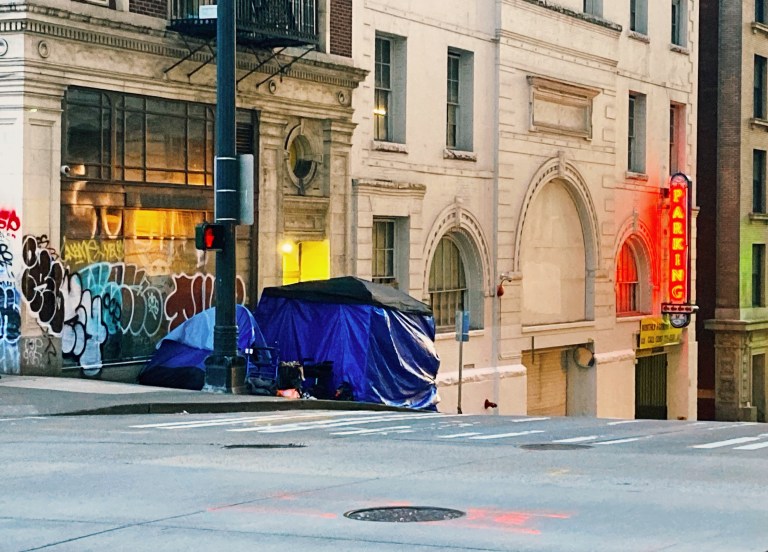
Parks contractors toss tents into the back of a dump truck on Fourth Avenue in downtown Seattle
Parks contractors toss tents into the back of a dump truck on Fourth Avenue in downtown Seattle in 2022.

By Erica C. Barnett

A sanitation company owned by a recent city of Seattle employee has received a growing share of the city’s contracts for encampment cleanup and removal work this year, eclipsing other longtime contractors to become the largest recipient of city contract hours for this work. [Update: Debbie Wilson is no longer employed by the city, according to Seattle City Light.]

The company, Fresh Family, is owned by a former Parks Department maintenance employee who until recently worked as a customer service representative for Seattle City Light, Debbie Wilson. Last year, as PubliCola reported, Fresh Family received nearly half a million dollars from the city even though it had no formal contract, which the Parks Department chalked up to an error: According to Parks, someone misread a form identifying the company as a woman- and minority-owned (WMBE) company, misreading “B” (for “Black”), in a column labeled “ethnicity,” as “B” for “Blanket contract.”

Fresh Family is now one of nine contractors on the city’s blanket contract for various kinds of encampment cleanup work, and one of two contractors—along with Cascadia—primarily responsible for encampment removals and litter removal.

It’s unusual for someone who works for the city to simultaneously hold a major city contract—in this case, one so closely tied to a department where the company’s owner used to work. Although Wilson left the city at some point last year, Fresh Family began receiving lucrative work from the city while she was still an employee—work that continued after she left her hourly customer service job at City Light.

PubliCola has asked how much Fresh Family has received from the city under its formal contract, which began last November, and will update this post when we have more information. In 2022, when it lacked an official contract, Fresh Family charged the city $110 per hour for each of its employees.

Over the last several months, department records show, the Parks Department has steadily increased Fresh Family’s hours and crew sizes while keeping its use of Cascadia static.

A review of the weekly “snapshots” for the city’s Clean City work, provided to PubliCola by the Parks Department, indicates that Fresh Family has become the chief contractor for encampment cleanup work. The Clean City Initiative is a joint operation overseen by the Parks Department, Seattle Department of Transportation, and Seattle Public Utilities, but Parks heads up most of the work because most encampments are located on Parks property.

Over the last several months, the snapshots show, the Parks Department has steadily increased Fresh Family’s hours and crew sizes while keeping its use of Cascadia static.

For example, on a typical day in January, Fresh Family had nine crew members and four trailers doing encampment removal for the Parks Department encampment sites, while Cascadia had two crew members and one staffer working on a Parks-led crew. (Separately, SDOT routinely used four Cascadia staffers and two trailers to respond to encampments located in  city rights-of-way). By the end of March, the Parks Department had bumped up its use of Fresh Family by another 50 percent, sending out 11 Fresh Family crew members with five trailers every day while keeping Cascadia at the status quo of two crew members and one trailer.

Encampment cleanup work often involves what the city calls a “litter pick”—driving along a prescribed route and picking up trash and debris at encampments along the way. Sometimes, crews are merged to do cleanup as a group—on a recent day, for example, seven Fresh Family crew members and two trailers were assigned to a single 13-stop route.

A spokeswoman for the Parks Department said the company “is not the primary contractor of the department, and we work to distribute work evenly amongst all approved contractors.”

In response to a question about whether Fresh Family is providing a superior or cheaper service compared to other contractors on the city’s list, the spokeswoman said, “The City retains the right to choose providers based on our approved lists and operational needs and both Cascadia and Fresh Family are on our approved contract lists providing similar services.”
Plan to Eliminate Visible Homelessness Downtown is “Clearly Behind Schedule,” but Backers Remain Optimistic

By Erica C. Barnett

Last week marked the one-year anniversary of the Partnership for Zero, a $10 million public-private partnership aimed at ending visible unsheltered homelessness in downtown Seattle. During the official announcement on February 17, 2022, King County Regional Homelessness Authority CEO Marc Dones said they considered it “feasible” to reduce the number of people living unsheltered in the downtown core to “30-ish people” within a year. “Straightforwardly based on the data, yes,” it is doable, Dones said, “and then secondly, straightforwardly based on what we have to do to help people—yes.”

Since that announcement, the partnership between the KCRHA and We Are In, the umbrella group for the KCRHA’s philanthropic donors, has hit a number of milestones—including a “by-name list” of almost 1,000 people living downtown and the establishment of a “housing command center” to coordinate housing placements—but has not come close to the goal of housing or sheltering a large majority of people living unsheltered downtown. According to an announcement from We Are In and the KCRHA last week, the downtown effort has housed 56 people so far in a combination of permanent supportive, rent-restricted, and private-market housing—about 5 percent of the people the agency’s outreach workers have identified downtown.

As of last week, according to KCRHA spokeswoman Anne Martens, another 96 people were in “interim options”—mostly hotel rooms paid for by vouchers distributed by the Lived Experience Coalition—waiting for housing placements. Hundreds more have either filled out questionnaires about their housing needs, gotten new IDs, or are “moving through the housing process at three prioritized sites (specific encampments or geographic areas),” according to last week’s announcement.”

Jon Scholes, the director of the Downtown Seattle Association, told PubliCola that Partnership for Zero is “clearly behind schedule, and I think they clearly need to pick up the pace.”

The KCRHA is under intense pressure to resolve several encampments in and around the Chinatown/International District, which is in the Partnership for Zero area, as well as another longstanding encampment in North Seattle that neighborhood residents have called a threat to public safety. During a recent meeting of the KCRHA’s governing board, agency CEO Marc Dones said the agency is working to “activate pathways inside” for people living in those encampments, “inclusive of the existing shelter resources, emergency housing, and permanent housing as available.” Mostly, these pathways appear to involve hotel vouchers, not housing.

Jon Scholes, the director of the Downtown Seattle Association, told PubliCola that Partnership for Zero is “clearly behind schedule, and I think they clearly need to pick up the pace.” Most of the people the KCRHA’s outreach workers, known as systems advocates, have identified downtown have been homeless for years and have significant behavioral health conditions, Scholes added. “This is a population that can be challenging to get into housing quickly, and then once you get them there, to keep them there,” he said.

Enjoying this article? PubliCola is supported entirely by readers like you. Help keep PubliCola sustainable by CLICKING HERE to become a one-time or monthly contributor.

Still, Scholes said, he’s hopeful that “as they are able to free some resources up from the work in some of these encampments, they’re able to continue to move into the central neighborhoods of downtown.” Kylie Rolf, the DSA’s vice president for advocacy and economic development, added that “in the amount of time that the Unified Command Center has been operational and the system advocates have been on the ground, I think they have made remarkable progress.”

Martens said the agency learned several “key lessons and improvements” for the program in the first year. The first: “Setting up the infrastructure takes time.” Training the system advocates, setting up the housing command center, and creating a new outreach system has taken longer than expected, as has “gathering the documentation to obtain a photo ID” for people who have been living outside for years and, in many cases, don’t have an official address or other documents that could prove they are who they say they are.

The agency has retooled the concept of system advocates so that they no longer will stay with a single client through every stage of the shelter and housing process. Instead, “we’re increasing the efficiency of the Systems Advocates team by shifting advocates into specialized teams, instead of every advocate managing every step of the process,” according to a spokesperson.

Additionally, Martens said, the agency has retooled the concept of system advocates so that they no longer will stay with a single client through every stage of the shelter and housing process. Instead, she said, “we’re increasing the efficiency of the Systems Advocates team by shifting advocates into specialized teams, so instead of every advocate managing every step of the process, we now have teams of advocates focused on Outreach & Engagement, Housing Navigation, and Housing Stability.”

This appears to be a shift from the original concept of system advocates, who were supposed to be a single, “longitudinal” point of contact through every stage of the housing process, from identifying a person and getting them on a “by-name list” to connecting them to housing to ensuring that they have the resources they need to stay housed. We’ve reached out to the KCRHA for clarification about the currentrole of the system advocates.

Scholes said one complicating factor downtown is that many of the people causing a feeling of “disorder” downtown are fentanyl users who aren’t actually homeless. “They may be housed and they may have a fentanyl addiction, and that’s why they’re on the sidewalk. And we sort of shorthand it as homelessness… [but] they’re going to need a different set of interventions” than what the homelessness authority can provide.

Last week’s anniversary announcement included news that the Partnership for Zero has received another $1 million in funding, bringing the total to around $11 million. Although the KCRHA previously said it would use Medicaid funding to pay for the system navigators after last year (prompting skepticism from some Seattle councilmembers) the authority is paying for the outreach workers through its general budget, which is funded by the city of Seattle and King County.

More Details On Proposal to Double Parks District Funding: Encampments, Park Security, and Pickleball

Interim parks director Christopher Williams speaks at a parks district press conference last week.

By Erica C. Barnett

Seattle voters approved the Seattle Metropolitan Parks District, a special taxing district that enables the city to raise property taxes by as much to .075 percent without a public vote, in 2014 over the objections of the Seattle Times editorial board and other anti-tax advocates who argued that it would create a “permanent tax” with no accountability.

The parks district, which imposed an initial property tax of 0.02 percent (or 20 cents per $1,000 of a home’s assessed valuation) replaced a system that required Seattle residents to vote on a parks levy every six years. If they didn’t, the city would forfeit much of its ongoing funding for things like community center and pool maintenance, landscaping, and new park acquisition. The Times didn’t like the old system much, either, but they really hated the idea of a tax that couldn’t be defeated at the polls.

So it’s interesting, this time around, that usual suspects aren’t lobbying the council at top volume to reject Mayor Bruce Harrell’s proposal for the second cycle of parks district funding, which would almost double the size of the levy from 20 cents per $1,000 to 38 and increase Seattle parks’ reliance on funding from the tax from 20 percent of the total parks budget to about one-third.

Harrell’s proposal would add 29 permanent positions in the parks department to expand the Clean City Initiative, which cleans up debris around encampments, as part of the new Unified Care Team, which responds to and removes encampments.

Maybe that’s because the Times supports Harrell and his vision. In addition to more funding for things like renovating and decarbonizing community centers, keeping parks restrooms open year-round, and pickleball, Harrell’s proposal would add 29 permanent positions in the parks department to expand the Clean City Initiative, which cleans up debris around encampments, as part of the new Unified Care Team, which responds to and removes encampments. (The funding mechanism is a money swap that puts the program in the base budget for parks while swapping money that pays for parks utilities from the city budget into the parks district).

The Clean City Initiative was originally funded with federal COVID response dollars as a “surge” program to clean up trash and litter, but it has always been strongly associated with encampment removals. By bringing this work under the UCT and making it part of the department’s base budget, the mayor is proposing to make a temporary response to encampments in parks permanent.

Similarly, Harrell’s proposal would revive the moribund Parks Ranger program by deploying 26 new rangers in city parks. The rangers, who are uniformed but unarmed, have historically patrolled parks in downtown Seattle and on Capitol Hill, providing security and occasionally helping the Seattle Police Department remove encampments, issue trespass warnings, or kick protesters out of public spaces, as they did at Westlake Park during the Occupy Seattle protests in 2011.

City Councilmember Andrew Lewis, who chairs the parks district board, said he hasn’t heard any opposition to the size of the tax increase during the town halls the board held this summer around the city. “I think it’s just a reflection of how much need there is for investment in our parks and how our old system was not sufficient to meet it,” Lewis said. Having the certainty of an ongoing tax, he added, enables the city to bond against parks district revenues for longer periods, because the city doesn’t have to worry about funds running out if voters decide not to renew the tax.

“We can do more community centers and climate resiliency [projects], because we can bond more of this,” Lewis said. The proposal includes funding for a number of capital projects that wouldn’t be affordable without longer-term bonds, including renovations and upgrades at four community centers.

Harrell’s office, in contrast to his historically secretive predecessor Jenny Durkan, provided a detailed preview of his parks district proposal that included information about some parks-related adds in his upcoming city budget proposal. This appendix provides a good high-level summary of the plan, which, flower enthusiasts will be bummed to learn, will “not include the [Board of Parks and Recreation Commission] recommended investment of approximately $270,000 to fund hanging baskets and other park beautification efforts.”

City Attorney Filing, But Also Diverting, More Cases; City’s Shelter Enrollment Rate Remains Low

City Attorney Ann Davison


1. City Attorney Ann Davison’s office released a detailed report this week confirming what PubliCola reported earlier this month: In the first six months of 2022, her office has filed charges in only about half of the criminal cases it has considered, declining to pursue charges at a rate similar to that of her predecessor, Pete Holmes. Between 2017 and 2019, Holmes’ decline rate ranged from just over 40 percent to just under 60 percent, only slightly lower than Davison’s.

Between January and June, the city attorney’s office declined about 51 percent of cases. That number includes cases from a backlog left after Holmes left office, which resulted from a combination of failure to file cases prior to the pandemic and an increase in unfiled cases in 2021, when the Seattle Municipal Court was not operating at full capacity due to the pandemic.

Excluding those cases, Davison’s decline rate was lower (46 percent between January and March and 41 percent between April and June), but without more details about what cases the office considered from the backlog, or what cases came in between April and June, it’s hard to draw long-term conclusions from that comparison.

Digging into the numbers in the report, the rate of domestic violence cases that the office declined has risen steadily over the years, and remains high under Davison (over 60 percent) so far; one reason for this, according to the report, is that domestic violence victims often don’t want to file charges against their abusers. Assault, property destruction, and harassment topped the list of domestic violence cases where no charges were filed.

The report shows that Davison’s office has resolved cases using diversionary programs, such as community court, mental health court, and the Public Defender Association’s Law Enforcement Assisted Diversion program, at least as often as her predecessors, diverting hundreds of theft, assault, trespassing, and other cases to therapeutic courts or social services.

Davison’s office did file charges in a much higher percentage of new non-domestic violence and non-traffic criminal offenses (those committed in 2022) than Holmes—around half in the first quarter of this year and 37 percent in the second quarter. If that trend continues, it will mean that Davison is choosing to pursue charges against more people accused of crimes like assault, theft, and trespassing, which are often crimes of poverty.


Ann Davison portrait

Perhaps most interestingly, the report shows that Davison’s office has resolved cases using diversionary programs, such as community court, mental health court, and the Public Defender Association’s Law Enforcement Assisted Diversion program, at least as often as her predecessors, diverting hundreds of theft, assault, trespassing, and other cases to therapeutic courts or social services. Overall, Davison referred about 750 cases to community court, more than 600 to LEAD, and about 180 to mental health court.

Earlier this year, Davison sought, and received, authority to deny access to community court for the 100 or so people on her “high utilizer” list, which includes people with more than 12 cases (not charges) in the past five years. The city attorney’s office really is treating this population differently: In contrast to their overall approach, the office has filed charges in 82 percent of cases involving this group, a decline rate of just 18 percent.

2. The latest quarterly report from the Seattle Human Services Department on the work of the Homelessness Outreach and Provider Ecosystem (HOPE) Team shows an uptick in the number of people who received referrals to shelter from the HOPE Team and actually enrolled in shelter, meaning that they showed up and stayed for at least one night. The HOPE Team does outreach at encampments, primarily the city’s regularly updated list of encampments it plans to sweep.

Between April and June, 173 people went to shelter based on a HOPE team referral, amounting to 41 percent of the total number of people who received at least one referral. (Overall, the team made 458 referrals, including multiple referrals for some individuals). Put another way, that means about 58 people went to shelter on HOPE team referrals every month last quarter. The numbers are approximate, because some people who enroll in shelter choose to remain anonymous, making them harder to track.

Those numbers, while they represent a slight improvement, continue to reveal that the majority of shelter referrals don’t result in shelter enrollments (and shelter, of course, isn’t housing)—people are getting referral slips but aren’t using them. This can happen for a variety of reasons: Leaving an encampment for shelter can involve a long trek across town, along with tough decisions, such as whether to leave an established street community or abandon a pet.

Notably, the second quarter of this year also included the removal of a large encampment at Woodland Park, which Mayor Bruce Harrell identified early on as one of the top priorities for his administration. As we reported at the time, the city asked the Low-Income Housing Institute to set aside dozens of spots in tiny-house villages—a desirable, semi-private shelter type that has a very high enrollment rate—for people living in the park. Out of 89 shelter referrals at Woodland Park, 60 were to tiny house villages.

The city also made a special effort to ensure that people forced to leave during the high-profile removal, offering direct transportation to shelters for everyone who received a referral, which likely boosted the overall enrollment rate. PubliCola has asked HSD how many of the 173 enrollments between April and June came from Woodland Park and will update this post when we hear back.

City Auditor Recommends Tracking Progress on Encampments—Not Just Encampment Removals

By Erica C. Barnett

The City Auditor’s Office—a small office that churns out reports and recommendations about how to improve city programs and policies—issued a report this month titled, self-summarizingly, “The City of Seattle Should Use a Data Dashboard to Track its Progress in Addressing Unsanctioned Encampments.” The report is part of an ongoing series of audits that began in 2017, when Councilmember Lisa Herbold asked the auditor to start tracking the work of the Navigation Team, ex-mayor Jenny Durkan’s encampment cleanup crew.

Through that work, the report says, the auditor’s office discovered that the city “was not systematically tracking the kind of data that would aid City leaders, stakeholders, and community members in understanding whether conditions related to encampments were improving or worsening over time. In previous reports we found that many important data, ranging from daily shelter-bed availability to trash accumulation, to the number of 24-hour bathrooms, were not being tracked over time.”

But wait, you may be wondering—don’t we already have a city homelessness dashboard? Well… kind of. The “One Seattle Homelessness Action Plan” website Mayor Bruce Harrell rolled out in May does include some dashboard-like elements, such as a bar graph showing the number of shelter referrals the city makes each month and a map identifying some of the encampment sites the city had identified and “closed” by mid-May. But the city plans to update the graph and map only quarterly, and the map is incomplete; many dots indicating closed encampments say “no outreach data available,” and huge swaths of the city, including the University District and Rainier Beach, appear to have no encampments at all.

“The idea is if you set it up appropriately and you had the right measures and good data, you’ll see if you’re making any progress.”—City Auditor David Jones

City Auditor David Jones said his office began working on its latest report before the Harrell administration came into office. “We do recognize that their dashboard is a work in progress,” Jones said. “We don’t want to jump in on something that’s just been put out there that hopefully will be improved over time and added to and changed in response to needs and critiques.”

The audit report suggests collecting (or compiling existing) data in three key areas: 1) the lived experience of people in encampments, including measures like  and physical and mental health; 2) public health indicators, such as the amount of trash and the number of needles at known encampment sites; and 3) measures of how well the system is performing, such as shelter acceptance rates and the availability of restrooms with running water. By tracking key metrics over time, the report says, the city could start to get a better handle on which strategies are working.

“The idea is if you set it up appropriately and you had the right measures and good data, you’ll see if you’re making any progress,” Jones said. Even though external factors, like the pandemic or the economy, can have outsize effects on some measures of progress, like shelter availability, a dashboard “at least would give you some sort of yardstick. …Are there fewer fires? Are there fewer people who are unsheltered? Is there a shorter time which people are receiving cervices? It at least gives you some sense of how you’re doing and if we’re moving in the right direction.”

A spokesman for Harrell’s office, Jamie Housen, said the report “provides a good starting point for these discussions,” adding that the King County Regional Homelessness Authority is responsible for the region’s overall homelessness response.

The KCRHA, which collaborated on the auditor’s recommendations, did not respond to requests for comment. In his letter, included in the report, Harrell did not respond directly to any of the recommendations. Instead, he noted that “a lot has changed” since the auditor’s office began their work, including the new administration and the transfer of homelessness contracts to the KCRHA. Continue reading “City Auditor Recommends Tracking Progress on Encampments—Not Just Encampment Removals”

Council Could Place Ranked-Choice Voting On Ballot; Ballard Commons Still on Slow Track to Reopening

Ballard Commons
Ballard Commons

1. On Tuesday, Seattle City Councilmember Andrew Lewis is expected to introduce legislation that would put ranked-choice voting—a type of election in which voters rank candidates according to their preference—on the November ballot alongside an existing initiative, I-134, that would allow voters to choose as many candidates as they want, a process called approval voting.

When presented with a validated initiative proposal, the council can put the measure on the ballot as-is, pass it as law themselves, or place an alternative measure on the ballot alongside the original initiative; if they put two measures on the ballot, the one that receives the most votes above a majority wins.

Ranked-choice voting, or instant-runoff voting, has been implemented in cities across the country, though in a slightly different form; in places with partisan like New York City, voters from each party use ranked choice voting to choose one person to move forward to the general election. In Seattle, which doesn’t have partisan elections, the top two candidates in the primary move forward to the general. Approval voting, in contrast, has only been implemented in two places in the US: Fargo, ND, and St. Louis, MO.

Advocates for ranked-choice voting argue that it elects leaders who are more representative of the general electorate. According to Fair Vote Washington spokesman Ben Chapman, ranked-choice voting produces “more civil, more issue-based campaigns, more voice for the voter and better representation for previously underrepresented communities.”  Advocates for approval voting say their system gives a fair chance to candidates who tend to languish in a winner-takes-all system where voting for the candidate you really like can feel like “throwing away your vote.”

Cannabis store owner and former city council candidate Logan Bowers, a member of the Seattle Approves campaign, says the council should put Initiative 134 on the ballot as-is, without introducing a second measure that would impose a totally different system. Under its ethics rules, the council is not allowed to discuss I-134 (or any alternative) publicly until it starts formally considering legislation to put the proposal on the ballot, which it will do next week. Because of the ethics constraint, Lewis declined to comment on his potential competing initiative.

Bowers says the council is rushing through an alternative measure without giving it the kind of scrutiny approval voting received through its campaign and signature gathering process. “I don’t think they need to rush this; they should just let approval voting go through or not, and they can always [put forward] another proposal later,” Bowers said. “We shouldn’t push this through as a two-week summer project.” Chapman counters that ranked choice voting is already a “known quantity” in use in more than 50 places across the US. “We don’t want Seattle voters to be an experiment,” Chapman said.

2. Since last December, the Ballard Commons—a 1.4-acre park surrounded by apartments and kitty-corner from the Ballard library— has been closed, its skate bowl, spray park, and grassy fields just out of reach behind the tall metal fence that has kept unsheltered people from setting up tents in the area for the last seven months. 

In a memo to Mayor Bruce Harrell’s office April, the city’s Department of Parks and Recreation recommended “fully reopening the park by summer,” but added that they recognized “we cannot be successful without strong, sustained support of the obstruction process” by the city’s Unified Care Team, a group of about 60 Parks, Department of Transportation, and Human Services Department employees that is in charge of removing encampments, including those that obstruct the use of public spaces.

The memo went on to recommend fully reopening the park by Memorial Day, with assistance from the Unified Care Team to “implement the… obstruction [removal] process.” Continue reading “Council Could Place Ranked-Choice Voting On Ballot; Ballard Commons Still on Slow Track to Reopening”