Tag: encampments

After Tumultuous Relocation, Tent City 4 Contemplates Its Next Move

Although Councilmember Cathy Moore and Mayor Bruce Harrell expressed surprise that Tent City 4 planned to stay in Lake City, emails show their offices were working to make the move happen as far back as February.

By Erica C. Barnett

Back in May, when the city told SHARE/WHEEL, the group that operates Tent City 4 in Lake City, that it would no longer be able to move to a long-planned new site where the Lake City Community Center was previously located, North Seattle City Councilmember Cathy Moore, who will leave the council on July 7,said she opposed the site because the neighborhood had not been asked to weigh in on having a self-managed encampment at that location, just a few blocks away from its previous site, the Lake City Mennonite Church.

The neighborhood, Moore told PubliCola in a statement, opposed the encampment. “The community directly impacted by the TC4 siting at the Mennonite church and now at the LCCC site is requesting that KCRHA find a different site outside of Lake City,” Moore said.

It’s unclear who, specifically, Moore meant by the “community”; by all accounts, the encampment was welcome at its previous location, and a representative of the Mennonite Church  told PubliCola they would be thrilled to have them back any time. Long before their anticipated move date in mid-May,SHARE Tent City 4 residents did door-to-door outreach and held a well-attended public where only one person raised any objection—a woman who erroneously believed the encampment would block access to the Lake City Farmer’s Market.

But by May, the city had made up its mind: Under no circumstances would the encampment be able to stay at its new site for a year, as previously planned. After a flurry of last-minute negotiations, the city agreed to allow the encampment to relocate to the new site for one to six months, until they can find what Mayor Bruce Harrell called a “more appropriate” location.

Since they moved, SHARE/WHEEL representative Michele Marchand said, the group has not received “a single complaint” about the encampment. “We’ve gotten all kinds of donations.” Tent City residents provide 24/7 security, and do litter pickups in the neighborhoods around their encampment sites.

On a recent weekday, the camp was quiet and largely unoccupied—a collection of closely spaced tents, including many set up directly on the grass, sizzling in the early-summer heat. By early June, the camp still didn’t have electricity or water hookups, and was using a noisy portable generator to supply the power that kept a fan going in the large open tent that served as the camp’s front office. Apart from the generator, which a Tent City representative said they shut off at night at the request of neighbors, the camp was silent.

PubliCola is supported entirely by readers like you.
CLICK BELOW to become a one-time or monthly contributor.

Support PubliCola


Justin Fain, who’s currently living in a large tent covered by a silvery tarp, said uncertainty around the encampment’s future was making it harder than expected to get electricity and water to the site. SHARE/WHEEL representatives told PubliCola the city had just informed the group that they needed to be out within three months. Later, Harrell’s office said they would once again have six months to leave.

Overall, Fain said, the group is getting along well with the neighborhood. “Everybody’s been very welcoming,” Fain said, including staff at the Lake City library branch, who recently ordered pizza for encampment residents.

Moore, who spoke to the Seattle Times about her opposition to the encampment, said her problem wasn’t with “Tent City per se, but the profound lack of investment in Lake City and the (feeling) that Lake City is being asked to shoulder a responsibility that other parts of the city are not being asked to do.”

“To say Lake City doesn’t need shelter is ridiculous,” Fain said, noting that the city does regular encampment sweeps at Albert Davis Park, just outside the Tent City 4, and along 33rd Ave. NE. “There’s tons of homeless around here.” On the streets around Tent City and in the park, several tents were visible on the day I visited. And it isn’t just single people in those tents; it’s also families.

The Mennonite Church is still hosting a small family shelter in a vacant dental building near Tent City 4’s previous location, but it’s perennially full. In the week before I visited, Fain said, six families had arrived at Tent City 4, with a total of 24 children; they’ll stay at the encampment until space opens up at the family shelter.

***

Moore’s comments last month, and the swift action by Mayor Bruce Harrell’s office to put the kibosh on a one-year lease between the King County Homelessness Authority and the city, suggested she just heard about plans to move Tent City to a new site shortly before it was supposed to move in May.

Harrell, similarly, suggested that the planned community center location was news to him. In a statement announcing that the city would allow the encampment at the site for up to six months, Harrell said, “Improving coordination among the City, KCRHA, and Share/Wheel will allow for strengthened community engagement and more effective process timelines that lead to better outcomes and remove uncertainty from similar situations going forward.”

Emails obtained through a records request, however, show that Moore, Harrell, and the city’s Human Services Department, which answers to the mayor, were aware that SHARE/WHEEL was planning to move to the community center site as far back as February. Not only that—HSD suggested the location. On February 26, a KCRHA staffer told SHARE/WHEEL that the city’s department had identified the Lake City Community Center site as a possible location for the encampment, and suggested that the organization start talking to Moore’s office about that site as soon as possible.

“The site is the old Lake City Community Center, which was demolished last summer and is currently awaiting redevelopment into a new community center and housing,” the HSD staffer wrote. “HSD has confirmed with leadership of both the Parks Department (who owns the property) and the Office of Housing (who is financing the redevelopment) that the site will be available for this interim use through May of 2026. We have the approval of the Mayor’s Office to proceed.”

In a March 6 email, one KCRHA staffer told another, “Tent City 4 has met with CM Moore already.” On March 14, SHARE/WHEEL met with a group that included Moore’s aide Harry Pollet, and reported to KCRHA that “CM Moore’s Office is starting to consult with District stakeholders about Tent City4’s request for the Lake City Community Center site,” as well as a short-term family shelter at the Mennonite Church, and was working with Seattle Public Utilities to figure out what it would cost to provide utilities at the site for a year.

Emails show that the city continued communicating with SHARE/WHEEL and the KCRHA in April, discussing the need to expedite permits and get a one-year lease signed “ASAP.” During this period, the group held its public meeting and did door-to-door outreach to the surrounding community.

But then, in May, something changed, and city officials, including Moore and Harrell, started saying the site, and the Lake City neighborhood as a whole, was not an appropriate site for the sanctioned encampment.

PubliCola sent Moore a list of questions about what happened between February and May, when she appeared to go from working with SHARE/WHEEL and KCRHA to secure the Lake City Community Center site to opposing any encampment in Lake City.

In a statement, Moore responded, “I think the entire siting process was poorly managed and resulted in needless angst for everyone involved.” Moore added that she heard in May that the site was “unavailable due to lack of utility hookup and need for a quick turnaround for the forthcoming affordable housing project.” According to the Seattle Times, developer Mercy Housing won’t break ground on the project until 2027.

Fain said Tent City residents were gratified that, before and after the move, four Seattle City Council members have visited Tent City 4 and talked to its residents directly. Cathy Moore, who represents the neighborhood, was not among them.
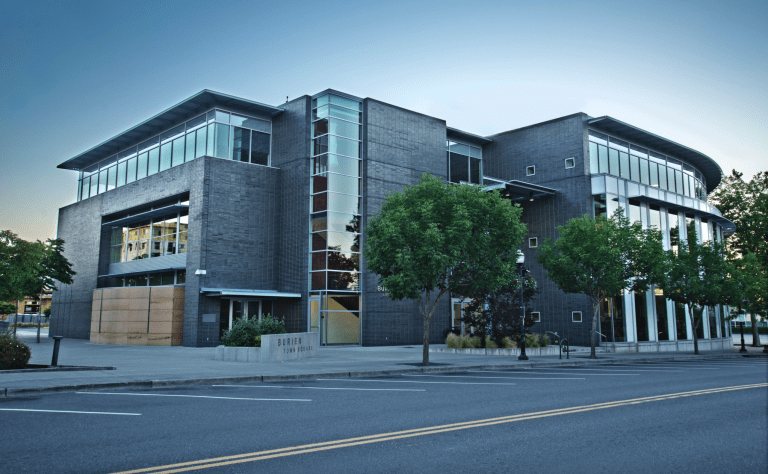
 

Burien Officials Excoriate Councilmembers Who Opposed New Restrictions on Church-Based Encampments

Image via City of Burien

By Erica C. Barnett

Back in May, the Burien City Council voted down legislation that would have imposed new conditions, including time and spatial limitations, on churches that want to host homeless encampments on their property.

The vote itself was a bit of a debacle, with both City Manager Adolfo Bailon and Mayor Kevin Schilling claiming—inaccurately—that the legislation had passed. In fact, it failed on a 3-2-2 vote, with Councilmembers Sarah Moore and Hugo Garcia abstaining and Stephanie Mora and Linda Akey voting no. (Jimmy Matta, Alex Andrade, and Schilling voted yes.)

The bill, with its five pages of pointed “whereas” clauses, was aimed at curtailing encampments like the one former councilmember Cydney Moore helped establish at Oasis Home Church in December 2023, which Bailon and city attorney Garmon Newsom III tried to shut down.

The legislation would have required church-based encampments to be open no more than six months in any calendar year (with a mandatory three-month waiting period before they could host another encampment); required extensive neighborhood outreach and a code of conduct, among other permitting conditions; and mandated large setbacks and view-obscuring fences so that Burien residents would not have to see their homeless neighbors. The proposed ordinance even dictated internal encampment details like mandatory spacing between “tent groups” (a term the bill did not define.)

Fresh off that embarrassing defeat, Bailon wrote an email to council members suggesting that the council members who voted against the bill or abstained from voting had “violated their oath of office to uphold state law” by not voting for the legislation, Moore disclosed at last week’s council meeting.

The email claimed that the ordinance—which imposed conditions on churches beyond those already in effect under state law—was necessary for the city to be “in conformance with an established state law. It is my duty to inform you that votes cast in abstention and opposition to Ordinance 861 (on May 19) are a violation of your oath of office, specifically to the section where you have sworn to uphold the laws of the State of Washington,”

The email, signed by Bailon, concluded, “Please keep in mind your oath of office and duty to Burien and Washington when casting votes in the future.”

Noting that the council has the right to vote however they choose, or abstain from voting, on legislation, Moore said, “for the city manager to claim that I do not have the right to vote as I choose and as I believe serves my constituents, was to question the purpose of me on the council and the council and the ability of any of us to fulfill our duties.”

PubliCola is supported entirely by readers like you.
CLICK BELOW to become a one-time or monthly contributor.

Support PubliCola

Moore then explained her decision to abstain from voting, saying that while she supports having rules on the books regulating church-based encampments, the letter of the law would have made it harder for religious organizations to host homeless people on their properties. In the absence of a local law, the state law regulating such encampments, which includes many requirements but is not as restrictive as the proposed law in Burien, applies.

A King County judge upheld Burien’s total ban on sleeping outdoors in the city last month.

“When I read through the proposed ordinance and discussed it with people who have studied state law and who have established various types of shelter, I came to believe that the ordinance added restrictions that would likely limit the actual ability of churches to help the city address this crisis,” Moore said.

Responding to Moore, Schilling piled on to Bailon’s criticism of the council, saying “what you were elected to do” is vote yes or no, and abstaining for reasons other than a conflict of interest is essentially “saying, ‘I’m not even here.'”

A review of Burien City Council minutes from 2024 and 2025 shows that most council members have abstained from votes in the past, including Schilling. Moore, Andrade, and Matta abstained from votes about rescheduling council meetings; Garcia and Moore abstained on several votes related to Burien’s disputed minimum wage ordinance; and Matta abstained from legislation about electing a deputy mayor and a proposal to reduce the number of times the council must consider legislation in public before passing it. Schilling himself abstained most recently in December, when he declined to vote on a list of 2025 proclamations.

Judge Upholds Burien’s Total Ban on “Camping,” With Appeal Likely

King County Courthouse

By Erica C. Barnett

King County Superior Court Judge Michael Ryan dismissed a lawsuit challenging the city of Burien’s total ban on sleeping in public, in a sweeping ruling that brushed aside the argument that the law criminalizes people for being homeless.

The lawsuit, filed by the Seattle/King County Coalition on Homelessness and three people who lived unsheltered in Burien at various times over the past two years—Carlo Paz and Elizabeth Hale and Alex Hale—challenged Burien’s law prohibiting people from falling asleep in public spaces.

The Burien City Council passed a law effectively banning homeless people from the city after the US Supreme Court overturned a ruling, Martin v. Boise, that made it illegal to criminalize homelessness if people had nowhere else to go. The Burien law bans unsheltered people from “camping” or “storing property,” such as tents or sleeping bags, in any public space, making it one of the region’s harshest anti-homeless laws.

In his ruling, Ryan wrote that Burien’s ban is fair because it applies to everyone equally, prohibiting homeless and housed people alike from falling asleep or “storing” property in public spaces. During oral arguments in February, Ryan asked if he could be arrested if he fell asleep after having a picnic with his family on the beach, and Burien’s attorney said he could, but the final call would be up to a police officer and, potentially, the judicial system.

Apparently drawing on this discussion, Ryan wrote that the law criminalizes sleeping in public, rather than the state of being homeless itself—disagreeing with the plaintiffs’ argument that sleeping in public is an unavoidable activity that defines the status of homelessness. This, he wrote, was in keeping with the ruling that overturned Martin, known as Johnson v. Grants Pass, which said that sleeping in public is a type of conduct, like using illegal drugs, rather than a status, like having an addiction. To rule otherwise, he wrote, would be tantamount to saying that because people need to eat, cities can’t enforce laws against lighting fires for cooking in public parks.

Alison Eisinger, director of the Seattle/King County Coalition on Homelessness, said she was “profoundly troubled that the court seems to interpret our state Constitution as unable to offer protections to people who are too poor to have a place to live.”

PubliCola is supported entirely by readers like you.
CLICK BELOW to become a one-time or monthly contributor.

Support PubliCola

“Threatening people with arrest, fines, or jail time for sleeping in public or otherwise trying to survive is cruel, unjust, and unreasonable,” Eisinger said. “Mr. Paz and Mr. and Mrs. Hale, along with many others, are trying to stay connected in their home community, which has no shelter for them.”

This is an undisputed fact—there is no general-use shelter in Burien, and all “offers” of shelter involve relocating people living unsheltered in Burien to another city, like Seattle. But Ryan seemed convinced by the city’s argument that its total ban on sleeping in public places would lead unsheltered people to accept offers of shelter they had previously “rejected.”

“In its political judgment, Burien determined that banning camping, sleeping, and storing belongings on public property will incentivize individuals to accept various services, which Burien believes is an important first-step in getting someone into permanent housing,” Ryan wrote.

After claiming repeatedly that, as a judge, he was ill-equipped to express policy views on homelessness, Ryan opined that Burien’s law, “with its criminal penalties, serves to deter the proliferation of encampments, which everyone should agree are unsafe for the unhoused and the surrounding community.” The evidence he cited for this claim included a quote from Grants Pass that inaccurately (and misleadingly) claimed more than 40 percent of Seattle shootings in early 2022 were “linked to homeless encampments”; in fact, that figure represents five shootings in 2022 in which the victim, the perpetrator, or both happened to be homeless.

Scott Crain, an attorney with the Northwest Justice Project who argued the case, said the court’s decision “contradicts fundamental constitutional principles and ignores the reality that Burien provides insufficient shelter options for its unhoused residents and none at all for single men. We respect the court’s attempt to thoroughly address each issue presented and explain its analysis to the parties but strongly disagree with this ruling, which forces the homeless out of Burien. We will be consulting with our clients about appealing this decision to ensure Washington’s constitution protects everyone, regardless of housing status.”

Last-Minute Rug Pull Leaves Lake City’s Sanctioned Encampment, Tent City 4, With Nowhere to Go

Image via Seattle Mennonite Church

By Erica C. Barnett

Back in February, SHARE and WHEEL—the shelter providers and homeless advocacy groups that have run self-managed tent cities in Seattle for many years—began doing outreach about plans to relocate Tent City 4 from its current location at the Seattle Mennonite Church in Lake City to the site of the former Lake City Community Center four blocks away.

Ten tent city residents fanned out across the neighborhood, knocking on doors and handing out about 500 flyers notifying residents about the move, and the group held a well-attended community meeting where only two people objected to the new location, according to several people who were present. One of those, a woman who worried that the community would block access to a farmer’s market, withdrew her objection after realizing it would not. “We had nothing but a positive response,” WHEEL organizer Michele Marchand said.

By design, Tent City never stays on one site for more than a year—a commitment that helps mitigate community concerns about their presence. Their lease at the church ends on Saturday, May 17, and all 104 residents, including families with a total of 17 kids, plan to leave that day. Until last week, they planned to sign a lease with the King County Regional Homelessness Authority to move to the community center site, with Journey Christian Church serving as the “faith sponsor” at the new location.

Last week, however, something changed, according to several people directly involved in planning the move, and the city decided not to give KCRHA control of the land. (KCRHA had planned to add Tent City 4 to its master lease agreement with the city, which hands authority over city-owned properties to KCRHA for the duration of the lease. Previously, the city’s Human Services Department would sign agreements with providers directly for the use of city-owned land.)

In response, the homelessness authority informed Tent City representatives that their lease would not be on the agenda for a KCRHA governing board meeting on May 15, as previously planned. That means that the relocation they’ve been planning for months won’t go forward—and they’ll have to move somewhere else, potentially to public land where they do not have formal permission to be.

Lisa Edge, a spokeswoman for the homelessness authority, said, “KCRHA and Seattle Human Services Department continue to receive community input and are reviewing it.”

Several people involved in the negotiations say Seattle City Councilmember Cathy Moore, whose north Seattle district includes Lake City, is behind the sudden reversal; one said she became “apoplectic” when she learned the encampment was moving to a new site in her district last week and reached out to KCRHA to stop it from moving forward.

Moore is a member of the KCRHA’s governing board of elected officials, which—thanks to the elimination of a separate implementation board late last year—now makes all major decisions for the homelessness authority. (Previously, the implementation board approved such leases). The sudden shift, according to SHARE/WHEEL’s Anitra Freeman, came “in spite of [Moore] being really friendly to us in the past.”

Moore declined to respond to detailed questions about her role in the decision to deny Tent City 4 a lease at the new location.

Kate Jacobs, a spokesperson for Mayor Bruce Harrell’s office, said the city “supports a solution that results in a new location for Tent City 4 that meets the needs of the people who reside there and the broader community.” We followed up with additional questions about why the city is transferring control of its own land to KCRHA—a move that effectively shifts responsibility for what happens on city property to the homelessness authority— and will update this post when we hear back.

Several people involved in negotiating the move say Tent City 4 was the target of a late-breaking email campaign directed at elected officials, including Moore and Harrell. In a meeting with Tent City 4 residents last week, Marchand said, KCRHA CEO Kelly Kinnison told the group that “they’ve been flooded with …  form emails” opposing the sanctioned encampment.

Pete Lagerwey, a member of the Seattle Mennonite Church, said Tent City has only had a positive impact on the neighborhood. “They’ve been fantastic neighbors,” Lagerwey said, picking up trash in the neighborhood and providing 24-hour safety patrols. “We’re sorry to see them go and we would invite them back in a heartbeat.”

Edge, from KCRHA, said the agency “is committed to helping resolve this issue” and is working with SHARE/WHEEL and the city to “identify a property for them to move to. KCRHA has asked SHARE/WHEEL and the current faith sponsor to consider extending the current lease while the issue is resolved.”

But Tent City 4 representatives say they plan to keep their word to the neighborhood and leave on May 17, whether they’ve reached an agreement on the community center site or not. “Our backup plan, no matter what, is to keep our word and move somewhere else,” said Brandon, a resident of the encampment. “That’s non-negotiable.”

The Mennonites are supporting Tent City 4’s commitment to move on schedule. “They’re a poor people’s organization and all they have is their own good word and trust,” Lagerwey said. “We’re not going to extend the lease, because we’re going to help them keep their word.”

Alison Eisinger, director of the Seattle/King County Coalition on Homelessness, called Tent City 4 “a well-organized self-managed group with a long track record” that has moved from one location to another dozens of times without incident. “This is the easy stuff,” Eisinger said. “If Seattle can’t figure out how to help 100 people who manage their own shelter move, how is this city ever going to site anything, shelter or supportive housing, anywhere?”

SPD Is Losing Women As Fast As It’s Hiring Them; State Budget Defunds Successful Encampment Program

Mayor Bruce Harrell turns to address a group of new SPD recruits at a hiring announcement Monday.

1. Earlier this week, we reported that the Seattle Police Department has only managed to hire five women, out of 60 new recruits, so far this year—a result that falls far short of the city’s “30 by 30” goal of having a 30-percent female recruit class by 2030. (To meet that goal, SPD would have had to hire 25 women so far; the five women represent 8 percent of the new recruits.

But the story is actually worse than that, because women are actually leaving the department at a much faster rate than SPD is recruiting new women to replace them.

In 2025 so far, according to the mayor’s office, 24 people have left SPD. Five of those were women. So not only does the net increase in female officers this year stand at zero, more than 20 percent of the people who have left the department are women. Put another way: SPD is losing women far faster than it is replacing them.

New police chief Shon Barnes said this week that the department was looking at why some women don’t pass recruiting requirements and may “give them another look,” adding that lots of departments have trouble hiring women.

He didn’t address ways the department could make women more likely to apply for jobs in the first place, since the real issue isn’t so much that women are applying and failing but that women don’t see SPD as a good place to work and advance their careers—understandably so.

PubliCola is supported entirely by readers like you.
CLICK BELOW to become a one-time or monthly contributor.

Support PubliCola


2. The final state budget adopted by the legislature last week failed to restore funding for a critical program that has successfully moved hundreds of unsheltered people indoors.

The program, a collaboration that includes Purpose Dignity Action, REACH, and the King County Regional Homelessness Authority, resolves encampments in state rights-of-way by providing sustained outreach, intensive case management, and hotel-based shelter to former encampment residents. Unlike Seattle’s policy of aggressive sweeps, the program sticks with people and gets them indoors long-term; since 2022, more than two-thirds of the people in the program remain housed.

The budget the state legislature passed reduced funding for the program from $75 million to $45 million, which is just enough to continue services for people already enrolled in the program, but not enough to keep the “front door” open by resolving new encampments in the future.

Carolanne Sanders Lundgren, PDA’s chief campaigns officer, said that while nearly everyone, including people living in encampments, “agree that no one should be living in those conditions,” the systems that are in place to deal with encampments “do not do a good enough job of connecting people to real help that makes sense for their lives and circumstances.”

By slashing funds to the program, Sanders Lundgren said, the budget “halts all progress. The bigger picture is that as social and economic instability continue to grow, the need for resources like [right-of-way] outreach and temporary lodging–which provide immediate relief and a bridge to long-term stability–will only increase.”

State Budget Cuts Could Halt Successful Encampment Resolution Program

Seattle City Councilmember Alexis Mercedes Rinck

By Erica C. Barnett

A program started under former governor Jay Inslee to resolve encampments on state-owned rights of way could shut down this year, advocates and King County elected officials warned on Tuesday, unless state Democrats restore funding to continue the program in this year’s budget. The program, unlike the daily sweeps that have become part of the urban landscape in Seattle, involves extensive outreach and, for most participants, ends in housing.

Currently, both the House and Senate versions of the budget reduce funding for the right-of-way program, as it’s known, from $75 million a year to $45 million a year. That funding, advocates said Tuesday, would only be enough money for the program to continue housing people from past encampments, not to provide ongoing outreach and shelter for new encampments in the future. To keep the program at current levels—accounting for inflation, capital costs, and payments to WSDOT for costs associated with physical cleanups—the state would need to restore $40 million to the budget.

Speaking at the Arrowhead Gardens senior housing complex in Highland Park, near the former site of an infamous encampment that was resolved through the program, King County Councilmember Teresa Mosqueda said, “We do not see results in getting people inside by sweeping people out of sight and from one location to another. We do not create trust with our housing service providers by making it harder for them to find people when there’s actually a unit available.”

In King County, the right-of-way program is run by Purpose Dignity Action, which created a program called CoLEAD to provide temporary lodging during the pandemic. Unlike previous efforts to shut down encampments through brute-force sweeps, the PDA’s program resolves encampments by providing sustained outreach, intensive case management, and hotel-based shelter to former encampment residents.

The strategy is more expensive than the sweep-and-repeat approach, but unlike sweeps, it has a strong track record of keeping people housed. According to the PDA, the program has resolved 23 encampments and moved 479 people into housing in King County since 2022, with more than two-thirds of those individuals still housed.

PubliCola is supported entirely by readers like you.
CLICK BELOW to become a one-time or monthly contributor.

Support PubliCola


“Without restored funding for those programs, the front door will close. In other words, we will not have an encampment resolution program that cannot resolve new encampments,” Seattle City Councilmember Alexis Mercedes Rinck said on Tuesday. “No new encampments will be resolved if this goes forward. But we know there’s a way that we can fix this, and leaders from the local and state level have a moral imperative to ensure that there is a path forward for this work to continue.”

Diane Radischat, president of the resident community at Arrowhead Gardens, worried out loud about what would happen if money for the right-of-way program dried up. Already, she said, people are beginning to set up tents and RVs in the area.

The people who have set up encampments on Myers Way are “not the cooperative ones,” Radischat said, “but they still need help. They still need services, and we cannot give up on them ever. So we can’t afford for the state to take any money away from this program in any fashion at all. If the money disappears, what you think will happen? People will just suddenly be all fine, and we don’t have to worry about them anymore?”

After the meeting, Mosqueda told PubliCola that along with restoring the cuts to the right-of-way program, state legislators also need to pass (and Governor Bob Ferguson needs to sign) the $12 billion progressive revenue package that state Democrats have proposed this session. “It’s not a zero- sum game,” Mosqueda said. “We cannot take funding from another bucket to invest in this evidence based program—it needs to be additive so that we are also investing in upstream safety net programs with new revenue from the state.”

Earlier on Tuesday, Mosqueda said the King County Regional Homelessness Authority needed the ability to raise revenues on its own, rather than serving exclusively as a pass-through agency for funding from outside sources.

Last year, King County Councilmember Claudia Balducci proposed spending $1.8 million of the county’s budget to supplement the right-of-way program, calling it a “bright spot” at KCRHA, but the council voted it down 7-2, with only Balducci and Jorge Barón voting yes. Then-budget chair Girmay Zahilay urged a “no” vote at the time, citing the need for fiscal discipline amid a growing county budget deficit. Both councilmembers spoke Tuesday in favor of the state budget request.