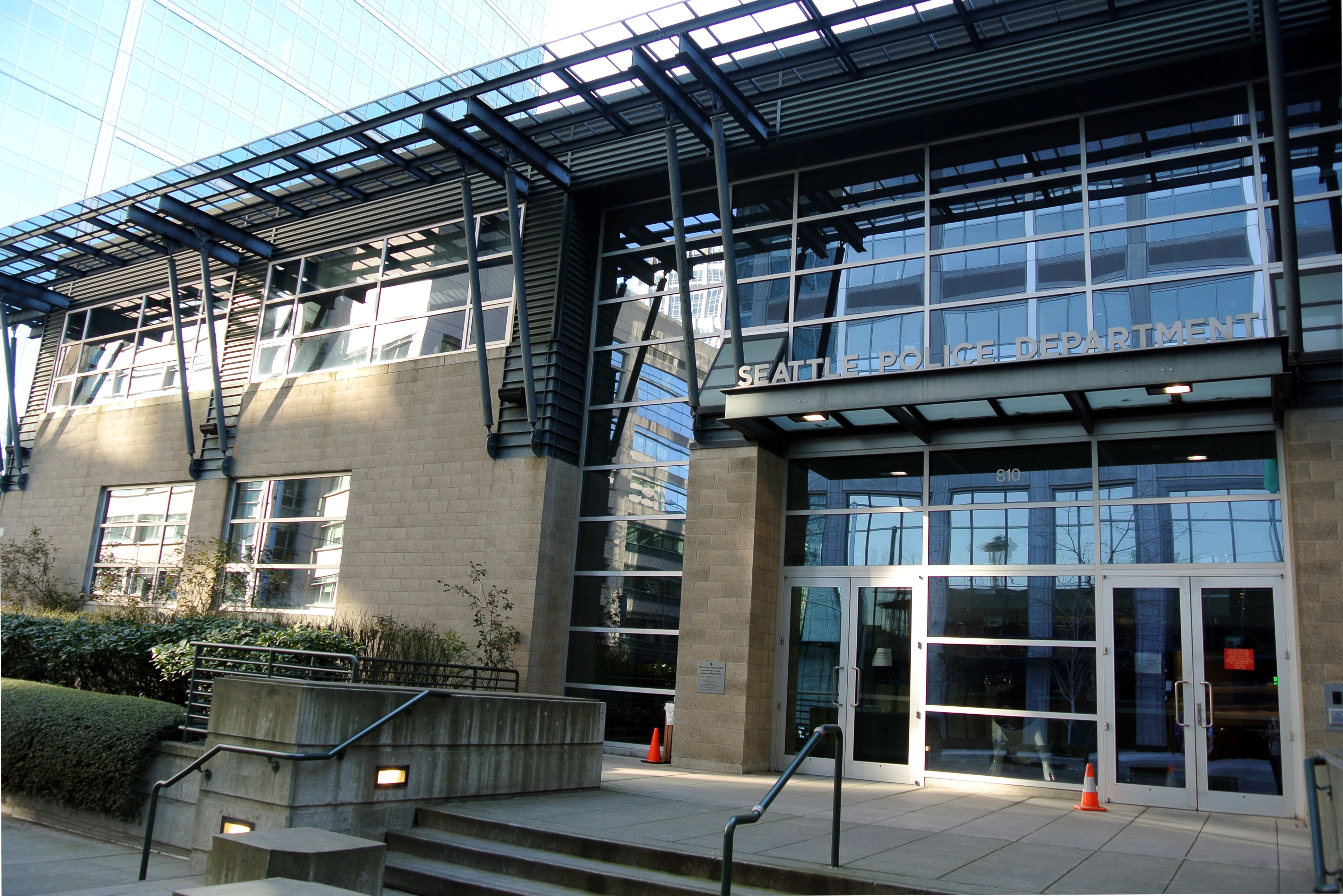
1. The Seattle Police Department spent more than $6,300 on a month-long stay at the four-star Arctic Club Hotel in downtown Seattle for Lee Hunt, Seattle Police Chief Shon Barnes’ Executive Director of Crime and Community Harm Reduction, after Barnes appointed him to the newly created position earlier this year. Hunt, who makes more than $300,000 a year, also worked for Barnes in Madison, WI, where Barnes was previously chief.
Expense records PubliCola has reviewed show that Hunt stayed in a room that cost between $221 and $293 a night between May 7 and June 7 of this year. The total cost to the city for the long-term hotel stay, according to an itemized receipt, was $6,330.
It’s unclear if the city paid for other Barnes appointees to stay at hotels as part of their moves to Seattle. As we reported earlier this year, Barnes brought in a number of new hires from outside Seattle, including a second deputy police chief, an assistant chief, a chief of staff, and a chief communications officer, in addition to Hunt, at an annual cost of more than $1 million.
In response to detailed questions, which included an inquiry about whether other Barnes hires also received an extended hotel stay as part of their moving costs, SPD’s communications office said, “All Command leaders who joined Seattle Police Department from locations outside of Seattle to bring their expertise here received a specific relocation package.
“Under that process, they submit receipts for review – and if approved, they get reimbursed per their agreed-upon package.”
SPD did not respond to questions about whether other out-of-town executive hires, including Barnes, were put up in hotels long-term after they moved to Seattle; nor did they respond to a question about whether SPD is currently subsidizing or paying for Barnes’ apartment. Many of SPD’s new top executives, including Barnes, live in Seattle while their families continue residing in the states where they used to live.
2. Under the Seattle Police Officers Guild’s just-approved contract with the city, police sergeants are authorized to deal internally with any police misconduct that falls below the level of “serious” misconduct, defined in SPD’s policy manual to include violations like insubordination, “serious neglect of duty,” and dishonesty.
Supporters of the change, including Seattle City Council public safety chair Bob Kettle, have said that authorizing sergeants to deal with minor misconduct helps build a more ethical, self-governing police force and frees the Office of Police Accountability to focus on more serious matters.
It’s unclear, however, precisely what kinds of misconduct sergeants will be authorized to dispense with internally. In SPD’s current policy manual, “serious misconduct” does not include behaving unprofessionally—raising the possibility that incidents like the one in which former SPOG vice president Daniel Auderer laughed about the killing of pedestrian Jaahnavi Kandula by officer Kevin Dave, would be handled internally and never come to light.
(Auderer’s “joke” that Kandula’s life was only worth $11,000 because she was young was caught on camera and discovered by a civilian SPD staffer reviewing video for records requests filed by PubliCola and other outlets).
A spokesperson for the OPA told PubliCola the new “frontline investigation” process “is not effective until finalization of an updated policy. OPA will take an active role in the creation of the new Frontline Investigations program to develop accountability and consistency.”
Former police chief Adrian Diaz tears up during a press conference at which Mayor Bruce Harrell announced his removal as police chief and replacement by former King County sheriff Sue Rahr (right).
By Andrew Engelson
A March 2023 letter from Office of Police Accountability director Gino Betts, obtained by PubliCola through a records request, provides details about 13 investigations into into former police chief Adrian Diaz, who was removed from his post in May amid allegations about his conduct.
Currently, OPA confirmed, 14 investigations are in the intake stage, four are going through full investigations, three are under legal review, and three are being investigated by outside firms.
Diaz, who is still on the city’s payroll with a $338,000 salary after being removed as chief by Mayor Bruce Harrell in May, is the subject of three lawsuits alleging gender and racial discrimination, retaliation and harassment. The letter confirms that the Office of Police Accountability (OPA) has been investigating the former chief for a variety of complaints over the past two years, including issues raised in the lawsuits.
The allegations detailed in the letter range from fairly frivolous citizen complaints to more serious matters, including charges that Diaz was a “predator” who bullied SPD employees and “preys on women.”
KUOW described two of the more recent investigations into Diaz: One claiming that Diaz hired a woman with whom he had a romantic relationship without disclosing this information, and one claiming he used SPD vehicles and personnel for personal trips, such as having his driver take him to Portland to catch a flight to watch the UW football team play in the Sugar Bowl.
In July, KUOW reported that an anonymous letter written by an OPA investigator claimed that Betts had delayed investigations of Diaz, sometimes for as long as 16 months. Unlike investigations into police officers, which must be completed within 180 days, there is no specified time frame to complete investigations into the chief of police.
In an emailed response to PubliCola’s questions about current investigations into Diaz, Betts said that Diaz has been the subject of a total of 52 complaints alleging misconduct since September 2022, including 28 OPA closed after determining they did not merit an investigation. Betts also noted that the city’s police accountability ordinance requires complaints against the police to be handled by civilian investigators, on top of their already “substantial workload”—and OPA only has two civilian investigators on staff.
Betts said there are 14 intake investigations of Diaz pending, including three that are under legal review, four that are pending full investigations, plus three that had been sent to an outside investigator. OPA declined to provide additional information about the pending investigations, including what they are about and whether they include any of the 13 complaints that were outstanding in March 2023.
Because of the volume of complaints against the chief, OPA is preparing to launch an online tracker specifically dedicated to investigations into chiefs of police.
The 13 complaints in Betts’ 2023 letter listed include one accusing Diaz of “using public funds to compensate a community member for a volunteer position” and one alleging that Diaz gave inaccurate testimony to the city council’s public safety committee—claiming, falsely, that Homeland Security regulations require cops to direct traffic at sporting events.
Another complaint claims that Diaz ordered officers not to file a report after a collision, while another concerns a possible ethics violation when Diaz attended an event at which then Mayor-elect Bruce Harrell spoke. According to documents acquired by PubliCola, OPA consulted with the Seattle Ethics and Elections Commission (SEEC) for guidance on this complaint. SEEC director Wayne Barnett told PubliCola that SEEC staff determined that Diaz’s attendance at the event, an Asian American/Pacific Islander unity celebration held in December 2021, was not an ethics violation.
The most serious accusation mentioned in Betts’ letter—that Diaz preyed on female employees—likely involves the alleged behavior that led four female SPD officers to file a lawsuit against Diaz in April.
Another accusation, which OPA assigned a private contractor to investigate, claims Diaz lied about events that happened during the CHOP/CHAZ protests of 2020. Regarding another investigation, which involves accusations that the chief and SPD neglected to address carbon monoxide emissions from SPD vehicles in one of its garages, Betts noted in the letter that “the allegation is uniquely intricate and overlaps with civil litigation.” An SPD officer was awarded $1.325 million in damages in 2022 as a result of a related lawsuit about the garage.
Yet another OPA investigation, which appears to be an officer-filed complaint, concerns whether SPD, under Diaz’s leadership, improperly awarded a contract to Truleo, a company that uses AI-based software to analyze body-worn video for inappropriate police behavior. SPD canceled Truleo’s contract in 2023 after SPOG, the police officers’ union, raised concerns about the software. The letter said OPA is looking into whether the contract violated SPOG’s collective bargaining agreement.
Another complaint accused Diaz of contributing to biased policing, a claim related to an incident in which SPD officers were accused of unnecessarily aiming rifles at a suspect. OPA ruled in 2023 that the accusations against the officers were not sustained.
PubliCola editor Erica C. Barnett also filed an OPA complaint against Diaz in August, alleging that he violated an SPD policy that prohibits SPD employees, including the chief, from retaliating against anyone who engages in any legal action, such as exercising their constitutional rights or publicly criticizing an SPD employee.
Diaz personally threatened to sue Barnett and PubliCola if we did not remove an article that described an interview Diaz did with right-wing commentator Jason Rantz to announce that he is gay—a “secret,” Rantz wrote, that has hidden “his innocence” of several women’s allegations against him. The piece summarizing Rantz’ interview with Diaz was not false or libelous, but was arguably critical of Diaz as well as Rantz: We expressed the view that gay men can and do harass women, and that being gay is not a defense against charges of harassing or discriminating against women.
Betts’ letter also lists several frivolous accusations against Diaz, including one accusing Diaz of “encouraging people to break the law,” one for something the complaint called “self induced grand theft auto,” and one that faults Diaz for protecting Union Gospel Mission, which the citizen complaint claimed was a “CIA front covering up a murder.”
1. City council members Rob Saka, Joy Hollingsworth, Maritza Rivera, and Bob Kettle have all proposed amendments to legislation proposed by City Attorney Ann Davison and sponsored by Kettle that would create zones from which people accused of drug-related crimes, including public drug use or possession, can be prohibited.
The legislation, which Davison proposed in June, expands on the old “Stay Out of Drug Area” zones established and expanded under former city attorney Mark Sidran, who is primarily remembered for instituting a number of punitive laws and policies, among them the “teen dance ordinance,” the poster ban, and many laws targeting homeless people, including a notorious prohibition on sitting down on public sidewalks.
As we’ve noted, banishment areas (whether for drug users or sex workers, who would be banned from Aurora under a different law proposed by Councilmember Cathy Moore) have an expansionary logic: When people are banned from existing in one area, they move just outside the banishment zone, until enough people complain that they are banned from that area as well. The result the last time these zones were widespread in Seattle was that people eventually give up even trying to stay out of the expanded no-go zone, as Katherine Beckett and Steve Herbert discussed in their 2010 book Banished.
In each amendment, the sponsoring council member justifies the SODA zone in their council district with the phrase, “Due to high levels of significant drug activity.” The zones will not stop this significant drug activity, but they will push it outside the zones, which will then require expanding, until most of the city is once again off-limits to people who have no choice but to display the symptoms of their addiction in public. The bill, which expresses concerns about “reducing overdose deaths,” does not address drug use and overdoses inside people’s homes.
Also Friday, Moore proposed a promised amendment to her legislation that would bring back the old prostitution loitering law and Stay Out of Areas of Prostitution (SOAP) banishment zones, clarifying that only people accused of being sex buyers to pimps would be subject to SOAP bans and prohibited from going anywhere near North Aurora Ave. As we reported last month, Seattle has attempted to focus on sex buyers in the very recent past, and it did not result in a decrease in the sex trade on Aurora and in other SOAP areas.
Moore’s amendment would also slightly expand the proposed Aurora SOAP zone and add a few more nonbinding recital clauses about diversion and the need for an “emergency receiving center” for women leaving the sex trade, which the legislation does not fund.
2. The Office of Police Accountability declined to interview Seattle Police Department general counsel Becca Boatright when it investigated a complaint about a Facebook post that appeared to dismiss female officers’ concerns about harassment and discrimination in the department as “clickbait.”
“Negative headlines may be the clickbait but for the honest brokers interested in an honest discussion, we’re here to have it. I’m so proud to be a member of the SPD and of the incredible work my teams do. Real change comes from within. Follow the data, lean into the science,” the post said.
Boatright’s post went up shortly after the release of a report in which a dozen women in the department described their experiences, which included sexual harassment, casual misogyny, and story after story of women getting passed over for promotions in favor of less-qualified men.
The person who filed the OPA complaint said the post constituted “harassment, unprofessionalism, and retaliation against female SPD employees who alleged mistreatment by SPD.”
A spokesperson for the OPA said the case was “certified for an expedited investigation. That means OPA and [the city’s Office of the Inspector General] agreed that OPA could issue recommended findings based solely on its intake investigation without interviewing the named employee.” Generally, an expedited investigation means that OPA decided an officer didn’t violate SPD policy—in this case, the policy prohibiting SPD employees from ridiculing or maligning protected classes.
3. Former City Councilmember Alex Pedersen co-authored an opinion piece for the Neighborhoods for Smart Streets lobby group, which formed during the heated debate over a bike lane in Wedgwood, urging a “no” vote on the Seattle Transportation Levy, which would provide $1.55 million for new sidewalks, road maintenance, spot improvements to help buses operate more smoothly, and protected bike lanes, among many other projects. The ballot measure includes the biggest investment in new sidewalks in the levy’s history.
Pedersen, along with former councilmember Margaret Pageler and Latino Civil Alliance board chair Nina Martinez, argues that the proposal is a “$1.5 BILLION boondoggle” (the word “billion” is capitalized like that throughout the piece) that “uses Seattle’s middle class like an ATM machine” to fund projects that only “bicycling clubs”—apparently a reference to the Cascade Bicycle Club, a perennial bugbear for the Seattle Times—will ever use.
“Lobbyists larded the levy with unnecessary projects – including costly bike lanes that are rarely used and impede access to brick-and-mortar small businesses,” Pedersen and his co-authors write. “It’s inequitable because it shoves 100% of the cost onto Seattle residents.”
During his single term on the council, Pedersen was a big fan of “impact fees” that would divert the cost of public street improvements onto housing developers. Based on the premise that new apartments have a negative impact on cities, transportation impact fees drive up the cost of new housing (and thus directly increase rents), but don’t impact incumbent single-family homeowners because they aren’t taxes.
Pedersen and his co-authors go so far as to claim the levy is inequitable to people of color, based on a January 2024 survey that they claim shows “most people of color oppose this levy.” While a majority of people the survey lumped into an undifferentiated “BIPOC” category did say they’d oppose a hypothetical $1.2 billion or $1.7 billion levy back in January, the city didn’t release even preliminary details of the actual levy until almost four months later. The high-level conclusion of that poll Pedersen cited? A strong majority of voters supported a $1.7 billion levy even without knowing the exact details of what it would fund.
Tension between the head of the Seattle Police Department’s communications office, Lt. John O’Neil, and his staff boiled over last year, when a detective in the division, Valerie Carson, accused him of retaliation after he addressed an internal dispute by filing a police-misconduct complaint against her.
The complaint against O’Neil, by one of just 150 or so female officers in the department, came at a time when SPD is openly struggling to recruit and retain women (of 61 officers who left last year, nearly a quarter were women), and when female officers are speaking out about what they describe as an environment of casual misogyny, discrimination, and harassment.
In a recently released report commissioned by SPD, women in the department described it as a hyper-masculine, misogynistic environment—one in which male officers frequently characterize female officers as inherently inept, comment on their appearance, and gossip about their sexual history.
Carson and O’Neil had clashed previously, including once when she failed to respond to a text while volunteering for on-call duty from a scheduled vacation on the East Coast. But the conflict reached a breaking point when Carson turned down an interview with a TV station, something she said she ordinarily had discretion to do. After a junior officer, Judinna Gulpan, told Carson she didn’t feel prepared to do the interview herself, O’Neil ordered Gulpan to tell Carson she had to do it. Carson refused again, went home, and requested medical leave for her mental health.
An hour after Carson informed O’Neil she was taking leave, O’Neil filed a complaint against her with the Office of Police Accountability, alleging that Carson had violated SPD’s policy requiring officers to obey any lawful order. (O’Neil said he was already planning to file the complaint but had been busy all day and didn’t get around to it until late that afternoon).
Citing reports from “a couple of lieutenants,” O’Neil continued, “One person said that she looked like she just came from a club, and it was a very short skirt and the shoes were inappropriate. … It was more party attire, stuff like that.” “I received complaints, which is what happened, and one of the main complainants was Chief [Adrian] Diaz—that’s who the main complainant was.”
Carson declined to speak on the record for this story. In an interview with SPD’s internal EEO investigator, Rebecca McKechnie, Carson said she declined the interview with FOX 13 News because she was stressed to the breaking point after being on call every day for months and “felt as though I could burst into tears at any moment.”
“I was not feeling well that day,” Carson told McKechnie. “I was physically, mentally and emotionally exhausted [by the] increasingly frustrating situation at work which I had already reached out to HR about. … I did not want to be at work, but I felt an obligation to stay because our office is very understaffed and because I was the most experienced person in the office.”
McKechnie also investigated O’Neil’s complaint against Carson. In his interview with McKechnie, O’Neil brought up a number of issues outside the scope of his official complaint, including whether Carson really had a legitimate mental health condition and the way she dressed.
O’Neil said Carson’s clothes were often “inappropriate,” and claimed that she “argued with me” over the requirement that she wear “business attire” when showing up to calls. “She is the face … on TV—we are the face of the department,” O’Neil said.
Citing reports from “a couple of lieutenants,” O’Neil continued, “One person said that she looked like she just came from a club, and it was a very short skirt and the shoes were inappropriate. … It was more party attire, stuff like that.”
“I received complaints, which is what happened, and one of the main complainants was Chief [Adrian] Diaz—that’s who the main complainant was.”
O’Neil acknowledged that he didn’t see the “club” gear Carson was allegedly wearing, and did not mention any evidence, such as TV footage, that would substantiate these secondhand claims. He also mentioned one instance—which is not in dispute—when Carson wore Birkenstocks and casual clothes when she showed up to an incident while off-duty.
PubliCola is supported entirely by readers like you. CLICK BELOW to become a one-time or monthly contributor.
In his interview with McKechnie and a later email appealing OPA’s decision, O’Neil referred to Carson as “combative,” “angry,” and “hostile,” and claimed that her only “mental health condition” was being too emotional about a recent breakup. “Not a disability. A breakup,” he said.
Far from being a victim, O’Neil told investigators, Carson and two other white staffers were engaged in a racist effort to oust him and prevent him from receiving a promotion by filing baseless complaints and refusing to follow orders. (O’Neil is Black). The issues, he said, started as soon as Diaz appointed him to head the communications office in August 2022. Previously, O’Neil was in the department’s canine unit, where he was the subject of multiple EEO complaints that he called “frivolous.” (Prior to that, he was part of a nightlife safety team that, according to bar owners, cracked down on porn at gay bars on Capitol Hill.)
“This all has to do with me being a Black sergeant,” O’Neil told McKechnie.
Ultimately, both Carson’s complaint against O’Neil and O’Neil’s complaint against Carson fizzled. The OPA dismissed Carson’s complaint because they found his timeline credible, and dismissed her complaint. They recommended a “supervisor action”—effectively, a slap on the wrist—in O’Neil’s complaint against Carson, calling her refusal to do the interview “minor misconduct” at most.
In an email objecting to OPA’s decision in his case, O’Neil said investigators may not have considered the possibility that “racist undertones, biases, and mistreatment due to color” were the reason three white staffers were “giving me and [Gulpan] (Asian) a hard time and ultimately being insubordinate.” PubliCola was unable to reach Gulpan for comment.
OPA director Gino Betts said he couldn’t comment on specific cases.
In an email objecting to OPA’s decision in his case, O’Neil said investigators may not have considered the possibility that “racist undertones, biases, and mistreatment due to color” were the reason three white staffers were “giving me and [Gulpan] (Asian) a hard time and ultimately being insubordinate.” PubliCola was unable to reach Gulpan for comment.
O’Neil told PubliCola he believes the EEO complaint process is “being misused, and is absolutely being weaponized, and it’s terrible because it overshadows the true victims.”
“Valerie was given the opportunity to come back to the unit and then work and follow the rules and regulations, and she didn’t do it,” O’Neil said.
“I realize people are trying to throw out misogyny and all this stuff, which is nonsense when it comes to my unit,” O’Neil continued. “With this unit, it [was] three males, three females”—O’Neil, two other men, and three women, including O’Neil’s own supervisor, Amy Clancy, who supported his complaint against Carson.
“The issues were the same” with all his employees, O’Neil said. “It had to do with insubordination, chain of command, and things that were violations of policy.”
Clancy left the department in April.
After working on light duty in another division after her leave ended, Carson took an demotion in rank and is now a patrol officer.
And Gulpan, who had just started when Carson went on leave, recently filed her own EEO complaint against O’Neil. Earlier this year, she—like Carson—took a demotion in rank and now works on patrol.
O’Neil received his promotion from sergeant to lieutenant last year.
“We had structure and rank in the unit, but we also treated each other like people with thoughts, ideas, and feelings, and routinely challenged each others’ ideas to make sure we were doing the right thing,” said former communications office staffer Jonah Spangenthal-Lee, who left the office earlier this year.
The allegations of discrimination and bias occurred during a heated internal debate over the office’s communications strategy. According to O’Neil, Police Chief Diaz directed the office to put out more information on all platforms—adding video, posting on social media and SPD’s Blotter blog more often, and highlighting the work of individual officers with posts and videos. Internally, some staffers objected to this strategy, saying the office should consider things like newsworthiness and the overall impression the department was creating about the level and severity of crime in Seattle.
“That was absolutely, definitely part of the conflict—the chief wanted to go in a certain direction, [and] I got fought on that,” O’Neil told PubliCola. When I was asking them to do certain tasks, I was told no.”
“This is a paramilitary organization,” O’Neil continued, meaning that people down the chain of command can only say no in certain circumstances, such as a situation that endangers their life or requires them to break the law. “They had no right to tell me no, no matter how much they disagreed,” he said. “You have people with a little bit of time on [duty], and they want stuff their way. It just doesn’t work like that.”
Staffers who worked in the communications office before O’Neil arrived, however, said that even within SPD’s top-down structure, there was room for collaboration and debate. Media relations staffers helped shape SPD’s communications strategy and made suggestions or pushed back when they thought an idea might backfire with the public—like a tour of SPD’s north precinct, requested by then-councilmember Kshama Sawant, that gave critics a chance to confront police in front of reporters and at least one embarrassing story in the Stranger.
“We had structure and rank in the unit, but we also treated each other like people with thoughts, ideas, and feelings, and routinely challenged each others’ ideas to make sure we were doing the right thing,” said former communications office staffer Jonah Spangenthal-Lee, who left the office earlier this year.
Carson told SPD investigator McKechnie that O’Neil took the concept of disobeying orders to an extreme. “I was in the military for five years and no one has ever used the word ‘insubordination’ more than I’ve heard him use that word,” Carson said.
Clancy, O’Neil’s former supervisor, sent an email to OPA supporting O’Neil after the office issued its decision last March.
“I am very concerned that if there is no discipline related to Sgt O’Neil’s filed complaint, the insubordination will only continue in the office, making it nearly impossible for him to lead,” Clancy wrote. “He is an excellent leader, and has always deserved the support of his people. Currently we have three additional employees in the Unit who have been added recently and all of them support Sgt O’Neil and work with him incredibly well. We have harmony for the first time in a very long time.”
But that “harmony”—if it exists—came at a real cost to institutional knowledge and strategic leadership in the media relations division. Since O’Neil was hired, the division has seen turnover of more than 100 percent, including the loss of one staffer, Spangenthal-Lee, who had worked in the office for more than 12 years. The division, which once had gender parity, now has an all-male staff.
In an interview with an investigator from the Office of Police Accountability, Seattle Police Officers Guild director Mike Solan claimed that SPOG vice president Daniel Auderer was processing a “tragic event” with “sarcasm and humor” when he laughed and joked about the death of Jaahnavi Kandula, a 23-year-old student who had just been struck and killed by a speeding SPD officer, Kevin Dave, earlier that evening.
Solan then blasted Auderer’s critics, suggesting that OPA director Gino Betts had informed media about the video and accusing unnamed people of engaging in a witch hunt against the department.
“I would like the director to answer publicly… why this case is already out in the media,” Solan said.
“People [who] use this unfortunate audio captured on body-worn video, which was unintentional, to gain a political strategy against the union and against officer Auderer—I think does the family that lost their loved one a disservice and makes them be re-victimized. Anybody that supports that ideology and supports that tactic should feel shame.”
PubliCola obtained the interviews and related documents from the King County Prosecuting Attorney’s Office, which is conducting a criminal investigation into Dave’s actions, through a public disclosure request. Half an hour after PubliCola became the first media outlet to post the video, SPD posted the video on its own blog.
“[As] police officers, we deal with tragedy almost on a daily basis, and we’re human beings just like the next person,” Solan told the investigators. “We have to process these in a manner that allows us to go to that next tragic event. And humor and sarcasm is used for us as a coping mechanism.”
In his interview, Auderer did not express contrition for his comments, saying it was a “private conversation” that could just as easily have taken place “over a beer” or “on a street corner.” Given that he thought the conversation with his union director was private, he continued, “No, I did not violate that policy.”
In the video, Auderer can be heard laughing repeatedly for several seconds at a time, then joking about the value of Kandula’s life.
“I think she went up on the hood, hit the windshield, then when he hit the brakes, she flew off the car. But she is dead,” Auderer said, then laughed for several seconds before replying to something Solan said. “No, it’s a regular person. Yeah.”
“Yeah, just write a check,” Auderer continued. Then he laughed again for several seconds. “Yeah, $11,000. She was 26 anyway, she had limited value.” At this point, Auderer turned off his body camera and the recording stopped.
The video does not capture Solan’s part of the conversation, which both Solan and Auderer have described as “mocking” the lawyers who will ultimately decide how much the city has to pay Kandula’s family for her death.
In his own interview with an OPA investigator, Auderer said that when someone dies, “you can either laugh or cry. … You’re laughing over the absurdity of people suddenly being here one moment and not the next.”
In his interview, Auderer did not express contrition for his comments, saying it was a “private conversation” that could just as easily have taken place “over a beer” or “on a street corner.” Given that he thought the conversation with his union director was private, he continued, “No, I did not violate that policy.”
The video is from the night Kandula died—January 23, 2023. An SPD employee who eventually saw the tape filed a complaint on August 2. Six days later, Auderer wrote a letter to OPA director Gino Betts asking for a “rapid adjudication” of his case, a process in which OPA foregoes an investigation in cases involving “minor or moderate” SPD policy violations. Rapid adjudication requires an officer to admit they violated department policy. Auderer is accused of violating SPD’s policy requiring officers to behave professionally.
Betts denied Auderer’s request for a speedy resolution seven minutes after he sent it, saying that “OPA does not consider this case a candidate for Rapid Adjudication.”
In his interview with OPA, Auderer said he asked for an expedited response to his case not because he believed he had violated SPD policy, but “in order to explain it if somebody started asking questions. That was more important to me than [the threat of] being disciplined.”
Solan fiercely defended Auderer in his interview with OPA, calling him a “pillar in this department” who had “served his community for decades, leading in arrests.” Auderer has been an SPD officer for about 14 years—not decades—and has been the subject of dozens of allegations of using excessive force, behaving unprofessionally, and other violations of SPD policy.
“I find it unconscionable that this rapid adjudication inquiry to the [OPA] director was not taken serious,” Solan said. “SPOG looks forward to the closure of this investigation to make sure all the facts are put out there for context, if we’re talking about policy, loss of human life, and transparency and the understanding that officers need to feel as if the accountability system has their best interests in mind.”
Solan told investigators his side of the conversation was not recorded, and has not given an explanation that includes the actual “humor[ous]” comment that made Auderer laugh, nor what he said to make Auderer respond, “No, she’s a regular person.” According to OPA, no complaint has been filed against Solan for taking part in the conversation.
Both the OPA investigation and King County’s criminal investigation into Dave are ongoing.
1. Earlier this year, as part of the the city’s efforts to spiff up downtown Seattle in the runup to MLB All-Star Week, Mayor Bruce Harrell wrote the US Postal Service with an urgent request: Let the city cover the outside of your building at Third and Union with murals or wall banners to help “improve conditions on the street.” At the time, there were several large graffiti tags on the outside the building along with someunpainted plywood panels.
“The City wants to make sure our downtown looks clean and feels safe. However, the current condition of the Post Office is inconsistent with our goal,” Harrell wrote on June 2, in a letter hand-delivered to the local acting postmaster. “The City will pay all costs associated with the murals or wall banners.”
As anyone who frequents downtown Seattle knows, the city plastered the neighborhood with large paste-up portraits of players in the weeks before the All-Star Game; for a while, working in the area was a bit like living inside a promotional installation for baseball.
When the USPS declined the city’s offer to decorate their building, mayoral advisor Tim Burgess responded by threatening legal action.
“The City may be compelled to take action regarding the graffiti on the building, violating the city code,” Burgess wrote on June 20. “Your building looks terrible and contributes to blight.” In a copy of the letter PubliCola received through a records request, those two lines were highlighted for emphasis.
One week earlier, US District Judge Marsha Pechman had issued an injunction barring the city from enforcing its law against graffiti, agreeing with several protesters arrested for chalking outside SPD’s East Precinct that the law is overbroad and likely unconstitutional. However, the mayor’s office noted, Burgess’ threat referred to civil action, which is different than the criminal charges at issue in the federal case.
“I would also point out that the University District post office has a mural painting on it that the UW completed. So permission can be and has been granted in the past,” Burgess’ email continued.
The US Postal Service responded to Burgess’ threat by, in effect, rolling its bureaucratic eyes. “Considering how agitated they are about the exterior, is there a reason we cannot get a coat of paint put on the outlined areas right before the all-star game next month?” a local USPS customer relations manager wrote to USPS higher-ups. Six days later, the postal service sent its response to the city—photos of the building, its exterior wall painted flat government gray and “ready for All-Star game this week.”
The mayor’s office confirmed this sequence of events.
2. Speaking of the graffiti injunction: On August 1, the Office of Police Accountability (OPA) dismissed a series of complaints against six police officers who arrested the four protesters who subsequently sued the city, concluding that the arrests did not constitute biased policing or retaliation against the protesters for chalking messages that criticized police.
In the report, OPA director Gino Betts agreed with the arresting officers that the arrests had nothing to do with the content of the chalked messages, which criticized police, but were “based on property damage—which [an officer who witnessed the arrests] described as a crime—and the cleanup efforts that would ensue rather than the community members’ positions.” At the time, Betts’ report notes, the law banning any kind of alteration to public property was in effect, so the protesters were breaking the law by chalking messages on the temporary walls surrounding the East Precinct.
Additionally, according to the report, at least one of the officers who made the arrests didn’t see the specific messages, “undermining the allegation that [one of the officers] retaliated based on the political message inscribed on the wall.”
In her preliminary injunction against the city, Judge Pechman wrote that the officers clearly retaliated against the four protesters, using the “astonishing degree of discretion” police have under the current law to “to retaliate against criticisms written by Plaintiffs, four peaceful protesters who Defendants arrested for writing political messages in ordinary charcoal and children’s sidewalk chalk in an open and traditional public forum. Defendants selectively enforced [the law] against Plaintiffs’ criticisms while tolerating politically neutral and pro-government chalking,” such as pro-SPD messages chalked on sidewalks by police supporters. “Such viewpoint discrimination,” Pechman wrote, “the Constitution does not allow.”


 Expense records PubliCola has reviewed show that Hunt stayed in a room that cost between $221 and $293 a night between May 7 and June 7 of this year. The total cost to the city for the long-term hotel stay, according to an itemized receipt, was $6,330.

 The
The 

 “The City wants to make sure our downtown looks clean and feels safe. However, the current condition of the Post Office is inconsistent with our goal,” Harrell wrote on June 2, in a