
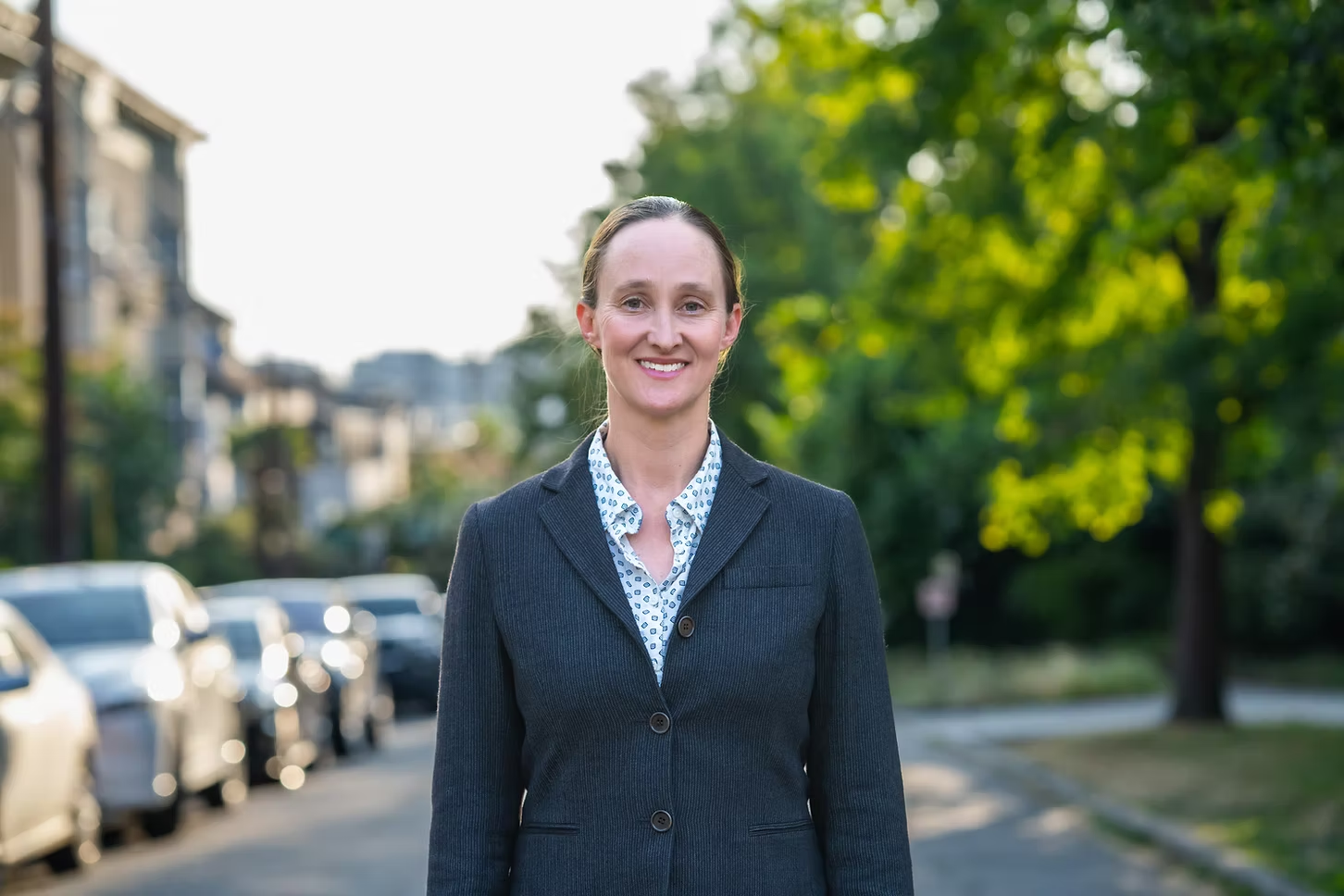
An interview with Mayor-Elect Katie Wilson, federal cuts that could leave thousands homeless, the city council adopts a budget that pushes off hard choices, and much more.
Monday, November 17
Federal Funding Changes Could Make Thousands of People in Seattle Homeless
Changes to the type of homelessness programs the Department of Housing and Urban Development will fund could slash most federal funding for permanent housing in Seattle—a shift that will force the city and King County to come up with new funding sources or allow thousands of people to fall into homelessness starting next year. We took a deep dive into the local implications of the changes.
Seattle Nice: Did Katie Wilson Win or Did Bruce Harrell Lose?
On this week’s show, we debated how Katie Wilson won the mayor’s race, why she won it, and how incumbent mayor Bruce Harrell tried to keep her from winning it. We also discussed Harrell’s claims, during and after his concession speech, that there had been “anomalies” in King County Elections’ vote count and his insistence to the end that it’s “offensive” to ask whether he understands the affordability challenges Seattle residents face in 2025.
Tuesday, November 18
County Executive-Elect Zahilay’s Layoff Proposal Shocks Some Longtime Staff
Incoming King County Executive Girmay Zahilay is the first new executive in 16 years, and he’s shaking up the executive’s office and county departments, announcing around 100 layoffs last week. Some staff reported feeling shocked and demoralized by the changes, which Zahilay’s transition team says are a normal part of every election.
PubliCola is supported entirely by readers like you.
CLICK BELOW to become a one-time or monthly contributor.
Wednesday, November 19
The city council made a number of last-minute changes after mayor-elect Wilson was elected, including provisions designed to force the new mayor to preserve the encampment-sweeping Unified Care Team, which has swelled to 116 members. The budget also bans the city from spending money on harm reduction supplies for drug users (except needle exchange, which has reached a degree of cultural acceptance even among centrists), and requires incoming city attorney Erika Evans to preserve her predecessor Ann Davison’s approach to misdemeanor drug crimes.
Thursday, November 20
Seattle Nice Interviews Mayor-Elect Katie Wilson!
We had Mayor-Elect Katie Wilson on Seattle Nice this week for a wide-ranging interview about her priorities as mayor—as well as how she plans to deal with the massive budget deficits set up by Mayor Bruce Harrell and the city council and the constraints the council has placed on her administration.
Friday, November 21
The “audit the budget” cohort of councilmembers elected in 2023 haven’t cut spending as they promised during their campaigns. Instead, they’ve approved most of the new programs Mayor Harrell has proposed while adding their own. The result is a budget that plunges into nine-figure deficits starting in 2027, when incoming mayor Katie Wilson will have to figure out how to address the budget cliff her predecessor, and the council, kept pushing off.
In a packed Friday Afternoon Fizz, we reported on King County Regional Homelessness Authority CEO Kelly Kinnison’s visit, with The More We Love director Kristine Moreland, to learn about a Christian recovery program for homeless people in Baltimore; Mayor-Elect Wilson’s plans to simplify and reorgnize the mayor’s office; who will be the next City Council president; and my appearance on a recent episode of City Cast, the new podcast about Seattle.
Below is link to an interesting payroll tax already in place in Seattle and then one proposed state wide in Olympia from Seattle Times. That fact that there is already a tax on larger corporations and tech in Seattle makes me wonder where we will get more income to fund h I using, drug rehab as mayor Wilson appeared to suggest running 🏃♂️ for the office
https://www.seattle.gov/city-finance/business-taxes-and-licenses/seattle-taxes/payroll-expense-tax
Democratic legislators propose payroll tax on large employers
By SHAUNA SOWERSBY – Seattle Times state politics reporter
OLYMPIA – With about a month to go before the 2026 legislative session, progressive lawmakers in Olympia rolled out a new revenue proposal Tuesday that targets Washington’s largest employers with a 5% payroll excise tax on wages above $125,000.
For a state long defined by its lack of a personal income tax, the
measure, if approved, would mark a notable shift in how Washington raises money. Lawmakers head into the session facing a persistent budget shortfall and federal uncertainty, and Democratic leaders have warned they may need both deeper cuts and additional revenue — despite the $9 billion tax package adopted in 2025.
Sponsored by Seattle Democrats Rep. Shaun Scott and Sen. Rebecca Saldaña, the proposal would levy a 5% tax on employer payroll expenses above $125,000 and would only apply to the top 1%, or approximately 3,500, of companies in the state. Seattle-based employers who already pay the city’s “JumpStart” payroll tax, which the plan is modeled after, would be exempt.
It is estimated to bring in approximately $3 billion annually and in the first year of collections in 2026, revenues would go into the state’s general fund. Starting in 2027, 49% of collections from the revenue source would go to the general fund with the remainder going into a dedicated “Well Washington Fund” to pay for services such as higher education, housing, health care and SNAP benefits. Currently the bill does not include a sunset clause.
Speaking on the Capitol steps Tuesday alongside union leaders, including for the Washington Federation of State Employees and other progressive organizations, Scott defended the proposal and challenged warnings that new taxes would send major employers fleeing the state. He pointed out that six of Washington’s largest businesses spent $2.1 million on lobbying last year.
“If these megacorporations were as enthusiastic about paying their taxes as they were about paying to avoid them, there are millions of Washingtonians who would not have to worry about how to pay for higher education, for health care and housing in our state,” he said.
Scott, a Democratic socialist lawmaker who first took office this year, also criticized majority Democrats for public sector cuts, comparing them to GOP- driven reductions happening at the federal level. Budget leaders such as Sen. June Robinson, D- Everett, have cautioned lawmakers not to pursue new spending during the 60-day session.
Scott previewed two other proposals: restoring the Wildfire Response Account by eliminating tax breaks for big banks, after lawmakers lowered the fund to $60 million in the next two years, and allowing counties to levy new corporate taxes to support services.
The debate for new taxes unfolds as Washington navigates two competing priorities–funding social programs and closing a budget gap while maintaining a favorable climate for businesses.
The Bellevue Chamber of Commerce has come out in “strong opposition” to the proposal, saying in a Tuesday news release that it “guarantees” an increased cost for working families. Joe Fain, president and CEO of the chamber, said it would result in taxpayers and employers statewide subsidizing Seattle’s budget.
Washington needs a tax system that supports growth and opportunity in every community, not one that privileges a single jurisdiction at the expense of all others,” Fain said in the release.
“The Bellevue Chamber stands ready to work with legislators on solutions that fund essential services while protecting jobs and strengthening our statewide economy.”
Scott pushed back on the notion that only Seattle would benefit from the tax, calling Fain’s statement not “particularly informed.” He emphasized that Seattle employers already subject to the city’s JumpStart tax would he exempt, and said that while he’s had indirect conversations with some of the state’s biggest companies, business interests are already “very well-represented” in Olympia, compared with residents who stand to lose access to essential services.
Fain pointed to a recent analysis from the Tax Foundation, a nonpartisan tax policy nonprofit, that ranked Washington 45th in the nation for tax competitiveness due to high tax burdens.
Major employers such as Microsoft, Costco, Nord-strom and T-Mobile waged a campaign blitz last session to kill revenue proposals including a statewide payroll tax on high wages and a wealth tax — measures Democrats ultimately ditched in the final weeks.
Microsoft President Brad Smith cautioned in a recent Bloomberg interview that if Washington’s tax burden “becomes prohibitive,” companies will rethink where they locate jobs, a clear warning as lawmakers consider similar proposals again.
Scott pushed back, telling reporters he rarely hears such warnings when companies invest in technology, such as AI, that are “designed to divest from human labor.”
“That strikes me as incredibly disingenuous because what it shows is that many corporations are doing the job shedding on their own volition,” he said.
Rachel Smith, president of Washington Roundtable, urged lawmakers in a statement to focus on “managing spending, avoiding budget maneuvers that kick the can, and prioritizing reforms that make government work better, not just get bigger.”
She argued that taxpayers would ultimately be left on the hook if a tax is imposed on employers.
Currently, individuals who make over $200,000 annually pay a 0.9% additional Medicare tax on top of standard taxes for Medicare to help fund care for low-income individuals.
Gov. Bob Ferguson will soon release his proposed budget for the upcoming session later this month, and the legislative session begins Jan. 12. Lawmakers will have 60 days to pass a supplemental budget for the 2025-27 biennium.
Shauna Sowersby: 206-652-7619 or ssowersby@seattletimes.com.
G Andy Miller
antim2@msn.com
206-369-7195