Tag: City Attorney’s Office

Davison Unilaterally Ends Community Court Program

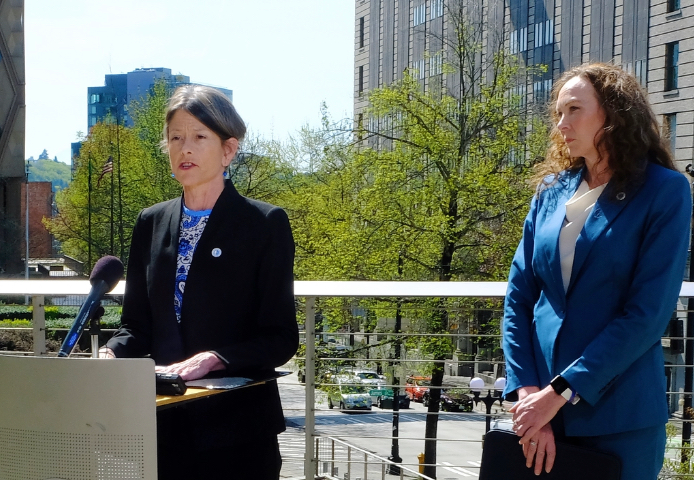
City Councilmember Sara Nelson and City Attorney Ann Davison

By Erica C. Barnett

City Attorney Ann Davison informed the Seattle Municipal Court today that the city of Seattle will no longer participate in the municipal court’s pioneering community court—a therapeutic court that allows people accused of certain low-level crimes to access services without pleading guilty to a crime. The decision effectively represents the end of community court in Seattle.

“After considerable thought and discussion,” Criminal Division Director Natalie Walton-Anderson wrote in a letter to municipal court judges Friday afternoon, “the City Attorney has decided to end the criminal division’s participation in Community Court. We recognize that Community Court has been part of the Seattle Municipal Court’s practice for many years, and that many will be disappointed by this decision.

“However, I want to assure you that the City Attorney remains committed to the principles behind the original formation of Community Court, and we remain committed to working with court and the Department of Public Defense to mitigate the potential impacts of this decision and to work together to find innovative and effective ways to address the criminal justice issues in our city.”

According to Judge Damon Shadid, who established and oversaw community court, Davison’s office “never negotiated in good faith regarding the changes they wanted in community court. They came with demands and if their demands weren’t met exactly, they continually threatened to pull out of the court.” Shadid spoke to PubliCola in his personal capacity, not in his role as a judge

In a statement, King County Department of Public Defense director Anita Khandelwal expressed dismay at Davison’s unilateral decision to pull out of community court.

“We are in the midst of a public health crisis. Our community members are dying from drug overdoses and need access to housing and to community-based services,” Khandelwal said. “Evidence demonstrates that the criminal legal system does not change behavior and that it undermines public safety by destabilizing people’s lives. Community Court was a collaborative effort to reduce the harm of the system and instead connect people charged with nonviolent misdemeanor offenses to services. Nonetheless, the Seattle City Attorney … seeks to push people deeper into a criminal legal carceral system that is expensive, deadly, and deeply racially disproportionate.”

One issue that came up during internal deliberations over the future of community court was whether defendants should have to do community service as a condition of receiving services through the court. During the pandemic, the court allowed people to take a life skills class in lieu of in-person community service, an option Shadid said proved to be more effective at helping people achieve their goals than requiring them to do manual labor near the courthouse. In her letter, Walton-Anderson said the work requirement was “a central component” of the original community court plan—one that would have had to be restored for the court to continue.

“The city attorney’s office would accept absolutely no compromise when it came to community service, regardless of the information that was provided to them about the efficacy of community service in the courts or just whether or not its right or wrong to force someone to work in order to receive services.”—Seattle Municipal Court Judge Damon Shadid

In recent months, Shadid said, the city attorney’s main demand was that the court require its participants to complete at least six hours of community service. However, he said, “the city attorney’s office would accept absolutely no compromise when it came to community service, regardless of the information that was provided to them about the efficacy of community service in the courts or just whether or not its right or wrong to force someone to work in order to receive services.”

Davison’s office did not immediately respond to a request for comment about the decision to pull out of community court. In her letter, Walton-Anderson said the city attorney’s office will “shift cases where the defendant is likely to engage with service providers to a pre-filing diversion model.” The letter does not provide any details about this model or how the city attorney will determine which people are “likely to engage with service providers.”

Community court is a therapeutic, rather than punitive, court aimed at people who commit low-level crimes like theft, trespassing, and resisting arrest; people who commit serious misdemeanors, like DUI and domestic violence, are not eligible. Its goal is to address the root causes of people’s criminal activity, such as addiction and homelessness, by enrolling people in case management and services as an alternative to prosecution and jail.

Last year, Davison successfully pushed the court to categorically exclude people on her “high utilizers” list—those accused of more than 12 misdemeanor offenses in the past five years—from community court, arguing that people who commit crimes repeatedly “need meaningful accountability” in the form of prosecution and jail.

The court became an issue in last year’s municipal court elections. Davison-aligned candidates (including one of her own employees, assistant city attorney Nyjat Rose-Akins, running against incumbent, and community court champion, Damon Shadid) argued for drastically changing or eliminating community court on the grounds that it was all carrot, no stick. Rose-Akins, along with incumbent Adam Eisenberg, lost to their more progressive opponents, extinguishing conservative hopes that a new court would make community court more punitive or eliminate it altogether.

In the letter to judges, which refers to community court as “Community Court 3.0” because it is the court’s third iteration, Walton-Anderson said the current court has not produced results, pointing to the fact that many people fail to appear in court for their first appearances—a point Rose-Akins made repeatedly in her campaign against Shadid last year. Shadid counters that the failure to appear rate for first appearances is “extraordinarily high” for misdemeanor cases throughout the municipal court system; “the only difference now is that in community court, we could try to connect people to services the day they came into court instead of warehousing them in the jail.”

Like many documents from Davison’s office, the letter uses several extreme, cherry-picked anecdotes about community court participants who went on to commit serious crimes to suggest community court is a soft-on-crime failure, including one involving a five-year-old child.

Earlier this month, Davison supported legislation sponsored by Councilmember Sara Nelson that will, if it passes, empower her office to prosecute people for possessing small amounts of drugs and using drugs in public, a first in the city’s history. (The Nelson bill stems from recent state action to make drug possession a gross misdemeanor. For Seattle to prosecute drug users under the new state law, the city has to pass a local law that incorporates—or goes beyond—the state law, which is what the proposed new law would do.)

According to some estimates, the new anti-drug law could result in up to 800 additional prosecutions per year—cases that, because they’ll be in mainstream court, will require full discovery, adding to existing court delays and further increasing the population of the downtown jail, which is currently sending inmates to jails in South King County in response to dangerous understaffing.

City Attorney Filing, But Also Diverting, More Cases; City’s Shelter Enrollment Rate Remains Low

City Attorney Ann Davison


1. City Attorney Ann Davison’s office released a detailed report this week confirming what PubliCola reported earlier this month: In the first six months of 2022, her office has filed charges in only about half of the criminal cases it has considered, declining to pursue charges at a rate similar to that of her predecessor, Pete Holmes. Between 2017 and 2019, Holmes’ decline rate ranged from just over 40 percent to just under 60 percent, only slightly lower than Davison’s.

Between January and June, the city attorney’s office declined about 51 percent of cases. That number includes cases from a backlog left after Holmes left office, which resulted from a combination of failure to file cases prior to the pandemic and an increase in unfiled cases in 2021, when the Seattle Municipal Court was not operating at full capacity due to the pandemic.

Excluding those cases, Davison’s decline rate was lower (46 percent between January and March and 41 percent between April and June), but without more details about what cases the office considered from the backlog, or what cases came in between April and June, it’s hard to draw long-term conclusions from that comparison.

Digging into the numbers in the report, the rate of domestic violence cases that the office declined has risen steadily over the years, and remains high under Davison (over 60 percent) so far; one reason for this, according to the report, is that domestic violence victims often don’t want to file charges against their abusers. Assault, property destruction, and harassment topped the list of domestic violence cases where no charges were filed.

The report shows that Davison’s office has resolved cases using diversionary programs, such as community court, mental health court, and the Public Defender Association’s Law Enforcement Assisted Diversion program, at least as often as her predecessors, diverting hundreds of theft, assault, trespassing, and other cases to therapeutic courts or social services.

Davison’s office did file charges in a much higher percentage of new non-domestic violence and non-traffic criminal offenses (those committed in 2022) than Holmes—around half in the first quarter of this year and 37 percent in the second quarter. If that trend continues, it will mean that Davison is choosing to pursue charges against more people accused of crimes like assault, theft, and trespassing, which are often crimes of poverty.


Ann Davison portrait

Perhaps most interestingly, the report shows that Davison’s office has resolved cases using diversionary programs, such as community court, mental health court, and the Public Defender Association’s Law Enforcement Assisted Diversion program, at least as often as her predecessors, diverting hundreds of theft, assault, trespassing, and other cases to therapeutic courts or social services. Overall, Davison referred about 750 cases to community court, more than 600 to LEAD, and about 180 to mental health court.

Earlier this year, Davison sought, and received, authority to deny access to community court for the 100 or so people on her “high utilizer” list, which includes people with more than 12 cases (not charges) in the past five years. The city attorney’s office really is treating this population differently: In contrast to their overall approach, the office has filed charges in 82 percent of cases involving this group, a decline rate of just 18 percent.

2. The latest quarterly report from the Seattle Human Services Department on the work of the Homelessness Outreach and Provider Ecosystem (HOPE) Team shows an uptick in the number of people who received referrals to shelter from the HOPE Team and actually enrolled in shelter, meaning that they showed up and stayed for at least one night. The HOPE Team does outreach at encampments, primarily the city’s regularly updated list of encampments it plans to sweep.

Between April and June, 173 people went to shelter based on a HOPE team referral, amounting to 41 percent of the total number of people who received at least one referral. (Overall, the team made 458 referrals, including multiple referrals for some individuals). Put another way, that means about 58 people went to shelter on HOPE team referrals every month last quarter. The numbers are approximate, because some people who enroll in shelter choose to remain anonymous, making them harder to track.

Those numbers, while they represent a slight improvement, continue to reveal that the majority of shelter referrals don’t result in shelter enrollments (and shelter, of course, isn’t housing)—people are getting referral slips but aren’t using them. This can happen for a variety of reasons: Leaving an encampment for shelter can involve a long trek across town, along with tough decisions, such as whether to leave an established street community or abandon a pet.

Notably, the second quarter of this year also included the removal of a large encampment at Woodland Park, which Mayor Bruce Harrell identified early on as one of the top priorities for his administration. As we reported at the time, the city asked the Low-Income Housing Institute to set aside dozens of spots in tiny-house villages—a desirable, semi-private shelter type that has a very high enrollment rate—for people living in the park. Out of 89 shelter referrals at Woodland Park, 60 were to tiny house villages.

The city also made a special effort to ensure that people forced to leave during the high-profile removal, offering direct transportation to shelters for everyone who received a referral, which likely boosted the overall enrollment rate. PubliCola has asked HSD how many of the 173 enrollments between April and June came from Woodland Park and will update this post when we hear back.

Ruling on Tree Regulations Coming Soon, City Attorney Filed Charges in Just Over Half of Cases This Year

1. The Seattle Hearing Examiner is expected to rule as soon as next week on a case in which the Master Builders Association of King County and Seattle—a business group that represents housing developers—is seeking a more thorough review of a new tree ordinance that would make it harder to remove trees on private property. The goal of the new restrictions, MBAKS argues, isn’t to protect Seattle’s tree canopy (which includes many trees on public property that wouldn’t be subject to the new restrictions); it’s to prevent new housing in historically exclusive single-family neighborhoods.

“There are people and groups in our City that care deeply about trees and about the health of Seattle’s urban forest,” MBAKS wrote in a letter to Mayor Bruce Harrell last week. “Those are the people and groups we’d like to work with. However, the loudest voices are anti-development groups that have weaponized tree protection to support their singular goal of stopping development in their beloved single-family neighborhoods.”

The new tree ordinance would lower the size threshold for regulated “significant” and “exceptional” trees and make them harder or illegal for private property owners to remove; removing a tree larger than 12 inches in diameter, for example, would require a developer to either replant the tree on site or pay a fee based on the value of the tree.

Technically, the appeal questions the Seattle Department of Construction and Inspection’s “determination of non-significance” under the State Environmental Policy Act—essentially a conclusion that imposing new restrictions on tree removal (and thus development) will have no significant impact on the city’s environmental policies or its Comprehensive Plan, which guides future development and land use decisions in the city. SDCI and TreePAC are the two groups opposing the Master Builders’ appeal.

The comprehensive plan encourages density inside neighborhoods as a bulwark against suburban sprawl and social inequity, since Seattle’s tree canopy is heavily concentrated in wealthier neighborhoods that were historically redlined to keep people of color out. In addition to more analysis that looks at density, not just privately owned trees, MBAKS has asked the city to consider requiring street trees when developers build new detached houses in single-family zones.

Chart showing Seattle City Attorney's Office Case Filing decisions (filed or declined), January-June 2022

2. City attorney Ann Davison, who announced in February that she would decide whether to file charges in her office receives from the police department within five days, decided to file charges in just over 56 percent of cases between the day she announced the new policy and late June of this year, records PubliCola obtained through a disclosure request show.

This represents a significant uptick in the percentage of cases Davison’s office filed compared to her predecessor, Pete Holmes’, filing rate during the pandemic, but is similar to Holmes’ pre-COVID filing rates when compared to data provided (in chart form) in a report from Davison’s office earlier this year. The overall number of cases coming in from SPD is lower than before 2020 because of a number of factors, including SPD’s decision to stop pulling people over for some minor traffic violations; Davison’s report suggests the cause is “the loss of a significant number of SPD officers.”

The charges Davison declined to file most frequently after announcing the close-in-time filing policy on February 7 included assault, assault with sexual motivation, theft, and property destruction; the charges she has filed most frequently also included assault and theft along with trespassing, harassment, and charges that involve driving under the influence of drugs and alcohol.

Case filings declined during the pandemic, in part, because the court shut down during COVID, creating a massive backlog that the municipal court is still struggling to work through. King County’s jails, meanwhile, remain understaffed even as jail populations rise, leading to conditions that both jail staffers and defense attorneys have described to PubliCola as inhumane. The more misdemeanor cases Seattle sends into this system, the greater the downstream backlog becomes.

Seattle Court Agrees to Exclude City Attorney’s List of “High Utilizers” from Community Court

By Erica C. Barnett

The Seattle Municipal Court voted Friday to exclude so-called “high utilizers” of the criminal justice system—those who have been accused of misdemeanors more than 12 times in the past five years, and at least once in the past eight months—from community court, a therapeutic court established in 2020 for people accused of certain low-level crimes.

PubliCola reported the news exclusively on Twitter Monday morning.

Davison asked the court to intervene on her behalf in late April, after community court judge Damon Shadid (one of seven municipal court judges, and the only one who handles community court cases) declined her request to immediately bar “high utilizers” from community court.

Currently, people whose charges consist entirely of low-level misdemeanors (a category that excludes more serious crimes like assaults, domestic violence, and DUI) are automatically eligible for community court, which gives defendants access to services without requiring them to plead guilty to a crime. People can only go through community court four times; after that, they have to go through mainstream court, which frequently convicts defendants but does not jail them beyond the time they have already served.

The King County Department of Public Defese analyzed the “high utilizers” list and found that most were homeless or had undergone competency evaluations, an indication of behavioral health disorders.


In meetings between the court and Davison’s office, Shadid had proposed putting off a decision about “high utilizers” until July to allow parties to court deliberations, including the King County Department of Public Defense (DPD), to come up with a plan for this group that went beyond jail and traditional prosecution. 

In a statement, Davison said she was pleased that the court agreed to her request. “Individuals causing the most impact on our community need meaningful accountability for their criminal activity paired with increased behavioral health services,” she said. “The best venue to ensure appropriate accountability and community safety is in Seattle Municipal Court and my team will continue to engage service providers to address underlying behavioral health needs. Addressing the impacts of individuals engaged in frequent, repeat criminal activity is one of the best ways to improve public safety.”

Davison has not proposed any additional spending on behavioral health care, which is mostly funded by the county, not the city. An analysis of Davison’s “high utilizer” list by DPD showed that the list consists primarily of people who are unsheltered or have been through a court-order evaluation to determine their competency to stand trial, a sign of extreme behavioral health issues that are most effectively addressed with health care and treatment, not jail.

DPD director Anita Khandelwal said community court came out of a collaboration between the municipal court, the previous city attorney, and her department, with the goal of charting “a new path for people accused of misdemeanors in Seattle that would reduce the harm of the criminal legal system and quickly address the needs of vulnerable members of our community. While the court continues, we’re sorry to see this collaboration unravel so quickly at the behest of the City Attorney.”

Traditional prosecution and jail, Khandelwal continued, “takes far more time, is very expensive, and fails to produce meaningful results. The City Attorney has produced no data—and I have seen none—that shows that the traditional criminal legal system is effective in changing behavior. Instead, it means people who have significant unmet needs will continue to cycle through a system that we know to be expensive, ineffective, and racially disproportionate.”

In a statement, the municipal court judges said they agreed to the changes Davison requested “in an effort to work collaboratively” with her office and “in the interest of preserving Community Court as an option to address many non-violent misdemeanor cases.” Later, the court amended the judges’ statement (which we quoted on Twitter) to read, “The Community Court agreement already provided the judges with discretion to screen defendants out of Community Court. The changes approved last week will allow the City Attorney to decline to refer a case to Community Court even if it is technically eligible.”

As a partner in community court, Davison has the ability to withdraw the city from the court, effectively shutting it down. This gives her office considerable leverage in negotiations over court rules, including which defendants are eligible.

Community court, the judges noted in their statement, was established as a corrective to a system in which people are already being released onto the street (instead of jailed) and are often hard to track down for court appearances specifically because of “housing insecurity, mental health issues, and substance abuse issues; all issues that Community Court was meant to address.”

City Attorney Davison Asks Court to Let Her Deny “High Utilizers” Access to Community Court

City Attorney Ann DavisonBy Erica C. Barnett

City Attorney Ann Davison sent a letter to the entire Seattle Municipal Court on Wednesday asking the court to give her the ability to deny “high utilizers” of the criminal justice system—a group of about 120 people who have had 12 or more referrals from the Seattle Police Department to the City Attorney’s Office (CAO) in the past five years—access to community court, a therapeutic court in which defendants define their own goals, such as reduction of substance use, and participate in mandatory community service. The change would effectively make prior criminal history a factor in determining someone’s eligibility for community court.

Currently, people whose charges consist entirely of low-level misdemeanors are automatically eligible for community court, which allows defendants to access services without requiring them to plead guilty to a crime. Crimes like theft, pedestrian interference, and resisting arrest are eligible offenses; more serious misdemeanor offenses like reckless driving, harassment, and DUI are not.

For weeks, Davison’s office has been negotiating with Municipal Court Judge Judge Damon Shadid, who presides over community court, over how to treat this group of defendants. As of Wednesday, according to Davison’s letter, those discussions “have come to an impasse.” In her letter, Davison asks the judges to overrule Shadid and allow the city attorney to deny access to community court for people the city attorney categorizes as high utilizers, and to “clarify how many chances individuals get to have their cases referred to Community Court.” Currently, defendants can go through community court a maximum of four times.

In a statement responding to Davison’s letter on Thursday, the municipal court said community court was “founded to address the root causes behind low-level criminal activity while reducing the harm of pretrial incarceration” and “designed with the Washington State Pretrial Reform Task Force Final Recommendations report and The Vera Institute of Justice’s 2020 report front and center.” (Links in original.) The court said it was still evaluating Davison’s proposal and “will continue to work with her office and the Department of Public Defense to identify how to move forward together and create a prioritized plan for people whose needs and issues are not being addressed, and have not been addressed historically, by our criminal justice system.”

“The letter mischaracterizes Judge Shadid’s statements in the meetings (and I have been in attendance at these meetings). The letter causes me concern about the possibility for good faith negotiations with the City Attorney’s Office given the inaccuracies in their statements.”—King County Department of Public Defense director Anita Khandelwal

Davison released her letter in a press release at 8:00 Wednesday night after PubliCola obtained a copy and sent her office a list of questions about it Wednesday afternoon.

“Unfortunately, in the Community Court Steering Committee meeting last Friday, Judge Shadid insisted that he would not agree to exclude those meeting the High Utilizer criteria from Community Court and would potentially refuse to oversee Community Court if his fellow judges agreed to the changes that I have requested,” Davison’s letter to the Municipal Court judges said. “At this juncture, I am formally requesting that the full Seattle Municipal Court consider this important modification of the 2019 Community Court agreement.”

That agreement, signed by then-city attorney Pete Holmes, lays out a process for the city attorney’s office to refer defendants to community court and describes the court’s less punitive approach to misdemeanor crime. “Simply stated, this version of Community Court (with its ‘release-first model,’ voluntary referrals to services, and limited accountability mechanisms) is the wrong place for those committing repeat, high-impact criminal activity,” Davison’s letter says.

King County Department of Public Defense (DPD) director Anita Khandelwal says Davison’s letter “mischaracterizes Judge Shadid’s statements in the meetings,” which Khandelwal has attended, and “causes me concern about the possibility for good faith negotiations with the City Attorney’s Office given the inaccuracies in their statements.”

Judge Shadid, Khandelwal said, did not “insist on anything,” as Davison’s letter claims. Instead, she said, he suggested postponing any major changes to community court until July, to “allow for us to work collaboratively to develop a plan for people on the list, because the only plan that the City Attorney’s Office seemed to be putting forward involved incarceration (including overriding jail booking criteria) and traditional prosecution.”

Importantly, the 2019 agreement removed a requirement that defendants plead guilty before getting access to community court—a requirement for other alternatives to the mainstream court system, such as King County Drug Court. According to the community court rules and procedures, “An individual should not have to choose between their Constitutional rights to a trial and having the ability to access services that will help them exit the criminal justice system. Therefore, a person doesn’t have to give up trial rights to participate and gain benefits from Seattle Community Court.”

Khandelwal says community court is designed to avoid the harmful outcomes that are common in the mainstream court system, which often leads to a cycle of incarceration and disproportionately impacts people of color, unsheltered people, and people with a history of being declared incompetent to stand trial because of mental illness.

In fact, a DPD analysis found that the people on Davison’s “high utilizer” list are overwhelmingly people who fit into one or more of those three categories. Nearly six in ten have “indications of housing instability,” such as giving 77 South Washington—the Compass Center shelter in Pioneer Square—as their address. More than half (51 percent) have been through a court-ordered evaluation to determine their competency to stand trial. And 40 percent were Black, Indigenous, or People of Color (BIPOC), higher than the proportion of BIPOC Seattle residents.

“Prior criminal legal system involvement is often a result of racially biased policing, which is only perpetuated or deepened by prosecution,” Khandelwal said. “DPD worked hard with the court and CAO to develop a court that did not look at criminal history to avoid perpetuating that bias.”

“Our office does not believe that individuals meeting the High Utilizer criteria are a good fit for Community Court, where the main obligations are completing a life skills class or meeting with service providers.”—City Attorney’s Office spokesman

According to a spokesman for Davison, Anthony Derrick, the 2019 agreement “removes [the city attorney’s] prosecutorial discretion to consider prior criminal history. Because community court is a release-first model, individuals with a history of repeat criminal activity are able to immediately return to their criminal behavior without consequence. Ultimately, as this agreement is written, we have no discretion to screen out any candidates that fit the high utilizer criteria without being in violation” of the agreement.

“Without modification to this agreement, many individuals meeting the high utilizer criteria are required to be repeatedly routed through Community Court despite little to no change in their criminal activity,” Derrick said. In general, he added, “our office does not believe that individuals meeting the High Utilizer criteria are a good fit for Community Court, where the main obligations are completing a life skills class or meeting with service providers.” Continue reading “City Attorney Davison Asks Court to Let Her Deny “High Utilizers” Access to Community Court”

Male Advisor Scott Lindsay Wrote City Attorney’s “Glass Ceiling” Email Calling Council Sexist; Bus Safety Audit Finds Most Incidents Aren’t Investigated

1. An email signed by then city attorney-elect Ann Davison calling the Seattle City Council sexist for proposing new reporting requirements for the City Attorney’s Office was originally written not by city attorney Ann Davison but by her male deputy, Scott Lindsay, emails obtained through a records request show.

Davison’s office sent the email to council members and the press in response to a council bill that would have required the office to inform the council before making any changes to, or eliminating, diversion programs that allow people accused of misdemeanors to avoid criminal charges, and provide quarterly reports to the council about the effectiveness of diversion programs.

“I have drafted an email for you to send to City Council with the idea that you would send it this morning by 8:30am before you head downtown. The hearing on the bill is at 9:30am,” the email from Lindsay to Davison explains. “The concept in this email (I was planning a letter but now think email is better) is to roll up your key messages (collaboration and listening, centering victim voices, transparency and problem-solving) into one strong intro piece that also highlights your focus on real public safety problems … I think this piece is strong and unique enough that it will certainly be noticed around City Hall and may help stir media interest in your transition.”

“I have drafted an email for you to send to City Council with the idea that you would send it this morning by 8:30am before you head downtown. I think this piece is strong and unique enough that it will certainly be noticed around City Hall and may help stir media interest in your transition.”—Deputy City Attorney Scott Lindsay, in an email to City Attorney Ann Davison

The email explicitly accused the council (which is made up of six women and three men) of targeting Davison because she is a woman. After describing the “unique barriers to women in the legal profession,” the email suggests the council was applying a “double standard”  based on Davison’s sex—one that sent a troubling message to “our daughters who may one day seek elected office.” (The line about daughters was not in Lindsay’s original email.)

“In the over 100-year history of the City Attorney’s Office, none of my male predecessors faced a single preemptive move by Council to establish additional reporting requirements and restrictions on operations in the two months before they took office. Nor did Council show any interest in scrutinizing the limited data provided by my predecessor,” Pete Holmes, the email says.

City council public safety committee chair Lisa Herbold responded earnestly to the email, noting that the council passed similar reporting requirements while Davison’s predecessor, Pete Holmes, was in office. “I’m sorry that the reporting bill has been received in this spirit. I do not believe it was the sponsors’ intent, nor was it mine in voting in favor of the bill,” Herbold wrote.

The council ultimately passed the bill, but changed the language; instead of requiring Davison’s office to let the council know before making changes to existing diversion programs, it requires the city attorney’s office to inform the council within 90 days after the changes are made. The legislation also required the office to report back once a quarter on changes to pre-booking diversion programs.

2. An audit of accidents and other safety incidents at King County Metro found that the agency fails to investigate the vast majority of incidents, leading to data gaps and negatively impacting the transit agency’s ability to train drivers and prevent dangerous incidents in the future.

“Metro Transit dedicates most of its analysis to incidents where there was damage or injuries reported and that the operator may have been able to prevent,” the audit found. “Once an incident is determined to be non-preventable or less severe, Metro Transit does not take additional steps to analyze or respond to its context or causes.” Continue reading “Male Advisor Scott Lindsay Wrote City Attorney’s “Glass Ceiling” Email Calling Council Sexist; Bus Safety Audit Finds Most Incidents Aren’t Investigated”