Category: State of Washington

PubliCola Questions: Secretary of State Steve Hobbs

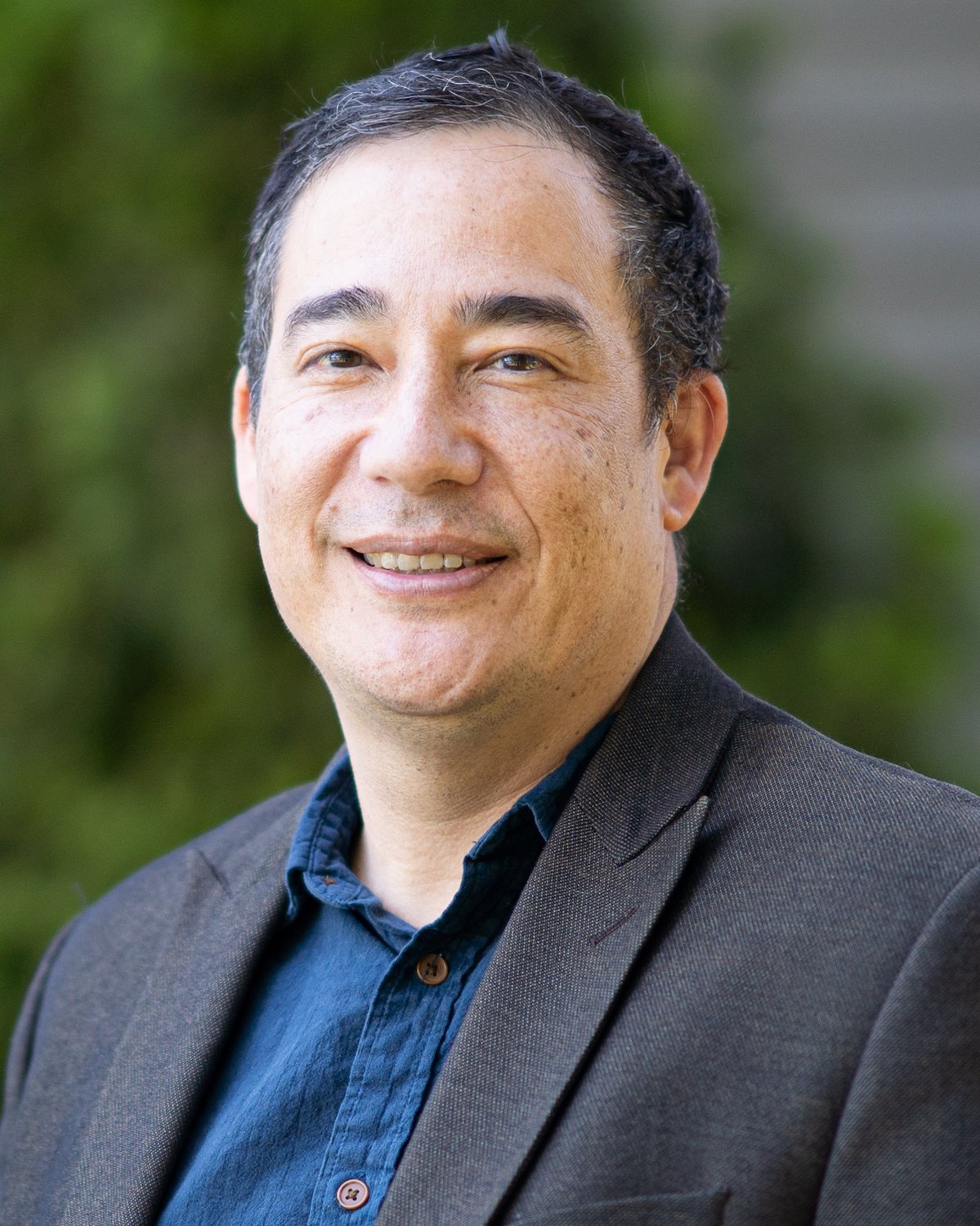
Steve Hobbs Voter Guide image

By Erica C. Barnett

The Secretary of State has historically been a largely administrative position; the primary duties of the office are to oversee and certify elections, manage the state’s physical and digital archives, and register corporations and nonprofits. In recent years, though—perhaps you’ve noticed—the mundane job of overseeing elections has become fiercely contested ground.

Despite Washington’s blue-state status, we’re still susceptible to disinformation and misinformation campaigns that threaten to erode voters’ trust in the voting system and election outcomes. Cyberattacks are becoming more aggressive and sophisticated, forcing the secretary of state’s office to keep up with evolving technology, and even benign changes, like moving local races to even-year elections and implementing alternative voting systems like ranked-choice voting, require a level of technical knowledge unheard of even 20 years ago.

In other words, it’s a good time to pay attention to who’s running for secretary of state.

Incumbent Steve Hobbs, a longtime state legislator and moderate Democrat appointed to the job by Gov. Jay Inslee last year, says his military background (he’s a lieutenant colonel in the Washington Army National Guard), on-the-job experience, and enthusiasm for innovation has earned him a full term; if elected, he would be the first Democrat elected the position in more than 60 years. Challenger Julie Anderson, the Pierce County auditor, says her years of experience as a local election official makes her a better fit; she’s running without a party label for a position she believes should be above partisan politics.

PubliCola spoke to both candidates for secretary of state earlier this month.

PubliCola (ECB): You were appointed to this job a year ago and don’t have any prior experience overseeing an elections office, which is something your opponent has brought up on the campaign trail. What kind of learning curve did you have, and do you think your experience so far qualifies you for this position?

Steve Hobbs: (SH): There was really no learning curve—hardly any. Because of my leadership experience from being in the military and managing large organizations, plus 15 years in the state legislature, serving the National Security Agency, being a public affairs officer, and having graduated from the various Department of Defense schools that study strategic threats and information warfare, it was easy to step into the job. The only thing I had to learn a little bit about was the other functions of state government. I knew about corporations, charities, and nonprofits, because I interacted with them before. But I hadn’t interacted a lot with [the] state legacy [division], which is basically our history of our state. So that was really exciting, kind of diving into there and seeing if we can take it in a new direction and talk to different people that affected the history of our state.

“When you go to the state level, you’re overseeing different counties and assisting in the process of elections. We’re doing the certification. We’re assisting with the outreach. And on top of that, the position of Secretary of State has evolved [to include] the security of our elections and combating misinformation, and that’s something that [my opponent] Julie [Anderson] does not have.”

We have state library services in our state institutions—our prisons and our state hospitals. So I wanted to know, can we use this facility and the people in it as a way to help with rehabilitation and help prepare those who are incarcerated for life outside. And so we’re looking at things like increasing the number of people [working] in those libraries, and providing an opportunity for the incarcerated to learn skills to tell their story. So for example, we are looking at doing a prison podcast very similar to “Ear Hustle” in the California penal system, I would like to start a pilot project in Purdy [the women’s prison in Gig Harbor], because I don’t think there is a women’s prison podcast.

And then I would like to bring in other items to the library’s besides movies and books and music. I’m a big nerd. I don’t hide it. I’ve got strong ties to the tabletop gaming industry here in the state of Washington, and I’d like to have a games library [in prisons], and I would like to see if we can have therapy sessions in there. There’s this nonprofit called Game to Grow. They use [role-playing games] as a form of therapy for kids with autism and developmental disabilities, and they were talking about doing this with veterans for PTSD. Maybe we can do that in our state institutions. Why not? If it’s going to help people, let’s try to help people with it. So yeah, I’m really excited about this. And we got a bunch of new books, because some of the books are really old.

ECB:  Your opponent says she has more experience than you as an election administrator. How do you respond to that, and can you give me an example of something you’ve learned on the job?

SH: It’s kind of apples and oranges when you go to the state level, because you’re not running an election, you’re overseeing different counties and assisting in the process of elections. We’re doing the certification. We’re assisting with the outreach. And on top of that, the position of Secretary of State has evolved [to include] the security of our elections and combating misinformation, and that’s something that Julie does not have.

This year alone, we had to face three very sophisticated disinformation campaigns and a cyber threat, and you don’t get that at [the county] level. And you have to maneuver with the legislature to get your budgets and policies passed. So I understand she does have the experience at the county level that I don’t have, but she doesn’t have the experience that I have at the statewide level and at the experience of combating these outside threats that are threatening our elections.

ECB: What have you done or will you do to address the kind direct misinformation or disinformation campaigns that now routinely occur during elections?

SH: We have three ways to attack it. Number one is just reacting to a misinformation campaign the best we can—reaching out to our partners, reaching out on social media platforms, to correct the record. Two is a public service campaign, or information campaign, educating the voters about the process of elections. We have done such an awesome job, both county auditors and secretaries of state across the United States, telling people hey, don’t forget to vote.

What we have done a bad job on is talking about what happens before you get the ballot, and after you get the ballot and you submit it. Simple things like, hey, did you know that every signature is checked? Did you know that you can actually go to the election center in any county office auditor’s office, and you can see the process, you can see the ballots coming in, you can see the balance being counted? Did you know the tabulation machines that actually count the ballots are not connected to the internet, and you can’t hack into them? The average citizen doesn’t know about that. And because of that, these false narratives have been able to take hold because there’s nothing to counter it.

And then the other part is educating young people before they become voting age. A lot of them are sophisticated, and that’s great, because they can identify disinformation better than we can, but we trying to look at different ways to engage them. People my age and older will typically retweet or reshare Facebook posts without taking the time to find out, who is this person? Is this message real?

We have launched our Vote with Confidence campaign, which is informing the public about how elections are run [through ads on radio, TV and social media]. It’s all part of the effort to inform the voters this is going to take this is long term because 35 percent of Washingtonians have doubts about the election, according to a KING 5 poll. That’s a big hill to climb.

ECB: As you know, there are racial and other disparities in which ballots get rejected. Are there better ways to track ballots or inform voters when their ballots have been rejected so their votes can be counted?

SH: The only time we see curing–getting people to sign their ballot or re-signing it if the signature has changed—is usually during close elections, where both sides’ campaigns and usually the parties are involved, and they’re getting people out there to sign those forms by going door to door. There’s got to be a better way.

“I have Republican endorsements and Democratic endorsements. And I’ve been endorsed by the Association of Washington Business and by the Washington State Labor Council. So I love how I’m being attacked for being a partisan, but I’ve operated in a bipartisan manner.”

We have to do two things. One is we have to study why this is happening. And the other thing is, maybe we can lean forward and start doing some things now. And so we are right now in the process [of developing a system]—it will not be operational until next year—which will text the voter that their ballot has been rejected. Because right now, you can either go online to find out, or you’re going to get a letter in the mail, which is highly inefficient, and maybe a phone call. And a lot of this happens after election night at 8pm. So wouldn’t it be nice to get a text message right away, the moment your ballot is rejected, because you’ve forgotten to sign the ballot, or you didn’t sign because English is not your first language?

ECB: What have you done to improve language access in other areas, such as informing voters about elections before they vote?

SH: Language access is definitely an issue, because the only way you get voter guides out there [in languages other than English] is, you have to reach a minimum threshold in a particular county. So for example, Skagit County has a large Hispanic population, but because they didn’t reach the population threshold, you don’t have the voters’ guide going out there in Spanish, mostly because the county commissioners are not supportive.

What I would like to do that is a combination of things. One is trying to get more money in the legislature to provide funding to these counties so they can put out those guides, because a lot of it is driven by money. The other thing we’ve done is, I’ve created a department to do more voter outreach and education. I’m mirroring what is happening in King County under [Elections Director] Julie Wise, which is the trusted messenger program, where we hire people from a community that knows the language, that knows the culture, that can help us do the outreach. Now, I can’t hire enough people to do this. So we also have to team up with organizations in various communities.

ECB: Your opponent is running as a nonpartisan and has said the secretary of state should be a nonpartisan office. How do you respond to that, and what does it mean to you to run as a Democrat for this position? And should this position even be elected?

SH: I do think it should be elected. In terms of partisan or nonpartisan, I don’t think it matters too much. I think at this particular time, people trust Democrats more because what happened on January 6. But the thing is, the only way to change this office to nonpartisan is to pass a bill in the legislature, and they’re not going to do that the because it’s a two-party system. Continue reading “PubliCola Questions: Secretary of State Steve Hobbs”

Toll Revenue Projections Plummet for Costly Waterfront Tunnel as Drivers Stay Away

By Erica C. Barnett

Revenues from tolls on the SR 99 tunnel, which replaced the Alaskan Way Viaduct on the downtown Seattle waterfront, are coming in much lower than the state Department of Transportation assumptions, and will continue to do so into the foreseeable future, the state treasury department told the Washington State Transportation Commission this week. Deputy state treasurer Jason Richter told the commission that the new projections likely represent a “permanent reduction” in toll revenues, which pay for construction debt, ongoing maintenance, replacement and repair costs, and a loan from the state’s motor vehicle account.

In May of this year, for example, the state collected just under $5.7 million from tunnel tolls, about $3 million less than projected last year. That trend extends into future projections, which show a shortfall ranging from around 16 percent over the latter half of the 2020s to 30 percent or more in the future. In some years, according to the latest projections , toll revenues won’t be enough to cover debt service on the $3.4 billion tunnel and waterfront roadway project. By 2026, the projections show the tunnel project about $2.5 million in the red, and “then the difference starts to climb at a pretty uncomfortable clip,” Richter said, with a cumulative negative balance of more than $200 million projected 25 years out.

The state can make up for some of the shortfall, Richter told the WSTC, “but I’m suspicious that that’s not going to be sufficient to cover the entirety of this issue, given that the shortfall in a lot of years is equal to roughly a third of the revenue coming in.”

The COVID pandemic had unprecedented impacts on traffic into and through downtown Seattle, changing commute patterns and reducing the number of cars on every road. During 2020, the number of people using the tunnel plummeted to less than 40,000 vehicles a day, and that number has not increased much even as other roads, like I-5, have started to approach pre-pandemic traffic levels. Gas prices, which are currently at unprecedented highs, have also caused people to rethink how they get around, combine trips, and avoid unnecessary driving.

But even before the pandemic and $6 gas prices, people weren’t using the tunnel nearly as much as WSDOT predicted they would; in fact, once tolls went into effect in 2019, the number of vehicles using the tunnel dropped by 28 percent to fewer than 60,000. Contacted by email, WSDOT toll division spokesman Christopher Foster noted that “prior to the pandemic, trafficvolumes in the tolled tunnel were exceeding forecasts,” but both the forecasts and “baseline” tunnel usage are moving targets; while the tunnel was originally justified on the grounds that 130,000 cars would use it every day, the state has continually adjusted its forward-looking projections downward in light of actual traffic volumes.

One of the major reasons people aren’t driving in the tunnel is that there’s no real incentive to use it: If you can from point A to point B quickly and conveniently for free, why would you pay for the privilege? If you’ve driven in the tunnel, you’ve probably noticed that it often feels like an empty highway in the middle of the night—people avoid the tunnel in favor of existing surface streets, including the currently two-lane surface Alaskan Way, which WSDOT is currently widening into yet another highway.

Cary Moon, the founder of the People’s Waterfront Coalition, which advocated against the tunnel, is reluctant to say “I told you so.” But she will say that the data WSDOT used to justify building the tunnel—which initially projected 130,000 vehicles would use the tunnel every day—was “a joke” even before COVID came into the picture.

“Driving alone, especially in the tunnel, is dropping significantly and that’s’ a good trend long term,” Moon said. It’s also “what we knew would happen. … If we had invested in the right infrastructure, can you imagine what we could have done?”

But to WSDOT, despite its stated commitment to sustainability, the best outcome is one in which drivers get back in their cars and start using the tunnel again. The state could continue to boost toll rates, which currently range from $1.20 to $2.70 each way, to make up for lost revenues, and undoubtedly will, but higher tolls tend to lead to more diversion and people making different travel decisions. It’s a delicate balance.

“I think the transportation commission is doing their best to set tolls at a level that covers costs but also doesn’t cause excessive diversion,” Richter told PubliCola. The negative balance in WSDOT’s tunnel account is “cumulatively growing to the point where there’s going to have to be a conversation with legislators, as well as the transportation commission, to come up with a viable way to solve this,” Richter said. In other words, the legislature needs to come up with a solution, and funding, because the tunnel’s financial underpinnings are shaky.

“The bills have to be paid, and I have no doubt they will be paid—it’s going to be a question of, how do we do so without causing harm to the corridor and do so in a sustainable manner?”


Democrats, Republicans, and “Nonpartisan Party” Candidate Face off for Secretary of State; Council Takes Up Abortion Bills

1. The race for Washington Secretary of State—a position to which no Democrat has been elected since the 1960s—has drawn eight candidates, among them two Republicans, two Democrats (including the appointed incumbent, former state Sen. Steve Hobbs), and four candidates with other affiliations, including Pierce County auditor and “nonpartisan party” candidate Julie Anderson. (One candidate, Tamborine Borelli, is running with an “America First (R)” affiliation).

At a virtual forum sponsored by the League of Women Voters of Washington last week, five of the eight candidates described what their priorities would be if elected. Three of the five—Hobbs, Anderson, and former Republican state legislator Mark Miloscia—have reported raising more than $50,000.

The other two candidates at the forum were Marquez Tiggs, a Democrat who said he would support in-person voting to increase turnout and require voter IDs at polling stations, and Bob Hagglund, a Republican who said he wants to require voter ID so that “the people who should not be voting don’t get their vote and don’t get their ballots counted.” Borelli, “Union Party” candidate Kurtis Engle, and Republican Keith Waggoner did not participate.

Hobbs and Anderson, the two top fundraisers and likely frontrunners, both emphasized their experience—Hobbs as an expert on disinformation from his training as a member of the US Army National Guard, and Anderson as Pierce County auditor for the past 12 years. Anderson said she would be the first Secretary of State to embrace nonpartisanship. “Political parties do not belong in the Secretary of State’s office,” she said, adding that she would support legislation to make the office officially nonpartisan. Hobbs said it doesn’t matter to him whether the office is partisan or not, because “it’s about the person that’s in the office, not the label.”

Among other claims, Republican Secretary of State candidate Mark Miloscia has argued that “perverts” on the left are “coming after our children,” denouncing abortion rights supporters, and accusing Democrats of “indoctrinating children with the demonic tenants of pagan radicalism.

The two candidates also differed on the issue of ranked choice voting (Anderson said she supports it as a matter of “local choice,” while Hobbs said it “just adds a new complicated element to elections” and “is vastly unfair to new Americans to come to this country where English is not their first language.” Both agreed that the state should do more to protect the security of elections, although Hobbs emphasized outreach and voter contact, including heightened efforts to reach voters when the signatures on their mail-in ballots are rejected while Anderson proposed a “statewide risk limiting audit” on a single race to test election security.

Since leaving office (and running unsuccessfully for state auditor in 2012 and 2016), Miloscia has been the director of the Family Institute of Washington, where he has written prolifically and conspiratorially about the decline of “traditional values.” Among other claims, Miloscia has argued that “perverts” on the left are “coming after our children,” denouncing abortion rights supporters, and accusing Democrats of “indoctrinating children with the demonic tenants of pagan radicalism.” (Also, he is positively obsessed with drag queens, who he says are tempting children with “lie[s] from the devil.”)

2. The city council will take up three different bills aimed at addressing access to abortion, two of them delayed because one of their sponsors, Councilmember Tammy Morales, contracted COVID.

The first, sponsored by Councilmember Kshama Sawant, aims to turn Seattle into a “sanctuary city” for abortion providers by directing the City Attorney’s Office and police not to cooperate with investigations, subpoenas, or search or arrest warrants by out-of-state authorities seeking to prosecute abortion providers who take refuge in Seattle. “If people break the unjust anti-abortion laws in their own state and believe they will be caught, they can come to Seattle to stave off prosecution,” Sawant said at a Monday afternoon council briefing.

The legislation also says that if Washington state bans or restricts abortion in the future, the police must make cooperation with other law enforcement authorities among its lowest law-enforcement priorities, along with marijuana-related offenses.

The second, from Morales and Councilmember Lisa Herbold, incorporates a 1993 state law that makes it a gross misdemeanor to interfere with a patient’s access to health care facilities, such as clinics and hospitals that provide abortions, by blocking entrances, disturbing the peace, and harassing or threatening patients or clinic employees. And the third, also sponsored by Morales and Herbold, would prohibit discrimination based on a person’s perceived pregnancy outcomes; for example, an employer could not fire or penalize an employee because the employer believed she had an abortion.

Although both proposals seem likely to pass, they also illustrate the limitations of what blue cities in blue states can do to mitigate the impact of abortion bans nationwide—it’s unlikely, for example, that abortion providers from across the country will resettle in Seattle en masse to avoid pursuit and prosecution by anti-choice judges and law enforcement officials in their home states.

Statewide efforts to fund abortion providers who will be inundated with out-of-state patients would be more impactful, as would restrictions on additional mergers between secular and Catholic hospitals, which not only refuse to provide abortions but often refuse to manage miscarriages in progress or provide tubal ligations or birth control. Earlier this year, a state bill that would have required some transparency when health care systems merge failed to make it out of committee.

Harrell Veto of Rent Transparency Bill Stands, JustCare Will Transition to Focus on Highway Encampments

1. The Seattle City Council voted not to overturn Mayor Bruce Harrell’s veto of legislation that would have directed a research university, such as the University of Washington, to collect information from landlords about the size of their units and how much they charge. City Councilmember Alex Pedersen sponsored the proposal because, he said at Tuesday’s meeting, it would help the city “validate [the] affordable benefits of smaller mom and pop landlords,” informing the city’s upcoming Comprehensive Plan rewrite; Councilmember Tammy Morales (District 2) co-sponsored it because she said it would give renters better information to make housing decisions and could ultimately bolster support for rent control.

“This could mean, for tenants, that they finally have the ability to make an informed decision and to make a choice between units when they’re searching for a new home—something that landlords have been able to do with background checks on tenants for decades,” Morales said. “We would finally have concrete data that dispels the illusion that private-market, trickle-down economics is the solution to our affordability crisis.”

Renters, unlike homeowners, lack access to crucial information to help them make informed housing decision. While home buyers can easily access public information about what a house sold for most recently, the assessed value of adjacent and nearby houses, and (through data maintained and published by the Multiple Listing Service) the average prices of houses in a particular area, renters have to rely on sites like Apartment Finder and Craigslist to get a general idea of local rents. Searches for the “median rent” in Seattle yield numbers that vary by hundreds of dollars, making it impossible to know whether the rent a landlord is charging is reasonable. 

In vetoing the legislation, Harrell argued that the bill would violate landlords’ rights by revealing “proprietary” information.

Overturning a mayoral veto requires a minimum of six council votes; as in the original vote, just five councilmembers supported the legislation this time.

2. JustCare, the COVID-era program that engaged with people living in encampments and moved them into hotel-based shelter, will no longer continue in its previous form. The program, run by the Public Defender Association, ran out of city funding at the end of June. Its new iteration, which will focus exclusively on encampments in state-owned rights-of-way, will be funded using state dollars allocated in a supplemental state budget for shelter and services tied to encampment removals on state-owned property.

“In the sense of a response to the conditions in the specific neighborhoods we served, there is no more JustCare. That era is over – it’s been superseded. The City of Seattle and KCRHA are now in charge of that response.”—Lisa Daugaard, Public Defender Association

The funding is only available to groups that focus on encampments in sites “identified by the department of transportation as a location where individuals residing on the public right-of-way are in specific circumstances or physical locations that expose them to especially or imminently unsafe conditions, including but not limited to active construction zones and risks of landslides.”

By moving its focus to encampments in state rights-of-way, such as highway overpasses, JustCare will lose its geographic, neighborhood-based focus, PDA co-director Daugaard acknowledges. 

“In the sense of a response to the conditions in the specific neighborhoods we served, there is no more JustCare,” Daugaard said. “That era is over – it’s been superseded. The City of Seattle and KCRHA are now in charge of that response.” Continue reading “Harrell Veto of Rent Transparency Bill Stands, JustCare Will Transition to Focus on Highway Encampments”

Amid Court Battle Over Capital Gains Tax, House Finance Chair Previews Future Reforms

State Rep. Noel Frame (D-36)

By Clara Coyote

Following up on last year’s capital gains tax—a major legislative win for progressives during the 2021 session that puts a 7 percent tax on profits greater than $250,000 from the sales of assets, such as stocks and bonds—state Rep. Noel Frame (D-36) has her eye on comprehensive structural change for Washington’s upside-down tax code. The poorest fifth of Washington state residents pay, on average, 16.8 percent of their incomes in state and local taxes while the richest 1 percent of Washingtonians pay an average of just 2.4 percent.

A key piece of that larger agenda for Frame, the House finance chair, is a wealth tax; she introduced a version last year,  HB 1406, which the state department of revenue estimated would bring in $2.5 billion a year. Frame passed the bill out of her Finance Committee last year before it stalled in House Appropriations. Frame said she sees the senate version, SB 5426, as this year’s vehicle, and hopes the Senate Ways and Means Committee will hold a hearing on the legislation. 

Additionally, Rep. Frame said there will be smaller but meaningful bills during this year’s short (60-day) legislative session to clarify the implementation of existing legislation—for example, refining the 2023 rollout of the Working Families Tax Credit, a program Democrats passed last year, that will provide payments ranging from $300 to $1,200 to low-to-moderate-income people. Frame’s committee may also consider progressive modifications to the existing estate tax, by lowering taxes on small and medium estates while increasing taxes on the largest. This is work that first began with HB 1465, introduced (but not passed) last year.

Frame said that larger, systemic reform is emerge from the work of the multi-year bipartisan Tax Structure Work Group, which Frame chairs. Frame told PubliCola that she hopes to see bills as soon as 2023 refining an anti-displacement property tax exemption proposal meant to protect housing for mid-to-low income Washingtonians. In its final draft, Frame said, the legislation will incorporate feedback from town hall meetings where participants said renters as well as homeowners should benefit from the exemption. Frame said the work group will also figure out the details of her proposed wealth tax. 

Frame believes small businesses also need help. “We have the business and occupation (B&O) tax passed in the 1930s as a temporary measure that never went away,” Frame said. The B&O tax applies to all revenues a business takes in, regardless of whether a business turns a profit. “This disproportionately harms small businesses,” Frame said. “A central goal of the working group is finding a better alternative.”

Frame said she’s well aware that the progressive capital gains tax is already facing a court challenge but said she’s undeterred about moving forward with additional reforms that could draw more lawsuits. “Just because the rich and the powerful will threaten us every single time with a lawsuit doesn’t mean we shouldn’t ask them to pay their fair share,” she said. 

A Functional Democracy Requires A Challenge to New Redistricting Maps

Washington State Redistricting Commission adopted state legislative boundaries
Washington State Redistricting Commission-adopted state legislative boundaries

By Andrew Hong and Margot Spindola

Earlier this month, the Washington State Supreme Court declined an opportunity to fix a gross miscarriage of democracy, declining to redraw the state’s political boundaries after the Washington State Redistricting Commission abdicated its authority by submitting their maps a day after the constitutional deadline. With this decision, the supreme court effectively endorsed maps that violate the voting rights of communities of color, turning a blind eye to a process that prioritized partisan advantage over communities’ interest.

Every decade, state and local governments redraw their legislative districts to reflect population shifts revealed by the US Census. The process has the power to reshape the political landscape—granting outsize power to one party, for example—and increase or reduce the power of communities, such as Washington state’s Latino population. This year, the redistricting commission—a hyperpartisan group made up of two Democrats and two Republicans—failed, after hours of closed-door meetings, to reach consensus on new political maps by the November 15 constitutional deadline. Despite this failure, the state supreme court swiftly announced that the maps were fine, disregarding both the contours of the maps themselves and the deeply flawed process that produced them.

This redistricting commission and the courts had a unique opportunity to take in community input and set the boundaries of our democracy in a way that ensures communities’ voices are heard. By that measure, they failed spectacularly.

The court didn’t consider, for example, whether the Commission violated the Open Public Meetings Act when they conducted eleventh-hour negotiations, off camera, to make a decision on a final map plan. Perhaps, they would have considered otherwise if they had seen a memo written by commission staff leaked last week that revealed the commissioners prioritized naked partisan advantage over equitable representation.

Most importantly, the court did not consider how the maps likely violate both state law and the federal Voting Rights Act, by diluting the Latino vote in Yakima County. Amid all the process drama, both the commission and the court failed to consider the impact of these maps on the actual people who live and vote in those districts.

In its effort to remain apolitical, the court gave this two-party commission a political victory: Partisan-driven incumbent protection by way of a voting rights violations for which taxpayers may end up footing the bill in a legal challenge. Throughout this broken process, commissioners ignored requests from communities of color in Western and Central Washington to be kept together to right the wrongs of previous districting failures. And yet the commissioners claimed victory in the name of diversity and representation. When they were called on it, they refused to listen to community input and public testimony.

District maps, as with all government services and entities, should serve the people, not the political establishment. This redistricting commission and the courts had a unique opportunity to take in community input and set the boundaries of our democracy in a way that ensures communities’ voices are heard. By that measure, they failed spectacularly.

In many ways, this is nothing new. Communities of color all across our state, at every level of government, have always been tossed around like a political football. In Seattle, I-5 splits the Chinatown-International District in half. And after its construction, the city zoned the historically Asian-American and Pacific Islander neighborhood with downtown and Pioneer Square—not accounting for the fact that our residential and industry interests more closely align with Beacon Hill and South Seattle. Continue reading “A Functional Democracy Requires A Challenge to New Redistricting Maps”